도시 · Tiranë
Tirana
The capital: a fast-changing city of painted blocks, Ottoman survivals and new towers, under Mount Dajti.
모든 주, 모든 해안, 모든 세기
안내 보기
알바니아가 처음이신가요? 모든 페이지는 세부 내용이 시작되기 전에, 열 살짜리 아이도 이해할 수 있는 평이한 설명으로 시작됩니다.
전문가 보기
기본 내용은 이미 알고 계신가요? 간단한 설명은 숨기고 핵심 내용만 바로 확인하세요. 이것이 기본 설정입니다.
음식
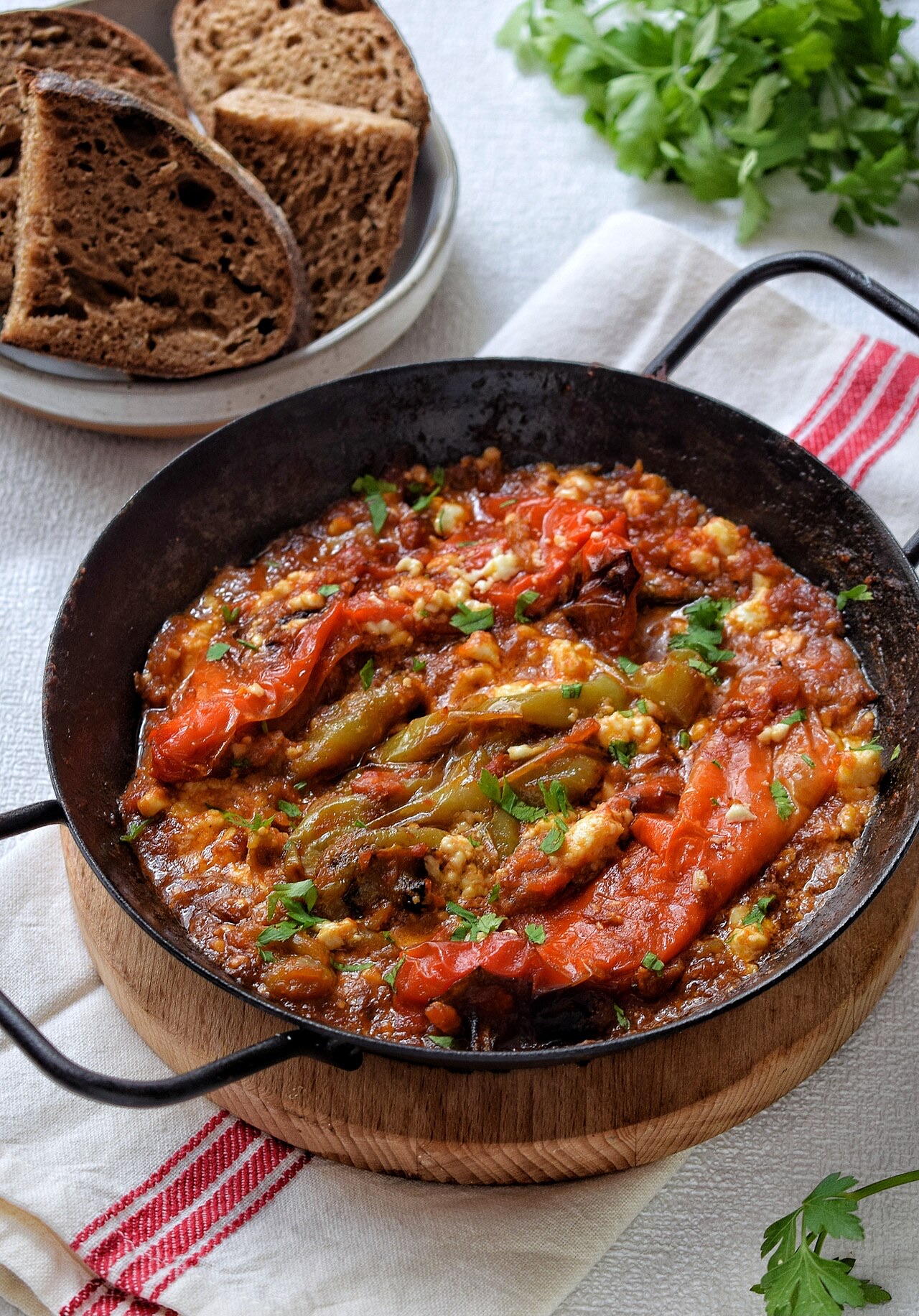
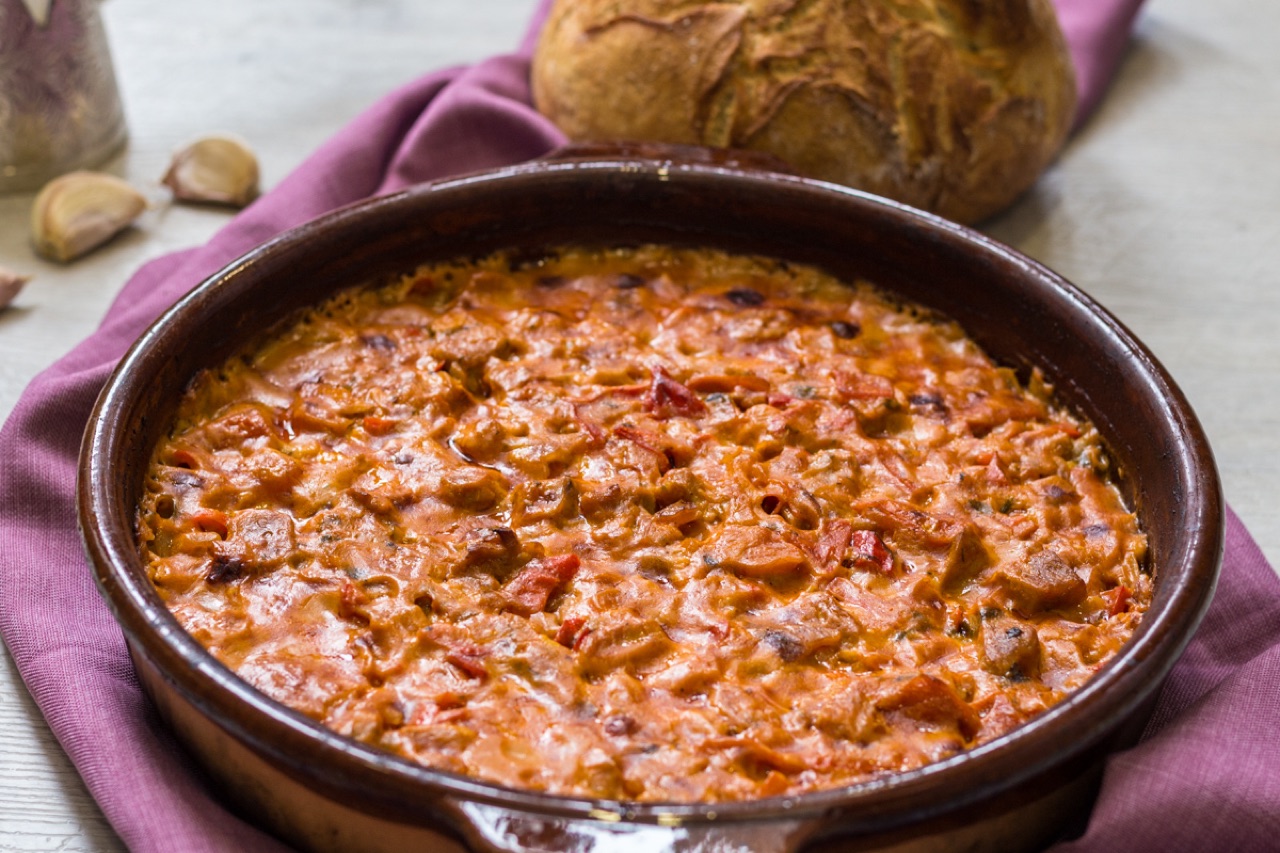
Peppers and tomato cooked down with white cheese, sometimes with liver — a Tirana staple.
저장
Fërgesë is a hot dish of peppers and tomatoes cooked with soft white cheese until it all melts together. Sometimes small pieces of liver are added. It is eaten with bread.
Fërgesë is a hot dish of peppers and tomatoes cooked with soft white cheese until it all melts together. Sometimes small pieces of liver are added. It is eaten with bread.
Fërgesë (definite form: fërgesa) is a traditional Albanian dish associated primarily with the Central Albania region. It is classified as a vegetable and cheese casserole, built from red or green peppers, tomatoes, onions, garlic and gjizë — a salted Albanian curd cheese — cooked slowly in olive oil and then baked until the ingredients merge into a creamy mixture.
The dish is typically served hot and functions either as a main course or as a side dish. Its character is shaped by the combination of fresh seasonal vegetables with the salt and fat content of gjizë, which breaks down during baking to produce the dish's distinctive consistency.
Fërgesë is generally prepared during the warmer months, from spring through to late autumn. This timing is determined by the availability of fresh peppers and tomatoes, which are the dish's primary vegetable components. The reliance on in-season produce gives fërgesë a marked seasonal character.
The dish is identified with Central Albania as its principal region of preparation. One specific variant, known locally as Fërgesë Tiranë, replaces gjizë with liver meat, linking that version explicitly to Tirana.
A recipe yielding four servings calls for 3–4 medium green or red peppers, 5–6 ripe tomatoes, one medium onion, three cloves of garlic, and 350 g of salted gjizë or white cheese. The fat component is 100 ml of extra-virgin olive oil. Seasoning consists of salt, black pepper and 2–3 bay leaves.
Gjizë is the defining dairy element of the standard recipe. It is described as a salted Albanian curd cheese, and the recipe allows white cheese as a direct substitute where gjizë is not available.
Preparation begins with chopping the onions, tomatoes and peppers into small pieces, which are then gently sautéed in extra-virgin olive oil. Garlic is added at this stage, followed by the gjizë or white cheese, which is stirred into the vegetable mixture until a uniform consistency is achieved.
The mixture is seasoned with salt, black pepper and bay leaves before being transferred to an ovenproof clay bowl. It is baked at approximately 175 °C (350 °F) for about 15 minutes. The use of a clay bowl is specified in the preparation, which affects heat distribution during baking and contributes to the final texture.
One documented variant of the dish substitutes gjizë with liver meat. This version is known locally as Fërgesë Tiranë, indicating its association with the capital. The substitution fundamentally changes the dish's protein and fat profile while retaining the broader preparation framework of sautéed vegetables baked in a clay vessel.
The article records this as a particular named recipe rather than a regional sub-type with its own fully separate tradition, suggesting Fërgesë Tiranë is understood as a recognised variation within the same dish family rather than an entirely distinct preparation.
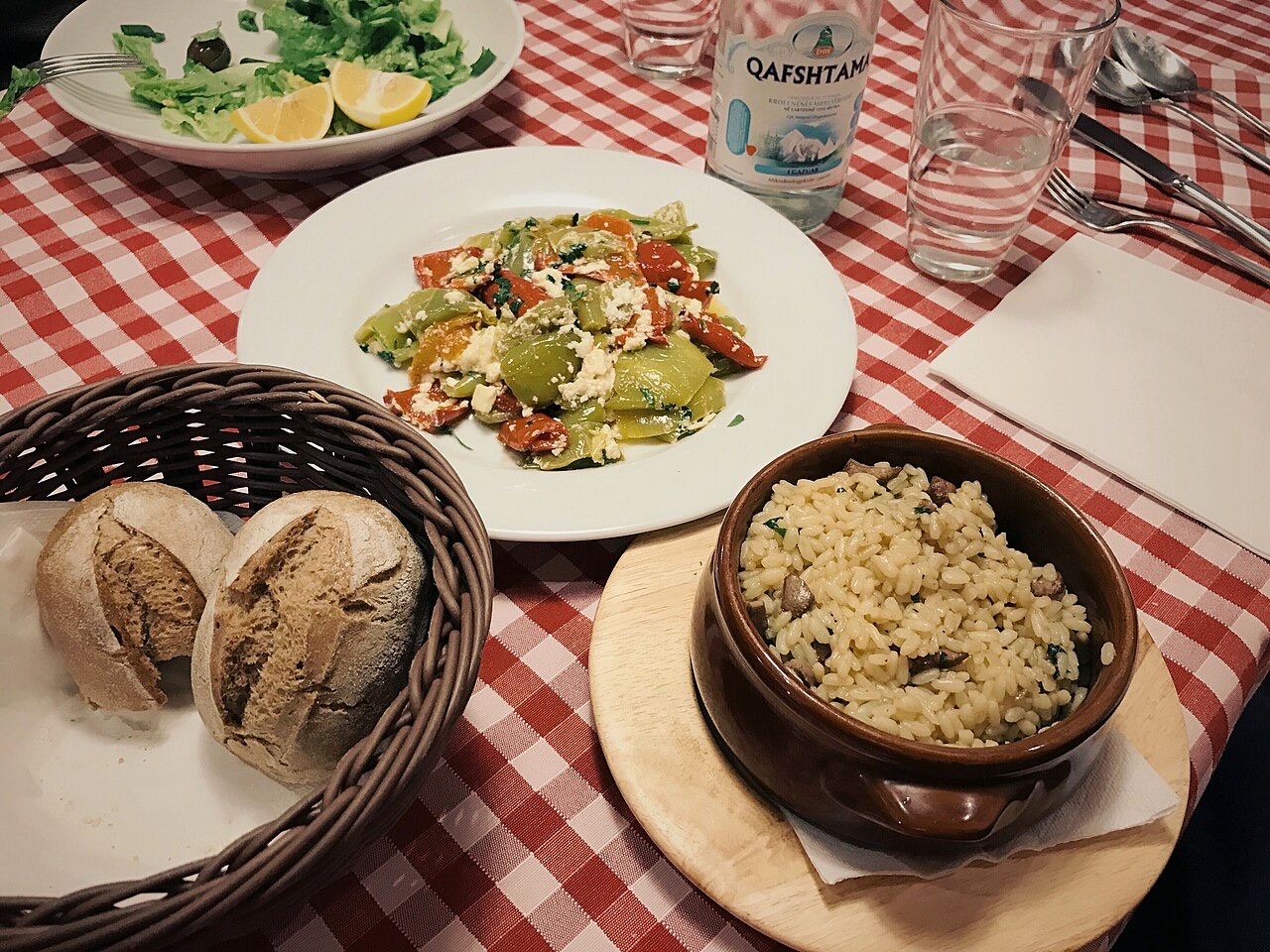
Fërgesë sits within the category of casserole dishes, distinguished from simpler vegetable preparations by the baking stage and the incorporation of cheese directly into the mixture. The clay bowl used for baking is an element consistent with traditional Albanian cooking vessels.
As both a main course and a side dish, fërgesë occupies a flexible position in a meal structure. Its preparation requirements — fresh seasonal produce, a stovetop sautéing phase and a short oven bake — place it within the range of everyday home cooking rather than specialised or ceremonial food preparation.
도시 · Tiranë
The capital: a fast-changing city of painted blocks, Ottoman survivals and new towers, under Mount Dajti.
제목
Mediterranean at the coast, Balkan and Ottoman inland, dairy-heavy in the mountains.
이 페이지에 오류가 있습니까? 수정 제안을 환영하며, 출처 기록과 대조하여 검토합니다. 잘못된 내용과 가능하다면 올바른 수치의 출처를 알려 주십시오.