Betreff
Albanian Cuisine
Mediterranean at the coast, Balkan and Ottoman inland, dairy-heavy in the mountains.
Jeder Kreis, jede Küste, jedes Jahrhundert
Geführte Ansicht
Neu in Albanien? Jede Seite beginnt mit einer einfachen Erklärung, die auch ein Zehnjähriger verstehen würde – bevor es ins Detail geht.
Expertenansicht
Sie kennen die Grundlagen bereits. Direkt zur Substanz, ohne die vereinfachten Erklärungen. Dies ist die Standardeinstellung.
Essen
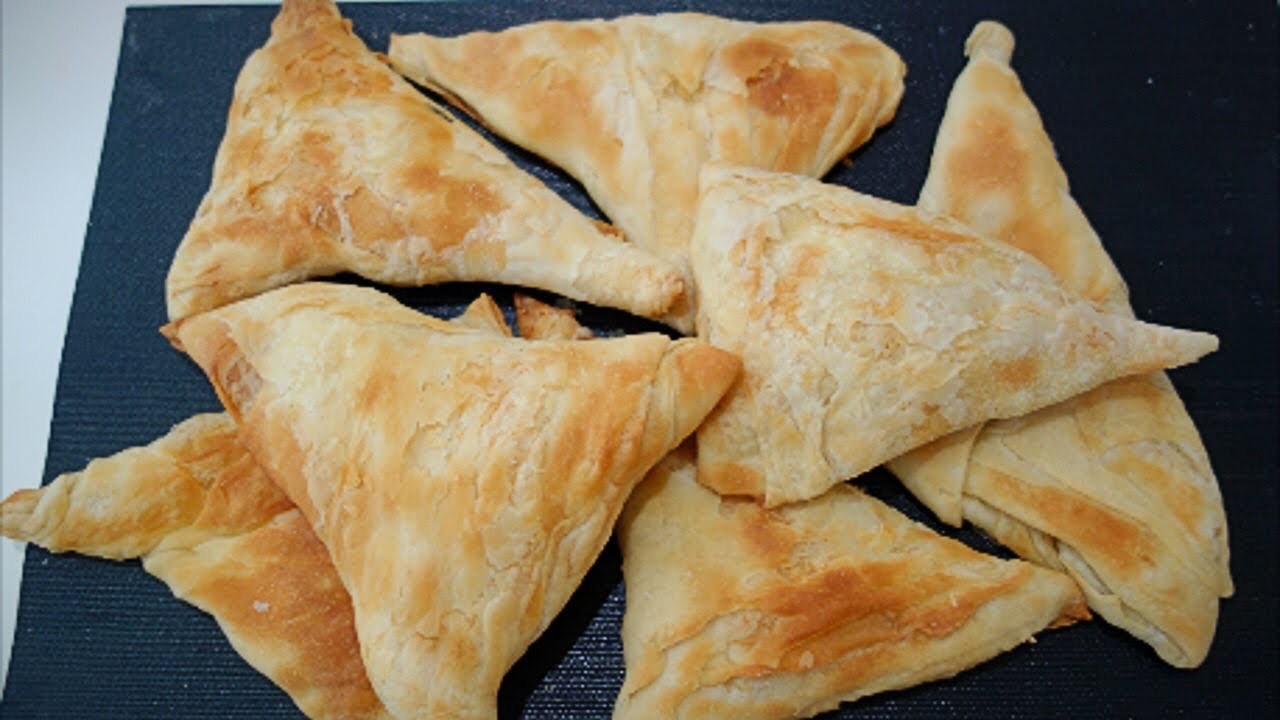
The everyday Albanian pie: hand-stretched pastry layered with cheese, spinach, leek, meat or tomato.
Speichern
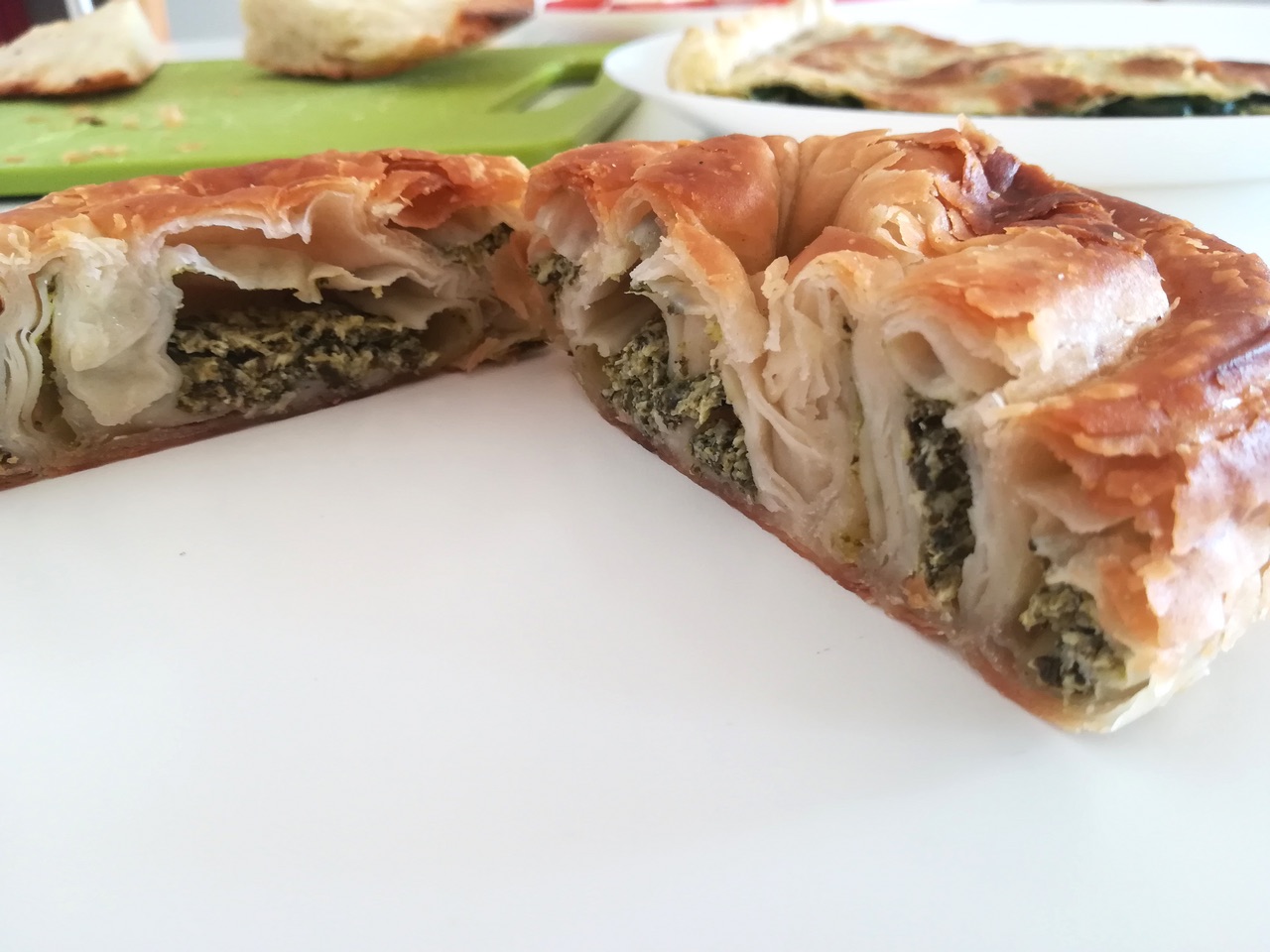
Byrek is a pie made of very thin layers of pastry with something inside — usually white cheese, spinach, leeks or minced meat. It is sold everywhere, eaten at any time of day, and is probably the food Albanians eat most often.
Byrek is a pie made of very thin layers of pastry with something inside — usually white cheese, spinach, leeks or minced meat. It is sold everywhere, eaten at any time of day, and is probably the food Albanians eat most often.
Byrek is the Albanian name for the family of pastries known across West Asia and Southeast Europe as börek, burek, or bourekas. The pastry is built from thin, flaky dough — typically filo — wrapped or layered around a filling. Fillings range from cheese and meat to spinach, potato, and pumpkin. A byrek may be prepared as a single large piece baked in a pan and cut into portions, or as individual hand-sized pastries. It is served hot or cold.
The word börek is of Turkish origin, derived from the verb bürmek, meaning 'to roll' or 'to twist', itself rooted in the Old Turkic bürük ('to gather') and the verbal root bür- ('to cover', 'to wrap', or 'to gather'). In Albanian the form is byrek. Related forms in neighbouring languages include the Greek bouréki, the Serbian-Croatian-Bosnian burek, and the Hebrew burekas. In Kosovo and some other parts of the region, the same pastry is also called pite.
The exact origin of börek is unclear, and the article notes that multiple cultures claim credit. One theory traces it to the Byzantine dish en tyritas plakountas — layered dough baked with cheese — itself descended from the classical placenta of Ancient Greek and Roman cuisine. The poet Antiphanes in the fourth century BC described a layered wheat-flour and goat's-cheese cake called plakous. In 160 BC, Cato the Elder provided a written recipe for placenta in De agri cultura, recording layers of thin dough sheets alternated with cheese and honey and baked under a preheated lid, with honey poured over the finished result.
A second theory attributes the pastry's development to the Turkic practice of preparing yufka, a thin flatbread that was often layered with butter or fillings. The earliest written mention of the Turkish word börek appears in the 12th-century epic Danishmendnâme. A 14th-century Chinese court cookbook, Yinshan Zhengyao, compiled by the Uyghur dietician Hu Sihui, contains one of the first recorded börek recipes, describing a pastry called päräk filled with chopped mutton, sheep's fat, leeks, and spices, baked on a flat iron and finished with butter or honey.
The origin of filo — the paper-thin dough used in modern börek — is itself disputed. Some attribute it to Ancient Greek cooking: Homer's Odyssey, composed around 800 BC, mentions thin breads with walnuts and honey, and a fifth-century BC poem by Philoxenos describes a cheesecake baked as a pie. Others attribute the invention of filo dough to the imperial kitchens of the Topkapı Palace in Ottoman Istanbul. Scholar Gil Marks suggests that yufka evolved into the thinner, filo-like dough by the 15th century, around the same time the modern börek was taking shape.
In Albania, byrek is traditionally made with several layers of dough rolled thinly by hand. It is sold both as small individual triangles and as one large piece cut into portions. Street vendors specialising in byrek and other traditional pastries and drinks are called byrektore. The pastry can be served cold or hot.
Fillings are numerous and vary by region and season. The most common include gjizë (a salted curd cheese), ground meat and onions prepared in a ragù style, spinach and eggs, and a custard-like filling of milk and eggs poured over pre-baked dough layers. Seasonal and regional variants include tomato and onion, peppers and beans, potato, sweet pumpkin, nettles (byrek me hithra), and kidney beans (byrek me fasule), the last being particularly popular in winter.
Albanian byrek divides broadly into two categories: house byrek (byrek shtëpie), made at home in a pan, and triangle byrek (byrek trekëndësh), the hand-held format most associated with street food. Two related Albanian pastries are lakror, a pie from southern Albania filled with greens or meats, and fli, typical of northern Albania and Kosovo, which consists of layers of flour-and-water batter, cream, and butter, traditionally baked on embers.
In Bosnia and Herzegovina, burek refers specifically to a meat-filled pastry, traditionally rolled in a spiral and then cut into sections. The same spiral shape filled with cottage cheese is called sirnica; with spinach and cheese, zeljanica; with potatoes, krompiruša. All of these are collectively referred to as pita. In 2012, Lonely Planet included the Bosnian burek in its 'The World's Best Street Food' book.
In Serbia, the recipe for the round burek is said to have been developed in the town of Niš, introduced in 1498 by a baker from Istanbul named Mehmed Oğlu. The dish then spread from southern Serbia, Kosovo, and North Macedonia to the rest of Yugoslavia. Niš hosts an annual competition and festival called Buregdžijada. In 2005, a burek weighing 100 kg with a diameter of 2 metres was made there and was considered at the time to be the world's largest. In Croatia, burek was introduced principally by Croats from Bosnia and Herzegovina and by Albanians.
In Slovenia, burek is a widely available fast food, particularly in student and urban nightlife contexts, though the article notes it carries complex cultural associations linked to its Balkan origins and is not universally embraced as part of mainstream Slovenian cuisine. Zeljanica, a spinach or chard-based burek, is common throughout the Balkans more broadly.
Burekas — the Hebrew plural form of the pastry, conjugated from the Balkan dish via Judaeo-Spanish — have been part of Sephardic Jewish cuisine since a large portion of that community migrated to the Ottoman Empire following the expulsion of Jews from Spain. They were later introduced to Israel by Sephardi immigrants from Turkey and the Balkans during Ottoman rule. It is a custom of Sephardic Jews to eat bourekas at their Shabbat breakfast meal on Saturday mornings.
In Israel, meat is a less common filling because Jewish dietary law prohibits mixing milk and meat. Many Israeli burekas, particularly those without cheese, are made with margarine-based rather than butter-based doughs to render them parve and thus permissible at any meal. Popular fillings include salty cheese (primarily feta), spinach, eggplant, and mashed potato. Other fillings recorded include mushrooms, sweet potato, chickpeas, olives, swiss chard, and tomato sauce (marketed as 'burekas pizza'). Pre-made frozen burekas are widely sold in Israeli grocery stores.
In Greece, the boureki family includes several distinct pastries. Galaktoboureko is a dessert of semolina custard baked between layers of filo and covered in syrup, historically popular also in formerly Greek regions of Anatolia. Bougatsa, said to originate in Serres, is filled with semolina custard, cheese, or minced meat between phyllo layers and is now most strongly associated with Thessaloniki. Tiropita is a cheese-and-egg mixture in buttered filo; spanakopita is a spinach pie, often also containing feta. On 1 June 2008, Serres set a record for the largest puff pastry: 182.2 kg in weight and 20 metres long, made by more than 40 bakers.
In Bulgaria, the local byurek (бюрек) is regarded as a variation of banitsa, the difference being the addition of eggs to the cheese filling. The term has extended in Bulgarian to describe other dishes using similar preparation methods, such as chushka byurek (a roasted pepper filled with cheese) and tikvichka byurek (squash with eggs).
In Algeria, bourek is a roll of pastry sheet stuffed with meat, onions, and spice, served especially during Ramadan. A distinct variant called brik or brika, a specialty of the Annaba region in eastern Algeria, is stuffed with mashed potatoes, minced meat, onions, cheese, and parsley, topped with a raw egg that cooks when the brik leaf is folded and deep-fried. In Tunisia, the brik is a thin crepe-like pastry around a filling — most famously a whole egg with tuna, harissa, onion, and parsley — and is commonly deep-fried. Among the Crimean Tatars, the most popular variety is the cheburek, a deep-fried crescent-shaped turnover of minced meat and onion, which spread widely across former Soviet-aligned countries, Turkey, and Turkmenistan during the 20th century.
Betreff
Mediterranean at the coast, Balkan and Ottoman inland, dairy-heavy in the mountains.
Essen
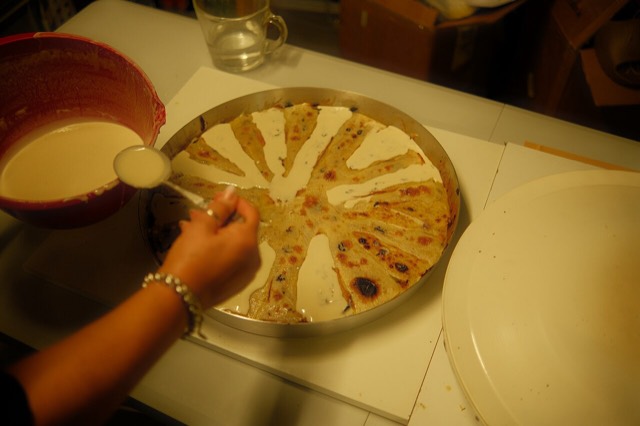
Concentric crepe layers built up one at a time under a hot metal lid — a northern highland dish that takes hours.
Leitfaden
What to order, where the regional differences are, and what a meal actually costs.
Etwas falsch auf dieser Seite? Korrekturen sind willkommen und werden gegen den Quelldatensatz geprüft. Bitte mitteilen, was falsch ist und, wenn möglich, woher die richtige Angabe stammt.