역사적 시기
Communist Albania
Forty-six years under Enver Hoxha and his successor: total collectivisation, the banning of religion, successive breaks with…
모든 주, 모든 해안, 모든 세기
안내 보기
알바니아가 처음이신가요? 모든 페이지는 세부 내용이 시작되기 전에, 열 살짜리 아이도 이해할 수 있는 평이한 설명으로 시작됩니다.
전문가 보기
기본 내용은 이미 알고 계신가요? 간단한 설명은 숨기고 핵심 내용만 바로 확인하세요. 이것이 기본 설정입니다.
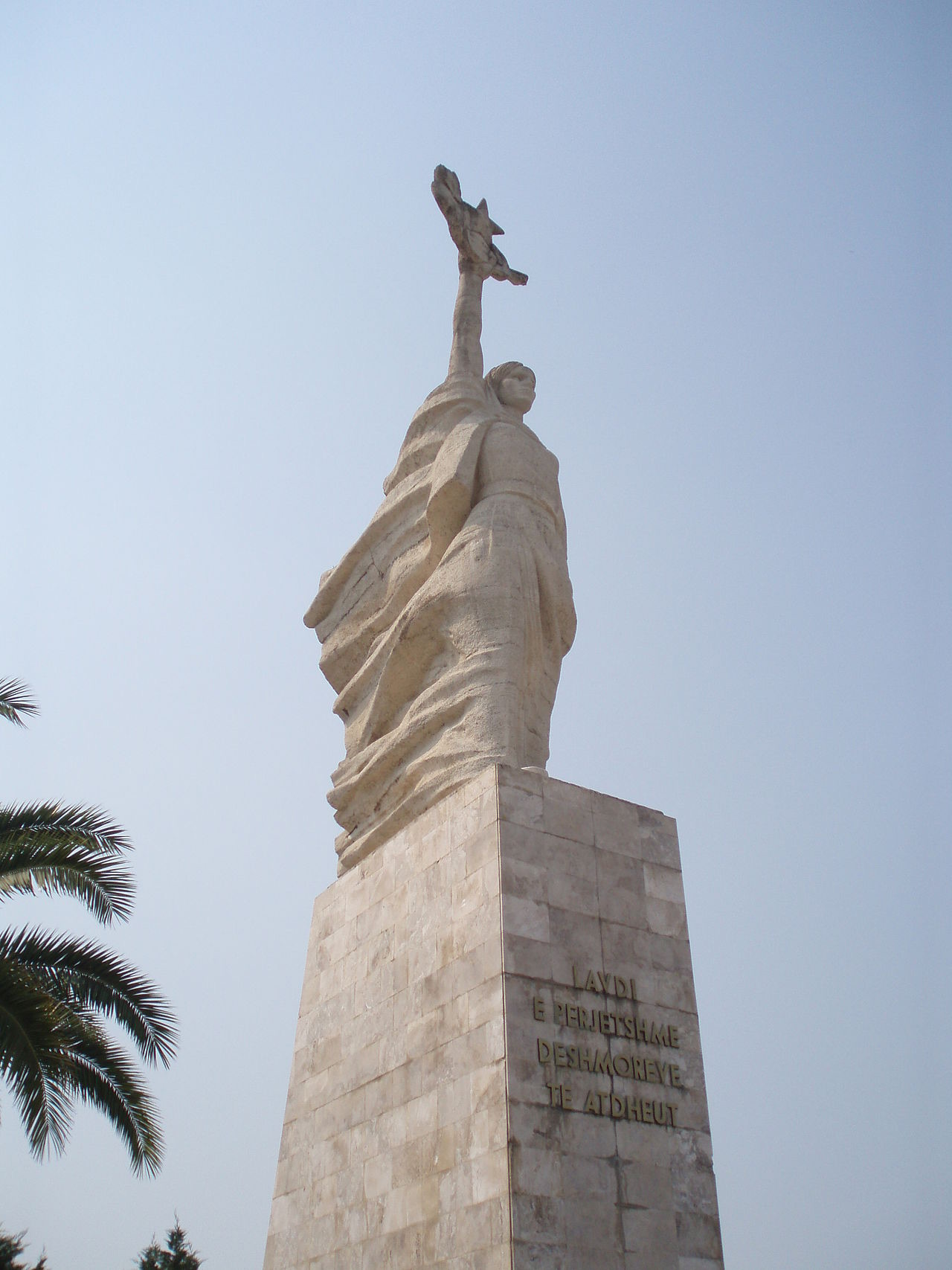
역사적 시기
Occupation, a three-way resistance, and the sheltering of Jewish refugees under besa.
저장
During the war Albania was occupied first by Italy and then by Germany. Albanians fought each other as well as the occupiers — communists, nationalists and royalists all had their own armies. Albanian families also hid Jewish refugees, and almost all of them survived.
During the war Albania was occupied first by Italy and then by Germany. Albanians fought each other as well as the occupiers — communists, nationalists and royalists all had their own armies. Albanian families also hid Jewish refugees, and almost all of them survived.
Italy's invasion of Albania on 7 April 1939 came five months before the formal outbreak of the Second World War in Europe. Mussolini's decision followed Germany's annexation of Austria and its move against Czechoslovakia, both carried out without notifying Rome in advance. Italy issued an ultimatum to the Albanian government on 25 March 1939 demanding that Albania accept Italian occupation. King Zog refused to accept money in exchange for a full Italian takeover and colonisation of the country.
The invasion force, commanded by General Alfredo Guzzoni, attacked all Albanian ports simultaneously. Original plans called for up to 50,000 men supported by 137 naval vessels and 400 aircraft; the force ultimately deployed was 100,000 men supported by 600 aircraft. Landing strengths at specific ports were recorded as 65 units at Sarandë, 40 at Vlorë, 38 at Durrës, 28 at Shëngjin, and 8 at Bishti i Pallës.
At Durrës, a force of approximately 360 Albanians—mostly gendarmes and townspeople—led by Abaz Kupi, commander of the local gendarmerie, and Mujo Ulqinaku, a marine official, attempted to resist with small arms and three machine guns. They held the Italians for several hours before Italian tanks were unloaded from ships and the resistance collapsed. Within five hours Italian troops had taken the city. By 1:30 pm on the first day, all Albanian ports were in Italian hands.
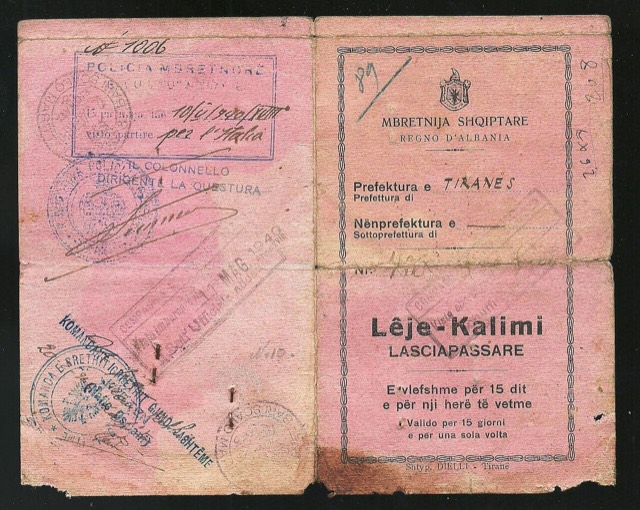
King Zog, his wife Queen Geraldine Apponyi, and their infant son Skander fled to Greece and then to London rather than remain under Italian rule. On 12 April the Albanian parliament voted to depose Zog and offer the Albanian crown to Italy's King Victor Emmanuel III in a personal union. Albania withdrew from the League of Nations on 15 April 1939, and on 3 June 1939 its foreign ministry was merged into the Italian foreign ministry. The Albanian military was formally merged into the Italian Army in 1940.
Italy set up a fascist government under Shefqet Verlaci and absorbed Albania's military and diplomatic services. The Italian Blackshirts formed four legions of Albanian Fascist Militia, initially recruited from Italian colonists in Albania and later also from ethnic Albanians. One of Mussolini's stated aims was the Italianisation of the Albanian population.
Galeazzo Ciano attempted to present the occupation in a favourable light through a series of early public gestures. He distributed 190,000 gold francs directly to the poor in Tirana, Shkodra, Vlora, Gjirokastra, Saranda, Korçë and Kukës, bypassing the usual bureaucracy. Food and clothing were distributed in poor areas, and political prisoners were released. The Italians also invested in infrastructure, agriculture, and chrome and hydrocarbon exploration. Mussolini guaranteed 22 million pounds over five years for economic development, considerably more than the approximately 8.2 million Rome had spent in Albania since the early 1920s.
Early accounts of Italian activity were broadly positive. American journalist Ruth Mitchell commented at the end of April 1939 that conditions had improved and the atmosphere had become 'brisker and more enterprising'. Even the German minister Eberhard von Pannwitz, described as perpetually critical of the Italians, commented favourably on the pace of activity, comparing it to the tempo seen in Austria after German annexation. Ciano and the Fascist regime also encouraged Albanian irredentist sentiment towards Kosovo and Chameria in an effort to win broader Albanian support for Italian rule.
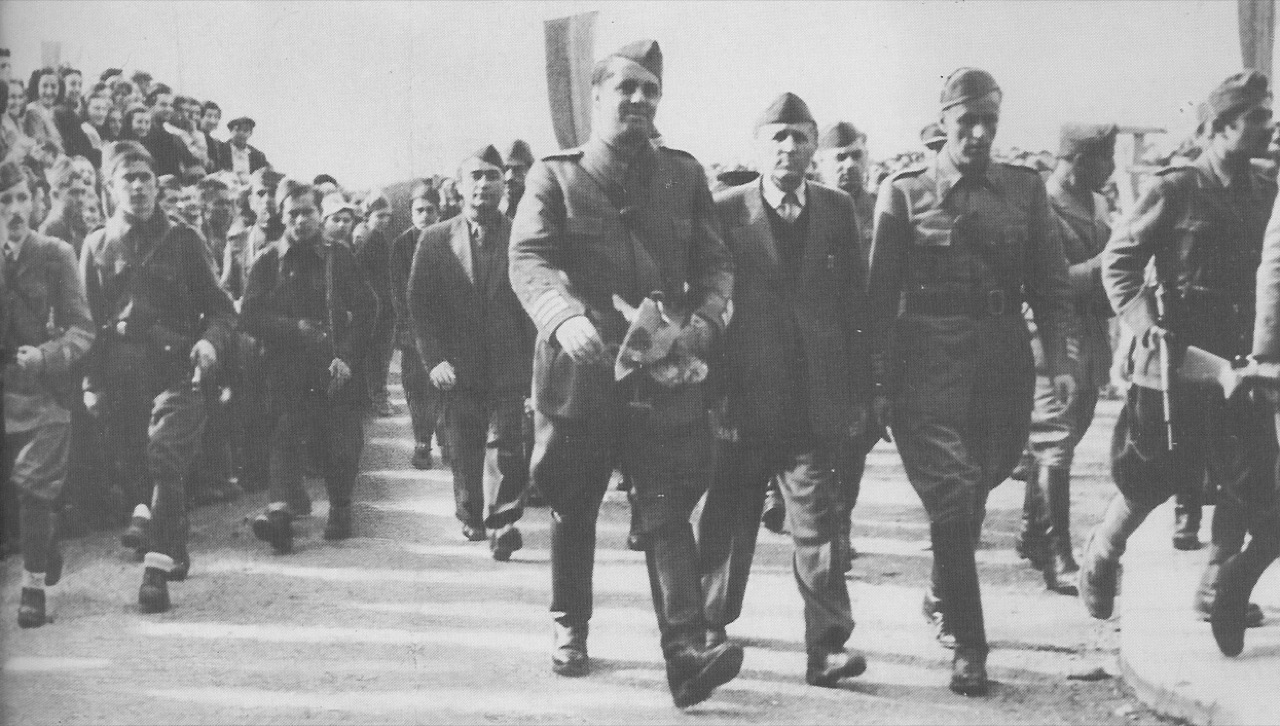
Albania entered the war period without a fully-formed Communist Party. Faced with an agrarian, predominantly Muslim society under close surveillance by King Zog's security police, the communist movement attracted very few adherents during the interwar years. After Fan Noli fled to Italy and later the United States in 1924, several of his leftist associates moved to Moscow and affiliated with the Balkan Confederation of Communist Parties and, through it, the Comintern.
In 1930 the Comintern dispatched Ali Kelmendi to Albania to organise communist cells, but the absence of an industrial working class severely limited the movement's base of support. Paris served as the main centre for Albanian communists until the fall of France in 1940, when Nazi deportations depleted their ranks. Albania's Communist Party was not formally established until November 1941, when small existing groups united in Tirana under the leadership of Enver Hoxha with a membership of 130 and an eleven-man Central Committee. Even then the party initially attracted little mass support.
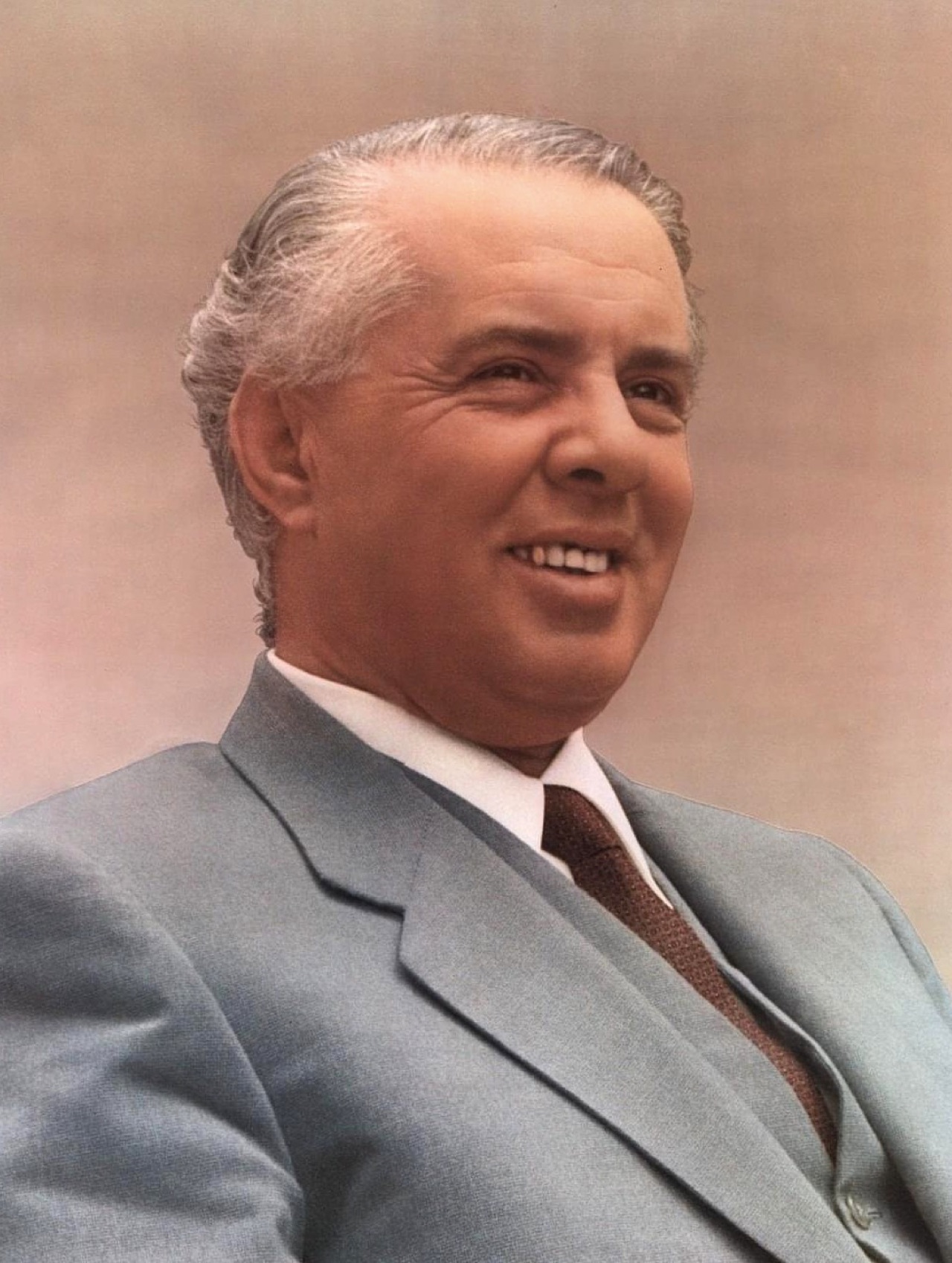
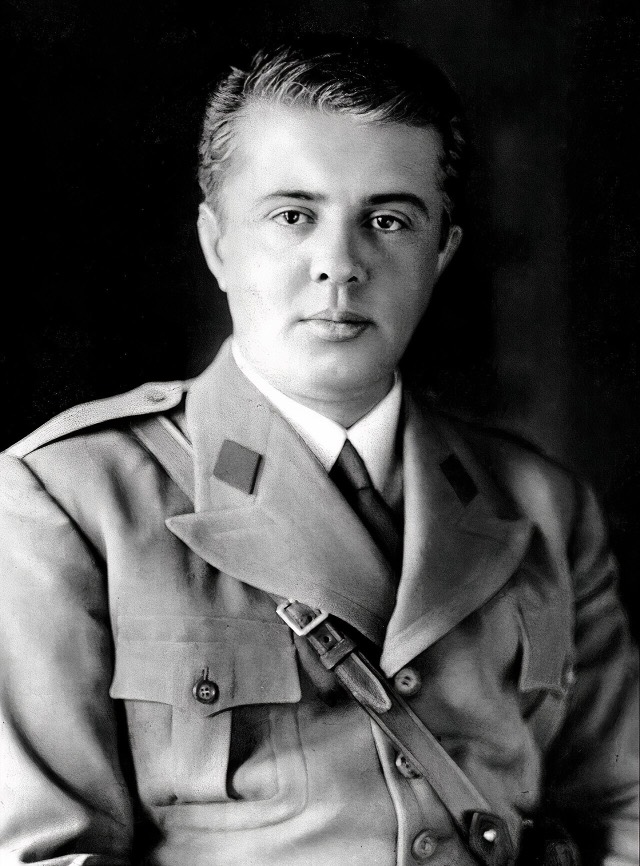
Enver Hoxha was born in 1908 to a Tosk landowner from Gjirokastër who had worked in the United States. He attended the National Lycée in Korçë, the country's leading college-preparatory school, and in 1930 enrolled at the university at Montpellier in France, where he lost an Albanian state scholarship for neglecting his studies. He subsequently moved to Paris and Brussels before returning to Albania in 1936 without completing a degree. He taught French at his former lycée and participated in a communist cell in Korçë. When the Albanian Communist Party was formed in November 1941 he was appointed general secretary, a post he held until his death in 1985.
Mehmet Shehu, also a Tosk, studied at Tirana's American Vocational School before attending a military college in Naples, from which he was expelled for left-wing political activity. He fought in the Garibaldi International Brigade during the Spanish Civil War and commanded one of that brigade's battalions. After the Spanish conflict ended he was captured and interned in France, returning to Albania in 1942. British Special Operations Executive officer David Smiley, writing in his 1984 memoirs, described Shehu as 'very capable' with 'far more military knowledge than most other Albanians', while also recording his reputation for ruthlessness and his stated claim to have personally killed seventy Italian carabinieri taken prisoner. Smiley noted that Shehu made little effort to conceal his dislike of the British.
Organised resistance began to expand after the defeats of Italian forces in the war with Greece, which opened on 28 October 1940. The promise of a Greater Albania—into which Italy offered to incorporate parts of Greek Epirus—had allowed collaborationist authorities to mobilise several thousand volunteers alongside regular troops. The collapse of the Italian offensive in Greece triggered desertions and the dispersal of volunteer units, many of whose members fled to the mountains. Partisan and combat groups reinforced by deserters grew to dozens of units totalling over 3,000 men.
In November 1940, mutinous soldiers who refused further service in Italian units fought Italian punitive forces at Lezhë, near the port of Shëngjin on the Adriatic, killing 19 and wounding 30 Italians before retreating to the mountains. In the same month a partisan detachment ambushed an Italian transport column en route to Gjirokastër. On 17 May 1941 in Tirana, a young man named Vasil Laçi attempted to assassinate King Victor Emmanuel III by shooting at him; the attempt failed and Laçi was subsequently executed.
In September 1942 the Albanian Communist Party organised a popular front, the National Liberation Movement (NLM), drawing together a number of resistance groups including several that were strongly anti-Communist. The NLM formally established the National Liberation Army (NLA) in July 1943 with Spiro Moisiu as military chief and Hoxha as political officer. By the end of 1943 the NLA had 20,000 regular soldiers and guerrillas in the field. The NLM held a nationwide party conference on 17–22 February 1943 in the village of Labinot, at which decisions were taken to create a more unified national liberation army and to conduct operations with larger forces.
A significant engagement took place on 17 May 1943, when twelve partisan detachments attacked the Italian garrison at Leskovik, which guarded an important road junction. The battle lasted three days; the garrison commander requested air support, but partisans seized the town before it arrived. Italian losses were described as several hundred soldiers along with considerable quantities of weapons and equipment. From May to July 1943 Italian losses across Albania were described as numbering in the thousands. By the summer of 1943, when Italian military capacity collapsed, almost all of Albania's mountainous interior was under resistance control.
A nationalist resistance distinct from the communist NLM emerged in October 1942, when Ali Këlcyra and Mit'hat Frashëri founded the Balli Kombëtar (National Front). The movement recruited from both large landowners and the peasantry. It supported the creation of a Greater Albania, called for the establishment of a republic and for economic and social reforms, and opposed King Zog's return. Its leaders nonetheless acted cautiously, fearing Italian reprisals or the confiscation of the landowners' estates.
Among prominent Balli Kombëtar commanders were Safet Butka and Hysni Lepenica. Butka had been interned in Italy until August 1942, after which he returned to Albania, gathered a core group of 70 experienced fighters in the Korçë area—a force capable of expanding to around 1,000 in an emergency—and led attacks on Italian positions at Floq in January 1943 and Vithkuq in March 1943. His group also recovered agricultural produce—corn, tobacco, wool—requisitioned by Italians from villages including Dardhe, Suli, Gračani, Progri, Pleshishti and Verbinj, and returned it to its owners.
After the Italian capitulation in autumn 1943, both communists and Ballists initially sought the peaceful surrender of remaining Italian forces. Hysni Lepenica went to Gërhot to negotiate the handover of weapons with the commander of the Italian 'Ferrara' division, but following intervention by a figure named Tilman the division general attacked Lepenica's group. At the subsequent battle of Gjorm, Albanian forces won a decisive engagement in which Italian Colonel Clementi was killed. Lepenica then committed suicide on learning that fighting had broken out between communists and Ballists. In autumn 1943, following full German occupation of Albania, the Balli Kombëtar made an accommodation with the Germans and formed a 'neutral government' in Tirana, continuing its conflict with the NLM and Yugoslav Partisans.
In August 1943 the Allies persuaded communist NLM and Balli Kombëtar leaders to sign the Mukje Agreement, dated 2 August 1943, in the Albanian village of Mukje. The agreement was intended to coordinate guerrilla operations against the Italian occupation. The two forces agreed to work together against Italian control of Albania.
The agreement collapsed over the question of Kosovo's postwar status. The Balli Kombëtar proposed to fight for the integration of Kosovo into Albania, while the communist representatives strongly objected, supporting the return of Kosovo to Yugoslavia in the expectation that Tito would later cede it to Albania peacefully. The nationalists labelled the partisans traitors and referred to them as 'Tito's dogs', while the partisans accused the Balli Kombëtar of collaborating with the Axis. The two sides then fought each other for approximately a year.
Following the overthrow of Mussolini's regime and Italy's surrender in 1943, five Italian divisions in Albania were disarmed by the Germans. Many Italian soldiers evaded capture and joined guerrilla forces; the sixth Italian division in Albania, the 41st Infantry Division Firenze, went over to the resistance. At the time of Italy's capitulation there were approximately 100,000 Italian soldiers in Albania, drawn from the Firenze, Parma, Perugia, Arezzo and Brennero divisions among others. There were also mass killings of Italian officers: General Ernesto Chiminello of the Perugia Division, together with 150 officers, was executed at Saranda, and 32 more officers were killed in the Kuç area three days later.
After the Italian surrender approximately 15,000 Italian soldiers surrendered to Albanian partisans. An Italian command structure called CITM (Comando Italiano Truppe alla Montagna) was formed under Arnaldo Azzi, former commander of the Firenze Division, to coordinate Italian resistance alongside Albanian partisans. Its units were dispersed in October–November 1943 by a German winter offensive; surviving officers were attached to British missions and repatriated to Italy in August 1944. Some 2,150 Italians expressed a desire to continue fighting within Albanian partisan units, including 472 in partisan shock brigades, 401 in logistics roles and 1,277 attached to local commands.
The communists took control of most of Albania's southern cities after Italy's capitulation, with the exception of Vlorë, which remained a Balli Kombëtar stronghold. Tirana was liberated by the partisans on 17 November 1944 after a 20-day battle. Albania was fully liberated from German occupation on 29 November 1944. By October 1944 the National Liberation Army comprised 70,000 regulars. Albanian forces also participated in the liberation of Kosovo and assisted Yugoslav communist forces in parts of Montenegro and southern Bosnia and Herzegovina.
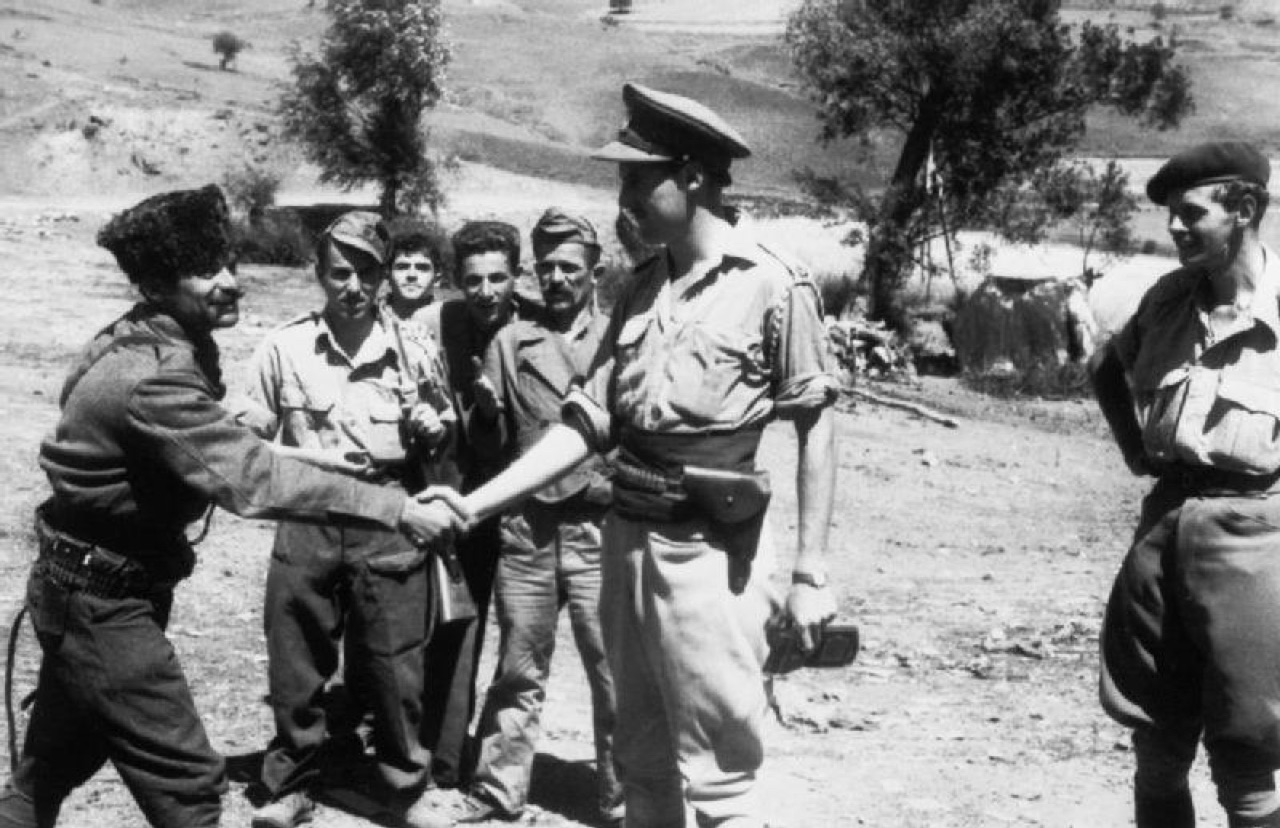
British liaison operations into Italian-occupied Albania were attempted in early 1941 from neutral Yugoslavia but were quickly abandoned after the German and Italian conquest of Yugoslavia. No further attempt to contact Albanian resistance groups was made until 17 April 1943, when M.O.4, a branch of the Special Operations Executive (SOE), dispatched a mission commanded by Lieutenant Colonel 'Billy' MacLean, with Major David Smiley as second-in-command. Rather than parachute directly into Albania, the mission was dropped into north-west Greece, where British parties were already working with Greek guerrillas, and then crossed into Albania on foot and by mule.
After several failed attempts, the mission made contact with the NLM. The first supply drop of arms and equipment was received on 27 June 1943. The bulk of supplies from this and subsequent drops went to the NLM, which was the dominant group in southern Albania, and was used to equip the 'First Partisan Brigade'. Later in 1943 SOE enlarged its mission. The new commander was Brigadier Edmund Frank Davies of the Royal Ulster Rifles—nicknamed 'Trotsky' at Sandhurst—with Lieutenant Colonel Arthur Nicholls as Chief of Staff. MacLean and Smiley were withdrawn to SOE's base at Bari in southern Italy. They noted that the Communist-led NLM appeared more interested in securing postwar political power than in fighting the Germans, but recommended that SOE continue supplying them while seeking agreement between the NLM and other resistance movements.
In January 1944 German forces attacked and overran the British mission headquarters. Brigadier Davies was captured. Lieutenant Colonel Nicholls died of exposure and post-operative shock after leading survivors to safety. During the remainder of 1944, SOE continued to supply the NLM despite protests from MacLean and Smiley—by then liaising with Abaz Kupi's group and the Balli Kombëtar in northern Albania—that the NLM was using Allied arms against domestic political opponents rather than against German forces. Smiley, MacLean and Julian Amery were evacuated to Italy at the end of October 1944. SOE declined to evacuate Abaz Kupi on the same vessel; he escaped independently and was picked up by a Royal Naval vessel in the Adriatic.
The communist partisans consolidated control of much of southern Albania in January 1944, though German attacks pushed them out of some areas until June. On 29 May 1944 the National Liberation Front held the Congress of Përmet, at which an Anti-Fascist Council of National Liberation was chosen to act as Albania's administration and legislature. Hoxha became chairman of the council's executive committee and supreme commander of the National Liberation Army. Communist forces defeated the last Balli Kombëtar units in southern Albania by mid-summer 1944, and by the end of July had entered central and northern Albania encountering only scattered resistance. A provisional government formed at Berat in October 1944 administered Albania with Hoxha as prime minister.
The war left Albania in a severely damaged condition. The Center for Relief to Civilian Populations in Geneva reported Albania as one of the most devastated countries in Europe. The United Nations Relief and Rehabilitation Administration reported approximately 30,000 Albanian war dead, 200 destroyed villages, 18,000 destroyed houses and around 100,000 people left homeless, though Albanian official statistics claim higher figures and no reliable count is considered definitive. A separate estimate cited elsewhere in the same source states that 60,000 houses were destroyed and approximately 10 percent of the population was left homeless.
The Allies never recognised an Albanian government in exile or King Zog, and the question of Albania or its borders was not raised at any of the major wartime conferences. The NLM's close ties with Yugoslav communists, who also enjoyed British support, ensured that Belgrade would play a significant role in Albania's postwar order. Thousands of Cham Albanians were expelled from Greece, accused of collaborating with Axis occupation forces. During the Axis occupation of Kosovo, Albanian collaborators persecuted Serb and Montenegrin settlers; between 70,000 and 100,000 were expelled or transferred to concentration camps in Pristina and Mitrovica, while nearly 10,000 are estimated—the article presents this as an estimate—to have been killed by the Vulnetari and other Albanian paramilitaries.
역사적 시기
Forty-six years under Enver Hoxha and his successor: total collectivisation, the banning of religion, successive breaks with…
인물
The leader who took Albania out of the Soviet bloc, then out of the Chinese one, and banned religion outright.
역사적 시기
Italy invaded on 7 April 1939; Albania was annexed under the Italian crown until Italy's surrender.
제목
The customary obligation of keeping one's word — the principle behind Albania's wartime sheltering of Jewish refugees.
이 페이지에 오류가 있습니까? 수정 제안을 환영하며, 출처 기록과 대조하여 검토합니다. 잘못된 내용과 가능하다면 올바른 수치의 출처를 알려 주십시오.