도시 · Berat
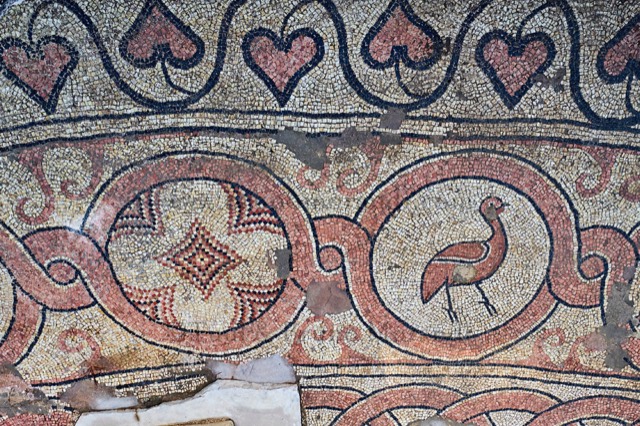
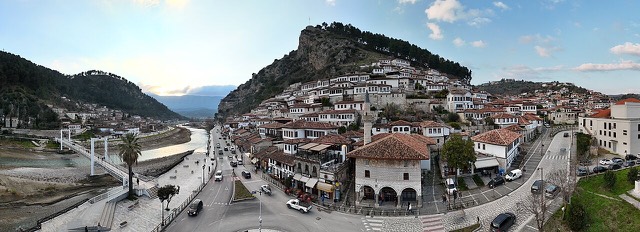
Berat
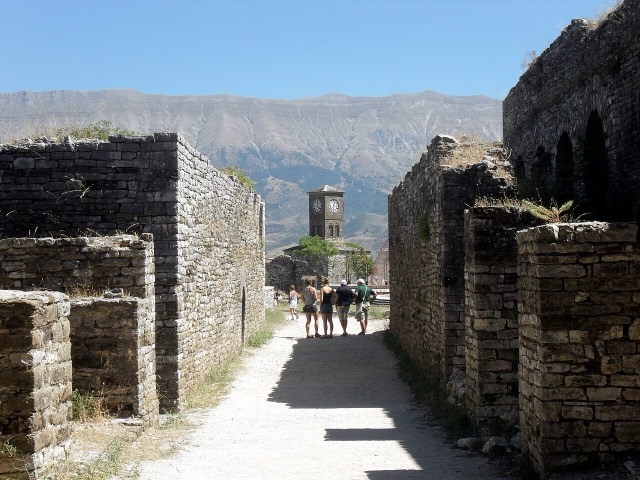
The 'city of a thousand windows': an Ottoman hill town under a still-inhabited castle, UNESCO-listed since 2008.
모든 주, 모든 해안, 모든 세기
안내 보기
알바니아가 처음이신가요? 모든 페이지는 세부 내용이 시작되기 전에, 열 살짜리 아이도 이해할 수 있는 평이한 설명으로 시작됩니다.
전문가 보기
기본 내용은 이미 알고 계신가요? 간단한 설명은 숨기고 핵심 내용만 바로 확인하세요. 이것이 기본 설정입니다.
역사적 시기
Four and a half centuries in the empire — mass conversion to Islam, powerful local pashas, and eventually a national movement.
저장
Albania was part of the Ottoman Empire for more than 400 years. Over that time most Albanians became Muslim. Some Albanians rose very high in the empire — several grand viziers were Albanian. Powerful local rulers like Ali Pasha ran their own near-independent territories.
Albania was part of the Ottoman Empire for more than 400 years. Over that time most Albanians became Muslim. Some Albanians rose very high in the empire — several grand viziers were Albanian. Powerful local rulers like Ali Pasha ran their own near-independent territories.
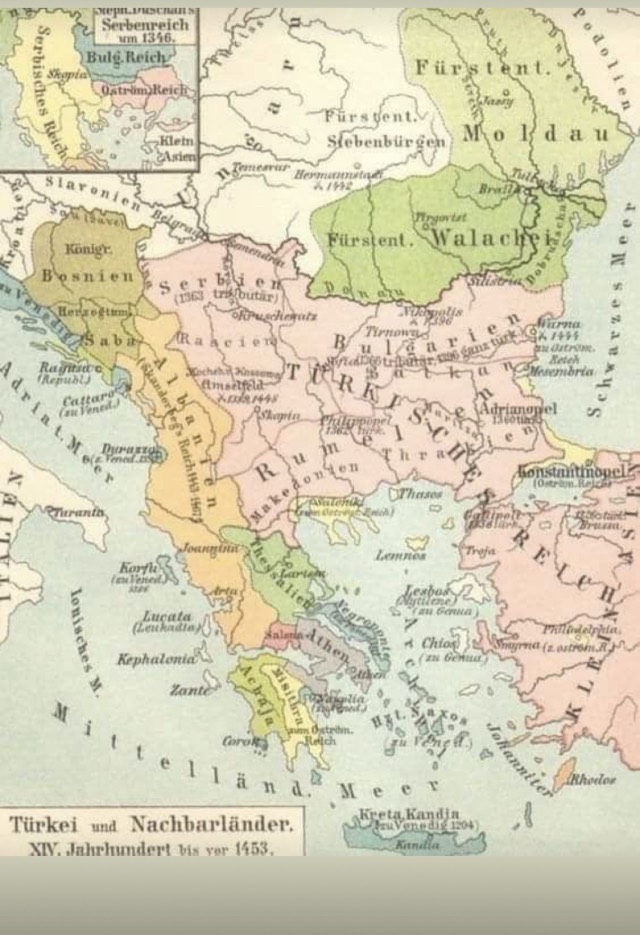
The Ottomans expanded from Anatolia into the Balkans in the mid-14th century, entering European territory in 1352. Their first direct military involvement in Albanian lands came in 1385, when Karl Thopia, the Albanian ruler of Durrës, appealed to the sultan for support against his rival, Balša II of the Balsha noble family. An Ottoman force marched into Albania along the Via Egnatia and defeated Balša II at the Battle of Savra. This intervention gave the Ottomans a foothold but not immediate administrative control.
Ottoman pressure across the broader Balkans eased briefly after 1402, when the Mongol leader Timur (Tamerlane) attacked Anatolia from the east, killed the sultan, and triggered a civil war within the empire. When order was restored, the Ottomans resumed their western expansion, culminating in the fall of Constantinople to Sultan Mehmed II in 1453. In the Albanian territories, garrisons were placed throughout southern Albania by the 1420s. Gjirokastra became the county town of the Sanjak of Albania in 1420, and formal jurisdiction was established in central Albania by 1431, with Krujë later serving as the sanjak's center after Gjergj Arianiti defeated the Ottomans between 1431 and 1435.
The Ottomans allowed Albanian clan chiefs to retain their positions, land, and authority in exchange for tribute, the occasional dispatch of sons to the Ottoman court as hostages, and the provision of auxiliary troops. Many Albanian clans and principalities, however, did not recognize Ottoman authority and refused to pay tribute. In 1431, several Albanian princes — including Gjergj Arianiti, the Zenevisi family, Andrea Thopia, and Gjon Kastrioti — began a war against the empire. Kastrioti was defeated, but Arianiti won four battles and Thopia achieved a separate victory, outcomes that created conditions for the organised resistance that would follow.
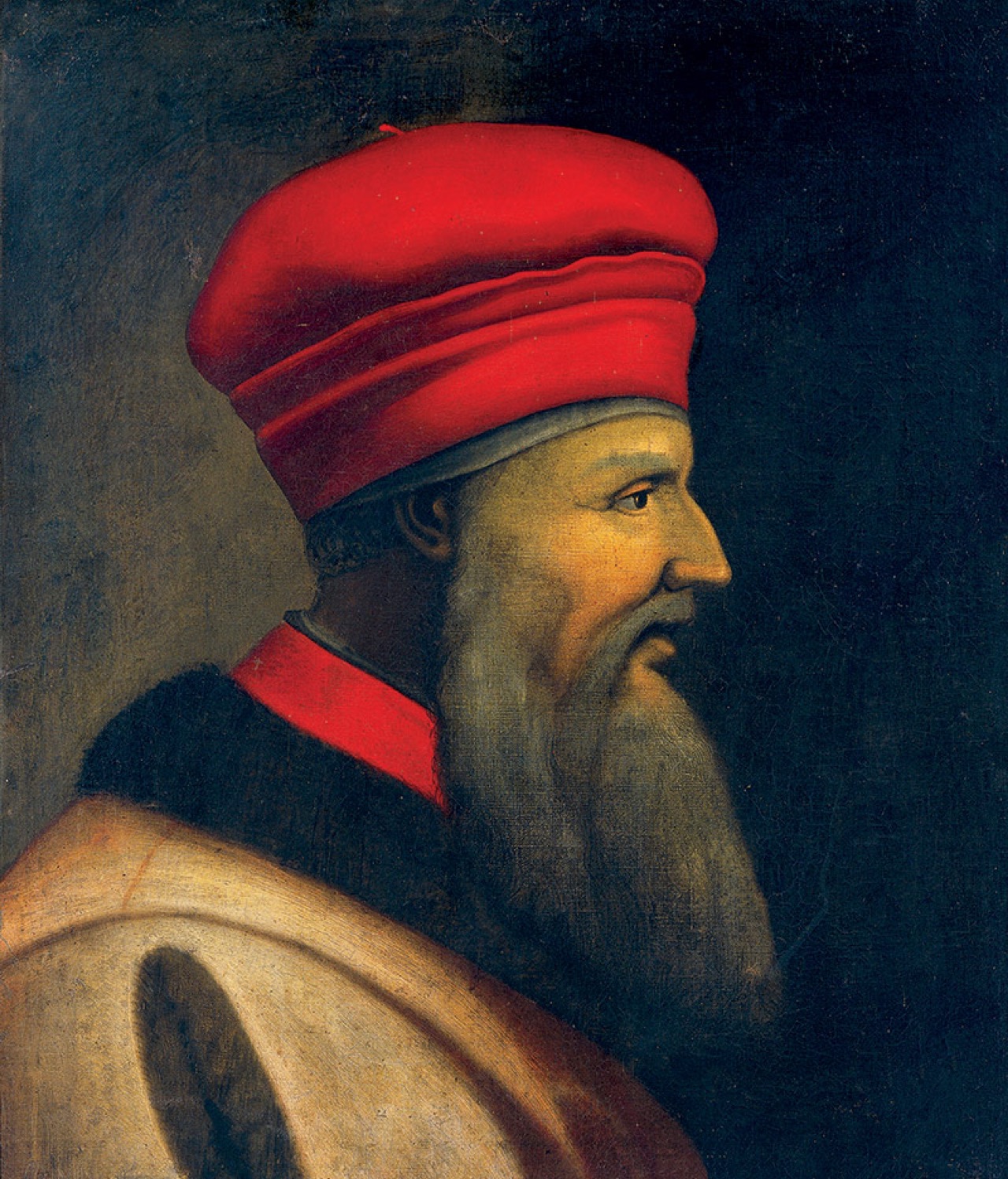
Gjon Kastrioti of Krujë submitted to Ottoman suzerainty in 1425 and was compelled to send his four sons to the Ottoman capital for military training. The youngest, George Kastrioti (1403–68), converted to Islam, was renamed Iskander, and became one of the main Ottoman generals, campaigning in Asia Minor and Europe. Appointed to administer a Balkan district, he became known as Skanderbeg. In 1443, after Ottoman forces under his command suffered a deliberate defeat near Niš, he rushed to Krujë, tricked a Turkish pasha into surrendering the fortress, renounced Islam, embraced Roman Catholicism, and declared a holy war against the Ottoman Empire.
On 1 March 1444, Albanian chieftains assembled in the cathedral of Lezhë alongside the prince of Montenegro and delegates from Venice, and proclaimed Skanderbeg commander of the Albanian resistance. Local leaders retained control of their own districts. An Albanian force estimated at 10,000–15,000 men, fighting under a red flag bearing Skanderbeg's heraldic emblem, held off Ottoman campaigns for twenty-four years under his command and for a further eleven years after his death in 1468.
The resistance produced notable military results. The Albanians repulsed three sieges of Krujë, routing Sultan Murad II in person in 1450 and repelling Sultan Mehmed II in 1466 and 1467. In 1461, Skanderbeg intervened in southern Italy in support of his suzerain, King Alfonso I of Naples. In 1449, Albanians also defeated Venice in three battles during the Albanian–Venetian War. The government under Skanderbeg was at times unstable, and some local Albanian rulers periodically cooperated with the Ottomans against him. With political and limited material support from the Kingdom of Naples and the Vatican, resistance continued for thirty-six years in total.
Krujë fell to the Ottomans in 1478, ten years after Skanderbeg's death. Shkodër resisted a first siege in 1474 and a stronger siege in 1478, but ultimately surrendered in 1479 after Venice ceded it to the Ottomans by treaty. The Venetians evacuated Durrës in 1501, and Himara fell in 1509. By 1488, the Ottomans had consolidated control over the ethnic Albanian territories and imposed wide-ranging administrative and political changes.
The fall of these fortresses triggered a significant exodus of Albanian nobles. They fled primarily to Venice and Italy — especially to the Kingdom of Naples and Sicily — but also to Romania and Egypt. Most of the Albanian refugees belonged to the Orthodox Church. Over subsequent centuries, the Albanian communities in Italy exercised a notable influence on the Albanian national movement, and Albanian Franciscan priests, the majority of them descended from those émigrés, played a documented role in preserving Catholicism in Albania's northern regions.
Skanderbeg's resistance acquired lasting symbolic importance. His family's banner — a black two-headed eagle on a red field — became the flag under which the Albanian national movement rallied centuries later. The Albanian declaration of independence in 1912 brought an end to Ottoman rule over the territory of present-day Albania, completing a process that the resistance of the 15th century had delayed by several decades.
The Ottoman sultan governed as the leader of a religious state whose stated purpose was to defend and propagate Islam. Non-Muslims paid additional taxes and held inferior legal status, but could retain their religion and a substantial degree of local autonomy. Conversion to Islam allowed individuals among the conquered to enter the privileged stratum of society. Senior Ottoman officials were, in the empire's early centuries, bondsmen of the sultan — children of Christian subjects selected in childhood, converted to Islam, and educated for imperial service. Some were prisoners of war, others gifts; still others were obtained through the devşirme, the tribute of children levied across the empire's Balkan lands.
The Ottomans divided Albanian-inhabited lands among a number of districts, or vilayets. They did not initially stress conversion to Islam; formal conversion began with Albanian nobles in the late 14th and early 15th centuries and spread gradually to the wider population. By 1479, with the exceptions of Durrës, Ulcinj, and Bar, the entire country was under Ottoman suzerainty. Many Albanian janissaries were conscripted as young boys from Christian Albanian families, and high-ranking Ottoman officials frequently maintained Albanian bodyguards.
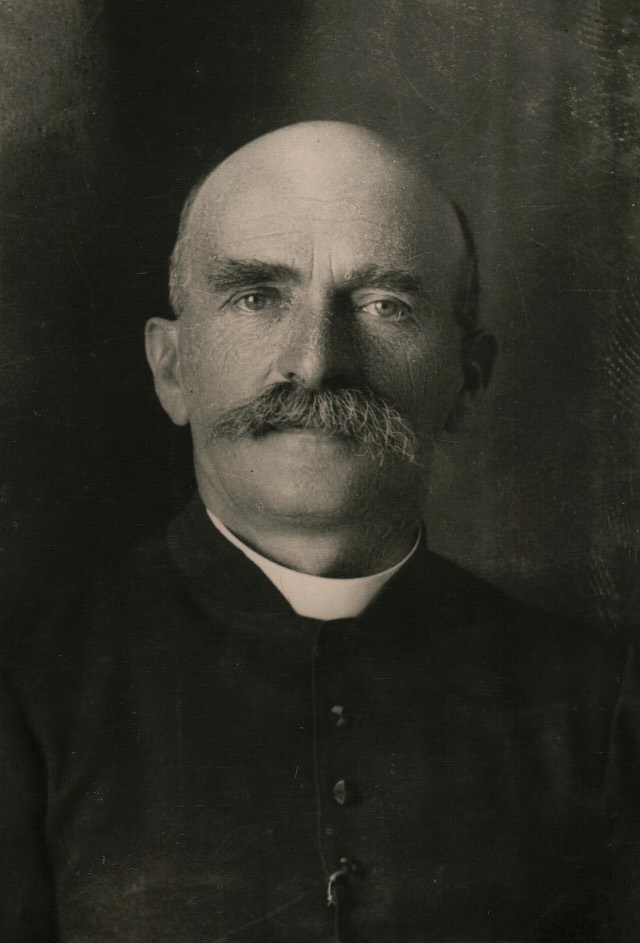
In the northern mountains, Gheg herders maintained a self-governing clan society. An association of clans was called a bajrak, led by a clan chief or bajraktar, who exercised patriarchal powers including arranging marriages, mediating quarrels, and administering punishments. The tribesmen of the northern Albanian mountains recognized no law other than the Code of Lekë Dukagjini (Kanuni i Lekë Dukagjinit), a collection of tribal laws transcribed in the 14th century by a Roman Catholic priest, which regulates subjects including blood vengeance. Taxes were difficult or impossible for the Ottomans to collect in these mountain territories due to the terrain and the resistance of the highlanders, and some tribes maintained their independence throughout the centuries of Ottoman rule.
The Albanian population gradually converted to Islam through the spread of Bektashism and through the material advantages available in Ottoman trade networks, the bureaucracy, and the army. The first Albanians to convert were members of the Christian nobility, who retained political and economic privileges through the timar system and by joining the emerging class of timariot sipahis. Many Albanians were initially recruited into the janissary corps and the devşirme, and conversion to Islam subsequently opened paths to military and political careers. In the 16th and early 17th centuries, Albanians converted to Islam in large numbers; within a century, the Muslim Albanian community had become the largest religious community in the country.
Albanians came to occupy a position within Ottoman power structures disproportionate to their population. Approximately 48 grand viziers were of Albanian origin, collectively managing the Ottoman state for roughly 200 years. In the second half of the 17th century alone, the Albanian Köprülü family provided six grand viziers. These officials fought corruption, temporarily stabilised central government control over local beys, and achieved military expansions that extended Ottoman territory to the gates of Vienna and into what the article describes as middle Ukraine. Albanian soldiers — janissaries and sipahis — and mercenaries (bashi-bazouks) formed a significant element of Ottoman military forces from the early 1600s to the mid-1800s, until the reforms of the Tanzimat period.
Among the most prominent Albanians in Ottoman service listed in the source are: Koca Davud Pasha, Koca Sinan Pasha, Köprülü Mehmed Pasha, Köprülüzade Fazıl Ahmed Pasha, Sedefkar Mehmed Agha (architect of major imperial buildings), Safiye Sultan (Haseki Sultan of Murad III and Valide Sultan as mother of Mehmed III), and Muhammad Ali of Egypt. The article also lists Murat Reis the Elder, Arnaut Mami, and the poet Nezim Frakulla (1680–1760) among notable figures of the period.
Bektashism, a mystic Islamic sect probably founded in the late 13th century in Anatolia, became the official faith of the janissaries in the late 16th century and subsequently spread into Albanian-populated lands. The Bektashi sect contains features distinct from normative Islam: it emphasises man as a reflection of the Divine, women participate veiled in ceremonies, and wine is used in rituals despite the prohibition on alcohol in most Islamic interpretations of Sharia. As early as the 18th century, the order had taken hold in Albanian territories.
After Sultan Mahmud II disbanded the janissaries in 1826 — in the event known as the Auspicious Incident — the Bektashis were reduced to a fringe religious group concentrated in southern Albania. Despite this marginalisation, Bektashi leaders played notable roles in the Albanian nationalist movement of the late 19th century.
Four centuries of Ottoman rule divided Albanians along religious, regional, and tribal lines. In the north, Gheg communities were predominantly Catholic or converted to Islam but maintained significant independence. In the south, Tosk communities were divided between Muslim and Orthodox adherents. The Ottoman authorities initially did not press conversion; the article notes that prominent viziers and pashas of Albanian origin were appointed to their posts long before the majority of Albanians professed Islam.
The weakening of Ottoman central authority and the decline of the timar system produced conditions of near-anarchy in Albanian-populated lands during the 18th century. Two main centres of Albanian power emerged: Shkodër, under the Bushati family, and Ioannina, under Ali Pasha of Tepelenë. Both cooperated with the Sublime Porte when it suited their interests and acted independently when it was advantageous. The Pashalik of Shkodra was established in 1757 under the Bushati family; the Pashalik of Berat was established subsequently; and the Pashalik of Ali Pashë Tepelena was established in 1787.
Kara Mahmud Bushati sought to establish a de jure independent principality, expanding into present-day Montenegro, northern Albania, Kosovo, Macedonia, and southern Serbia through alliances with highland tribes and by playing Austria and Russia against the Sublime Porte. In 1785, his forces attacked and conquered Montenegrin territory. Austria offered to recognise him as ruler of all Albania if he allied with Vienna against the Porte. In 1788, he sent the sultan the heads of an Austrian diplomatic delegation, after which the Ottomans appointed him governor of Shkodër. In 1796, while attempting to subjugate the last free tribes in Montenegro, he was killed in an ambush in northern Montenegro.
His brother Ibrahim Bushati cooperated with the Porte until his death in 1810. Ibrahim's successor, Mustafa Pasha Bushati, proved resistant to central authority despite participating in Ottoman campaigns against Greek revolutionaries and rebel pashas. Ali Pasha of Tepelenë (1740–1822) governed the Ioannina region; the British traveller Charles Robert Cockerell, visiting Albania in 1814, recorded that Ali Pasha had made roads, fortified borders, suppressed brigandage, and raised Albania 'into a power of great importance in Europe.' At their peak, the Albanian Pashaliks extended, according to the article, from Bosnia south to the Peloponnese. The last pashalik, that of the Bushatis, ended in 1831.
An Ottoman-Albanian commander named Mehmet Ali of Egypt (Muhammad Ali, 1769–1849) seized power in Egypt in 1805 using Albanian mercenaries and established a dynasty that the article states lasted until 1954. By 1824 he had taken control of Sudan and large regions of the Arabian Peninsula. In 1831 he seized the Levant, and in 1833 his forces defeated the Ottomans in open battle.
The conflict escalated into what is known as the Egyptian–Ottoman War of 1839–1841. According to the article, it was only the intervention of the European Powers that prevented Mehmet Ali and his son Ibrahim Pasha from seizing Constantinople and replacing the Ottoman dynasty with an Albanian one — a resolution known as the Oriental Crisis of 1840. Albanian communities established during this period persist, according to the article, in Egypt and parts of the Levant including Syria and Palestine.
Ottoman-Albanian relations deteriorated sharply in 1826 when Sultan Mahmud II carried out the Auspicious Incident — the violent dissolution of the janissary corps. The turmoil that followed disrupted the Balkan Muslim leadership in Rumelia and provoked new rounds of revolt and instability. After suppressing the Bushati pashalik and Ali Pasha, the Sublime Porte introduced the Tanzimat reforms, aimed at reasserting central control over fractious pashas. The timars were formally converted into large individual landholdings, particularly in the lowlands.
In 1835, the Porte divided Albanian-populated lands into the vilayets of Janina and Rumelia, dispatching officials from Constantinople to administer them. This provoked revolts in 1843–1844, which were suppressed by the Ottoman army. After 1865, the Albanian lands were further redivided among the vilayets of Scutari, Janina, and Monastir. The reforms reduced the privileges of highland Albanian chieftains without offering compensation; authorities eventually abandoned efforts to control them. In 1876, Muslim northern Albanian tribes participated in Ottoman campaigns that devastated the territory of the Mirditë Catholics. Large numbers of Tosks emigrated to Romanian, Egyptian, Bulgarian, and Italian Albanian communities, and later to the United States.
In July 1908, a Young Turk rebellion in Macedonia, supported by an Albanian uprising in Kosovo and Vardar Macedonia, escalated into widespread insurrection and mutiny within the imperial army. Sultan Abdül Hamid II agreed to restore constitutional rule. Many Albanians participated in the uprising expecting autonomy within the empire. The Young Turks lifted the Ottoman ban on Albanian-language schools and on writing the Albanian language, and as a direct consequence Albanian intellectuals meeting in Manastir (present-day Bitola) in 1908 chose the Latin alphabet as the standard script for Albanian.
The Young Turks were committed to maintaining the empire and made no substantive concessions to the nationalist groups within its borders. After securing the abdication of Abdül Hamid II in April 1909, the new authorities levied new taxes, outlawed guerrilla groups and nationalist societies, extended Constantinople's control over the northern Albanian mountain men, legalised the bastinado even for minor offences, banned the carrying of rifles, denied the existence of an Albanian nationality, banned the Albanian national flag, and used the Muslim clergy to press for the adoption of the Arabic alphabet in place of the Latin script chosen at Manastir.
New Albanian uprisings began in Kosovo and the northern mountains in early April 1910. Ottoman forces suppressed these after three months, outlawed Albanian organisations, disarmed entire regions, and closed schools and publications. A 1911 uprising by mountain tribes — supported by Montenegro, which was preparing to seize Albanian-populated territory — grew into a widespread revolt. Unable to maintain control by force, the Ottoman government granted concessions on schools, military recruitment, and taxation, and sanctioned the use of the Latin script. It refused, however, to unite the four Albanian-inhabited vilayets into a single Albanian vilayet. The territory of the present-day Republic of Albania remained part of the Ottoman Empire until the declaration of independence in 1912, during the Balkan Wars.
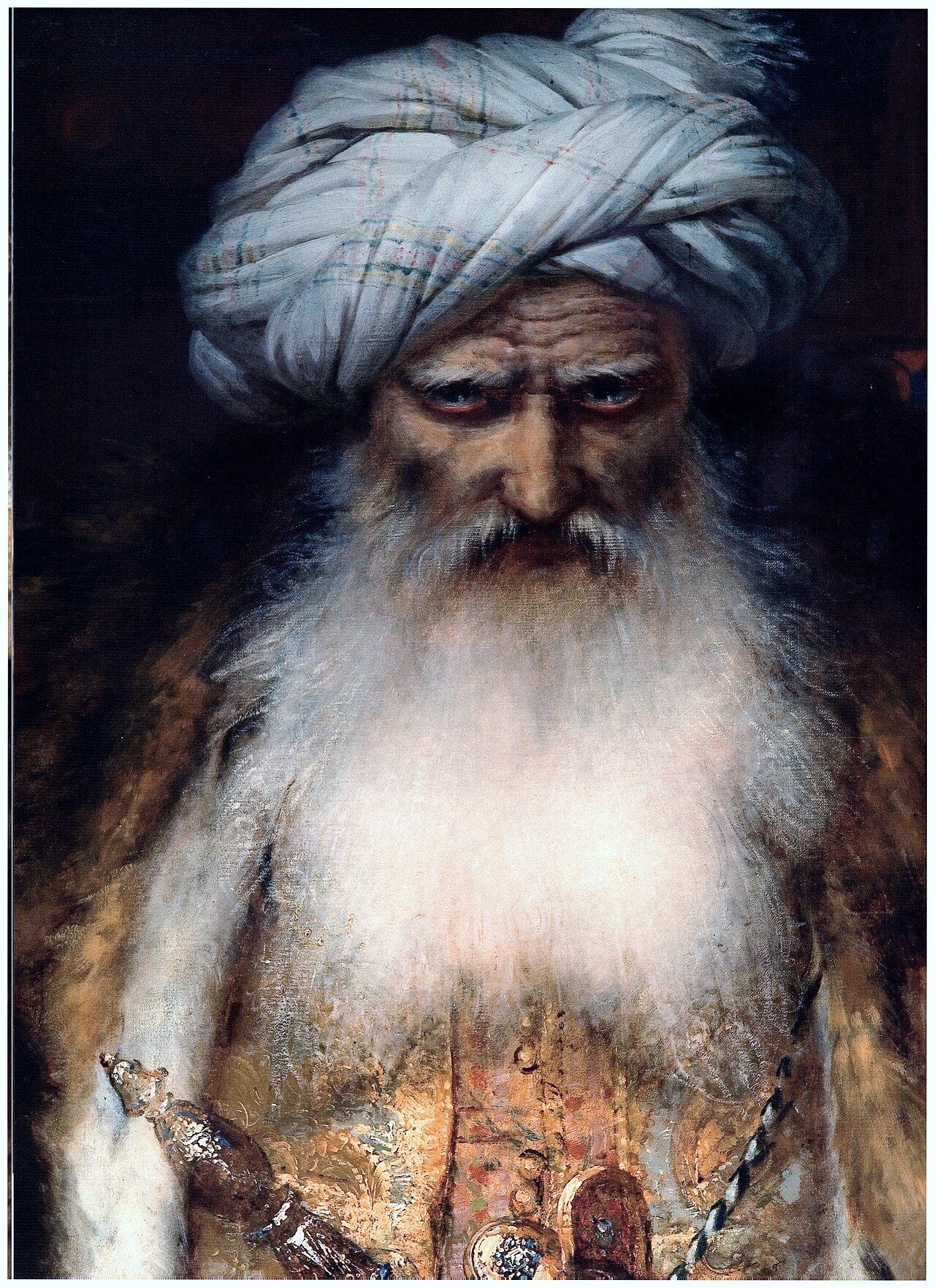
도시 · Berat
The 'city of a thousand windows': an Ottoman hill town under a still-inhabited castle, UNESCO-listed since 2008.
도시 · Gjirokastër
The 'stone city': slate-roofed tower houses on a steep slope beneath one of the Balkans' largest castles.
역사적 시기
The Rilindja: the League of Prizren, the fight for an alphabet, and the first Albanian-language school.
역사적 시기
Twenty-five years in which a coalition of Albanian nobles held off the Ottoman Empire at its height.
인물
The 'Lion of Ioannina': an Ottoman governor who built his own state, courted Britain and France, and was finally killed for it.
제목
Illyrian kingdoms, Roman roads, five Ottoman centuries, twenty-eight years of independence, forty-six years of the strictest…
이 페이지에 오류가 있습니까? 수정 제안을 환영하며, 출처 기록과 대조하여 검토합니다. 잘못된 내용과 가능하다면 올바른 수치의 출처를 알려 주십시오.