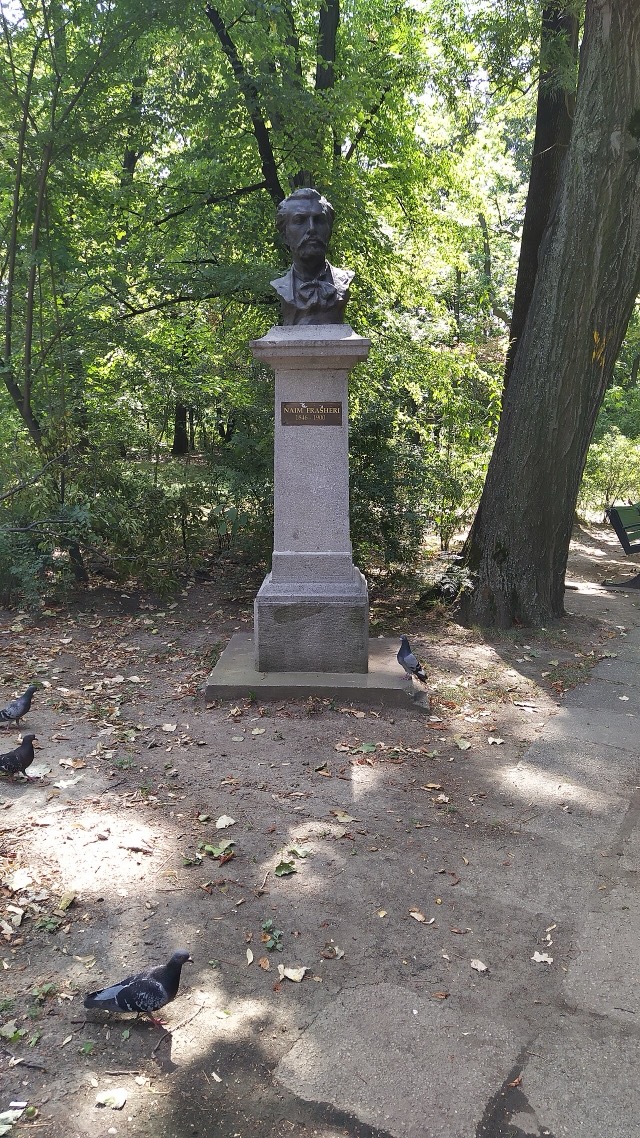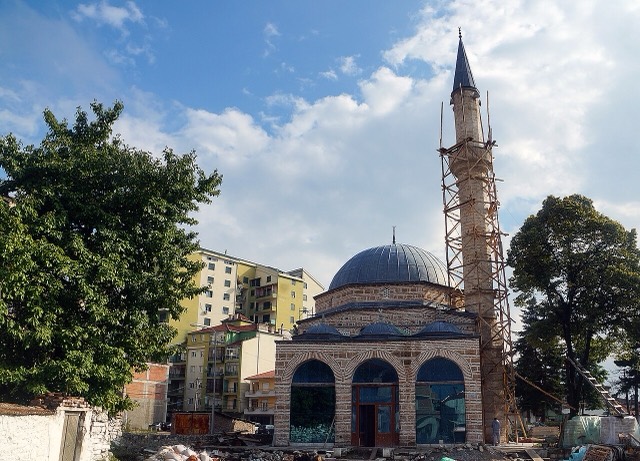
Ville · Korçë
Korçë
The highland city of serenades, the first Albanian-language school, and the country's oldest brewery.
Chaque comté, chaque côte, chaque siècle
Vue guidée
Nouveau en Albanie ? Chaque page s'ouvre sur une explication en langage clair, accessible à un enfant de dix ans, avant d'entrer dans le détail.
Vue expert
Vous connaissez déjà les bases. Directement à l'essentiel, les explications simples étant masquées. Il s'agit du réglage par défaut.
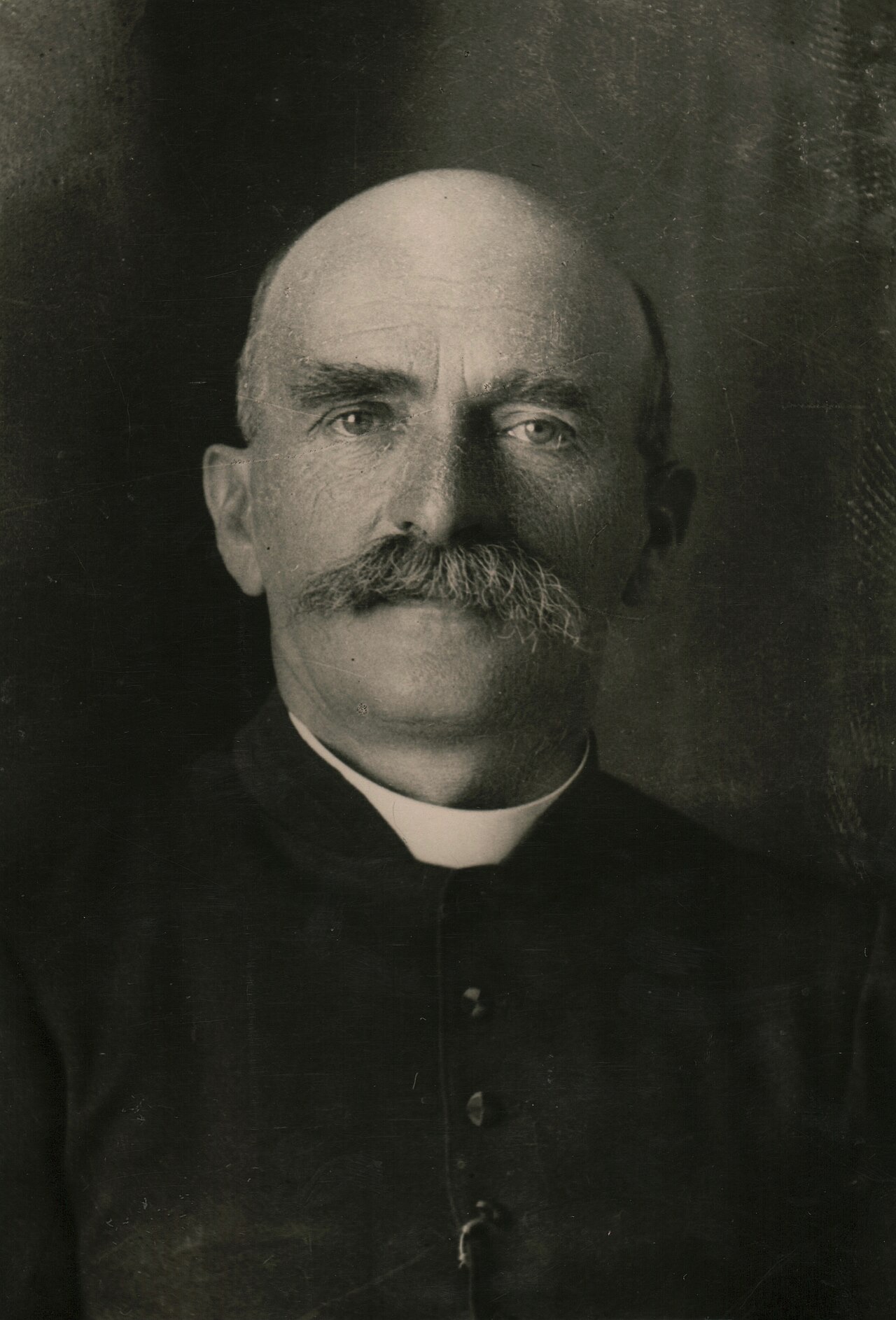
Période historique
The Rilindja: the League of Prizren, the fight for an alphabet, and the first Albanian-language school.
Enregistrer
In the 1800s Albanians began to organise around their language and identity. This is called the Rilindja, the rebirth. Writers argued for a single alphabet, the first Albanian school opened in Korçë in 1887, and in 1878 the League of Prizren demanded self-rule.
In the 1800s Albanians began to organise around their language and identity. This is called the Rilindja, the rebirth. Writers argued for a single alphabet, the first Albanian school opened in Korçë in 1887, and in 1878 the League of Prizren demanded self-rule.
The Albanian National Awakening—known in Albanian as the Rilindja or Rilindja Kombëtare, and rendered in English variously as the Albanian Renaissance or Albanian Revival—was a cultural, political, and social movement spanning the nineteenth and early twentieth centuries. Its central aim was to establish an independent Albanian cultural and political life, culminating in the creation of an Albanian state. The movement operated against the backdrop of nearly five centuries of Ottoman rule, during which Albanian national unity and institutional national conscience were actively suppressed by Ottoman authorities.
Experts disagree about when Albanian nationalism properly began. Three main positions exist: one traces origins to the revolts against Ottoman centralisation in the 1830s; a second points to Naum Veqilharxhi's publication of the first attempted standardised alphabet for Albanian in 1844; a third locates the start at the collapse of the League of Prizren during the Eastern Crisis in 1881. Compromise positions have also been advanced. One holds that Albanian nationalism had earlier foundations but 'consolidated' as a movement during the Great Eastern Crisis of 1876–1881. Another argues that its roots 'sprouted' during the reform decades of the early nineteenth century, that it emerged as a romantic movement for societal reform in the 1830s and 1840s driven largely by Albanians publishing from abroad, and that it transformed into an overt political national movement only in the 1870s.
Scholars who place the Rilindja's political emergence in the 1870s point to specific structural obstacles. Because the Albanian majority of the population shared religious ties with the ruling Ottomans, and because no prior Albanian state existed, nationalism developed more slowly among Albanians than among neighbouring south-eastern European peoples—Greeks, Serbs, Bulgarians, and Romanians. According to this view, the Rilindja was in part a continuation of Albanian revolts and cultural activities throughout the entire Ottoman period, with the Tanzimat centralising reforms—which replaced local Albanian functionaries and suppressed Albanian culture—providing the conditions that produced the movement. Political nationalism and economic liberalism were the two modern intellectual platforms that most inspired Albanian intellectuals of the period.
When the central authority of the Ottoman Empire and the timar land-grant system weakened in the late eighteenth century, two Albanian centres of power arose: the Pashalik of Shkodra, controlled by the Bushati family in the north, and the Pashalik of Yanina in the south, controlled by Ali Pasha of Tepelenë. Both cooperated with and defied the Sublime Porte as their respective interests required. Albanian people, both Muslim and Christian, exercised considerable influence over late eighteenth and early nineteenth century Ottoman politics, including a significant role on both sides of the Greek War of Independence.
The rulers of these increasingly independent pashaliks were Albanian military leaders who had initially been rewarded for loyalty to the Ottoman Empire but exploited the weakening of the Sublime Porte to accumulate military and political power. They are not characterised by historians as champions of a national fight for a united and independent Albania, but rather as political opportunists operating within the Ottoman context. Nevertheless, Ali Pasha of Yanina in particular established foreign diplomatic relations with Napoleonic France and with Britain, referred to his territory increasingly as 'Albania', and at times aimed at creating an independent Albanian–Greek state, thereby revealing the vulnerability of Ottoman power. British travellers who met Ali Pasha recorded that he described himself and the Albanians as friends of the British nation.
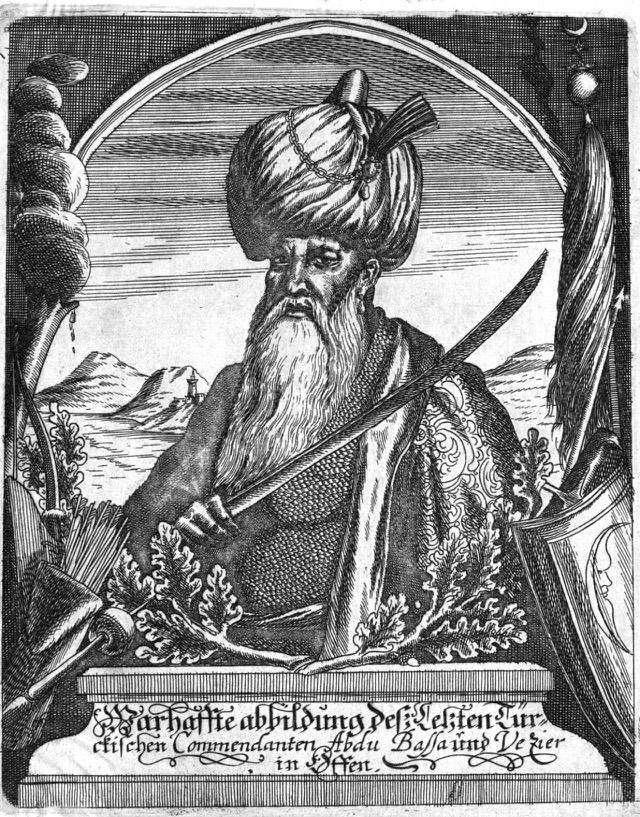
The Albanian rule of the Pashalik of Yanina and the Pashalik of Scutari is credited with fostering a sense of ethnic belonging among the Albanian population and generating an enduring hostility toward the Sublime Porte. The fall of these pashaliks, however, came quickly: the Bushati dynasty's rule ended in 1831 when an Ottoman army under Mehmed Reshid Pasha besieged Rozafa Castle and forced Mustafa Reshiti to surrender. In place of the pashaliks, the Ottomans created the vilayets of Scutari and Kosovo. The Albanian defeat simultaneously ended a planned alliance between the Albanian beys and the Bosnian nobility, who had been similarly seeking autonomy.
Following the suppression of the pashaliks, the Ottoman government moved to implement centralising Tanzimat reforms throughout Albanian-inhabited territories from the 1830s onward. By removing the timar system the Sublime Porte intended to reclaim imperial power that had been weakened by economic and social backwardness, exploitative governance, and ongoing popular uprisings. These reforms struck directly at the old military feudal class, which had already been damaged by Ottoman expeditions from 1822 to 1831. Feudal leaders who had launched revolts were eliminated, exiled, or forced to flee, and their properties were declared state-owned, creating a new landowning class with connections to the Porte.
Implementation of the reforms provoked immediate armed resistance. Two local uprisings in early 1833 in Kolonjë and Dibër were suppressed, but larger revolts then erupted in the Berat–Vlorë–Delvinë–Çamëria area. Ottoman army operations were characterised by terror, which increased local hostility and produced further cycles of insurrection. Fugitive agitators circulated across provinces to organise additional rebellions, appealing to a sense of brotherhood across Albanian-inhabited territories. In early 1844, Ottoman authorities concentrated large military forces at multiple points—particularly in Bitola, where conditions were considered worst—to forestall a new outbreak, but a further uprising erupted by the end of March 1844 and was suppressed.
The revolt of 1847 marked a qualitative shift: preliminary national claims began to spread within the ongoing armed insurrections against new taxes and obligatory military service. This revolt assumed significant proportions in two zones of southern Albania—the Gjirokastra region, led by Zenel Gjoleka, and the Berat region, led by Rapo Hekali. The national movement as yet lacked a fully formulated policy, but its ideas found expression in literary works and studies of Albanian history, language, and culture. Writers of the Rilindja generation sought to awaken feelings of national attachment by invoking the era of Skanderbeg and Albanian folk culture, while directing particular attention to the native language and the establishment of Albanian schools as instruments of national affirmation.
The ideological foundations of the Rilindja owed debts to both internal Albanian circumstances and external European currents. The French Revolution left a socio-economic impact on Albanian society, with Albanian intellectuals highlighting the ideals of the Revolution and the thought of figures such as Voltaire and Jean-Jacques Rousseau. The Italian Risorgimento served as a direct inspiration, and some Albanian patriots—including many from the Arbëreshë communities in Italy—built contacts with Italian democratic and revolutionary forces, broadening the Rilindja from a question of Albanian–Ottoman relations into an international issue. The destruction of the Pashalik of Yanina and growing Greek nationalist ambitions also fuelled a reactive urgency among the Albanian intellectual elite.
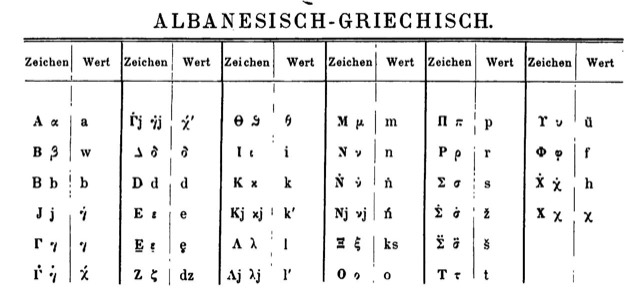
The son of one merchant family, Naum Veqilharxhi, began work on an alphabet intended to help Albanians overcome both religious and political divisions, starting in 1824 or 1825. He deliberately avoided Latin, Greek, or Arabic characters because of their religious associations and the divisions they would provoke. In 1844–45 he published his Evëtori Shqip Fort i Shkurtër (The Short Albanian Evëtor), comprising thirty-three letters of his own invention. In November 1869, a Commission for the Alphabet of the Albanian Language convened in Istanbul; one of its members was Kostandin Kristoforidhi. The Commission completed its standardisation work in January 1870, producing an alphabet based primarily on Latin letters, and drafted a plan for Albanian-language textbooks and schools. The Ottoman government declined to finance the schools, and the plan was not realised.
Despite the Commission's 1870 output, writers in northern Albania continued using a Latin-based alphabet while writers in the south used mainly Greek letters. A decisive shift came after the events surrounding the League of Prizren (1878), when in 1879 Sami Frashëri and Naim Frashëri formed the Society for the Publication of Albanian Writings in Constantinople. The society's membership included Muslim, Catholic, and Orthodox Albanians. Members published a primer of the Albanian language and other works in Albanian covering the humanities and natural sciences. Albanian émigrés in Bulgaria, Egypt, Italy, Romania, and the United States supported the society's activities. The ecumenical patriarch of Constantinople responded with opposition: in 1886 he threatened to excommunicate anyone found reading or writing Albanian, and priests disseminated the teaching that God would not understand prayers in Albanian.
The immediate trigger for organised Albanian political action was the Treaty of San Stefano, signed on 3 March 1878, which assigned Albanian-populated lands to Serbia, Montenegro, and Bulgaria. The treaty generated profound anxiety among Albanians, and in the spring of 1878 influential Albanians in Constantinople—among them Abdyl Frashëri, described as one of the first political ideologues of the National Revival—organised a secret committee to coordinate Albanian resistance. In May 1878, this group called for a general meeting of representatives from all Albanian-populated lands.
On 10 June 1878, approximately eighty delegates—predominantly Muslim religious leaders, clan chiefs, and other notable persons drawn from the four Albanian-populated Ottoman vilayets—met in Prizren. They declared the formation of the League of Prizren, which comprised two branches. The Prizren branch was led by Iljas Dibra and drew representatives from Kicevo, Tetovo, Pristina, Mitrovica, Vushtrri, Skopje, Gjilan, Bitola, Debar, and Gostivar. The southern branch, led by Abdyl Frashëri, had sixteen representatives from Kolonjë, Korçë, Arta, Berat, Parga, Gjirokastër, Përmet, Paramythia, Filiates, Margariti, Vlorë, Tepelenë, and Delvinë. The League was directed by a central committee empowered to impose taxes and raise an army.
The League's stated goal was not independence but rather to gain autonomy for Albanians and to obstruct implementation of the Treaty of San Stefano, reverting to the pre-war status quo. Among its specific demands were official status for the Albanian language in Albanian-inhabited territories and the establishment of Albanian schools. The delegates were internally divided: conservative Muslims who constituted the majority supported maintaining Ottoman suzerainty, some advocating Muslim solidarity and defence of Muslim lands including present-day Bosnia and Herzegovina; a minority under Frashëri's leadership focused on Albanian autonomy and a secular Albanian identity cutting across religious and tribal lines. The Ottoman authorities initially supported the League but pressed delegates to identify primarily as Ottomans rather than as Albanians.
In July 1878 the League sent a memorandum to the Great Powers at the Congress of Berlin demanding that all Albanians be united in a single autonomous Ottoman province. The Congress ignored the memorandum and ceded to Montenegro the cities of Bar and Podgorica and areas around the mountain towns of Gusinje and Plav, which Albanian leaders considered Albanian territory. Serbia also received Albanian-inhabited lands. The League organised armed resistance in Gusinje, Plav, Scutari, Prizren, Preveza, and Ioannina. Albanian resistance eventually forced the Great Powers to alter the border, returning Gusinje and Plav to the Ottoman Empire and awarding Montenegro the coastal town of Ulcinj instead. Albanians refused to yield Ulcinj as well; the Great Powers ultimately blockaded the town by sea to compel compliance.
Faced with international pressure to pacify Albanian resistance, the sultan dispatched a large army under Dervish Turgut Pasha. In April 1881, Dervish Pasha's 10,000 men captured Prizren and later crushed the resistance at Ulcinj. The League's leaders and their families were arrested and deported. Abdyl Frashëri, who initially received a death sentence, was instead imprisoned until 1885 and subsequently exiled until his death seven years later. Despite surviving for only three years, the League succeeded in making the Great Powers aware of the Albanian people and their national interests; Montenegro and Greece received substantially less Albanian-populated territory than they would have obtained without the League's resistance.
After the Congress of Berlin, Sultan Abdül Hamid II resorted to repression as the Ottoman Empire continued to weaken. Albanian demands for unification of the four Albanian-populated vilayets were refused. Albanian leaders reorganised the League of Prizren and fomented uprisings that brought Albanian-populated lands, particularly Kosovo, close to anarchy. A successor organisation, the Besa-Besë (League of Peja), founded in 1897, was disbanded by the imperial authorities, and its president Haxhi Zeka was executed in 1902. Albanian-language books and correspondence were banned.
In 1905, Albanian leaders meeting in Bitola established the Secret Committee for the Liberation of Albania. That same year, the priest Kristo Negovani, who had acquired Albanian national sentiments abroad, returned to his native village of Negovan and introduced the Albanian language into Orthodox liturgy for the first time. He was subsequently killed by a Greek guerrilla band acting on orders from Bishop Karavangelis of Kastoria. The killing provoked a nationalist response: an Albanian guerrilla band led by Bajo Topulli killed the Metropolitan of Korçë, Photios. These episodes illustrate the extent to which Albanian cultural and religious assertion was met with organised violence from competing Balkan interests.
In 1906, opposition groups within the Ottoman Empire began coalescing, one strand eventually forming the Committee of Union and Progress—the Young Turks—which sought to restore constitutional government in Constantinople. In July 1908, a Young Turk rebellion in Macedonia, supported by an Albanian uprising in Kosovo and Macedonia, escalated into widespread insurrection and mutiny within the imperial army. Sultan Abdül Hamid II agreed to restore constitutional rule. Many Albanians supported the Young Turks' uprising, hoping it would result in autonomy within the empire. One immediate outcome was that the Ottoman ban on Albanian-language schools and on writing the Albanian language was lifted.
Taking advantage of the changed political climate, Albanian intellectuals convened the Congress of Monastir in Bitola in 1908 to settle the alphabet question. The Congress was hosted by the Bashkimi (unity) club, and prominent delegates included Gjergj Fishta, Ndre Mjeda, Mit'hat Frashëri, Sotir Peçi, Shahin Kolonja, and Gjergj D. Qiriazi. The competing alphabets under consideration were those of Istanbul, Bashkimi, and Agimi. Unable to reach a clear decision, the Congress adopted a compromise: both the widely used Istanbul alphabet, with minor changes, and a modified version of the Bashkimi alphabet would be used. Usage of the Istanbul alphabet declined rapidly and was essentially extinct within the following decades; the Bashkimi alphabet forms the basis of the official Albanian alphabet in use today.
The Young Turks, however, were committed to preserving the empire rather than accommodating nationalist movements. After securing the abdication of Abdül Hamid II in April 1909, the new authorities levied taxes, outlawed guerrilla groups and nationalist societies, and attempted to extend Constantinople's control over the northern Albanian highland communities. The Young Turks also legalised the bastinado—beating with a stick—even for misdemeanours, banned the carrying of rifles, denied the existence of an Albanian nationality, appealed to Islamic solidarity to break Albanian unity, and used the Muslim clergy to attempt to impose the Arabic alphabet on Albanians.
In 1910, in response to new Young Turk centralisation policies, Albanian leaders Isa Boletini and Idriz Seferi launched an uprising against the Ottomans in the Kosovo vilayet. After Albanian insurgents subdued Ottoman garrisons in towns including Prishtina and Ferizaj, the Ottoman government declared martial law and dispatched a military expedition of 16,000 men under Shefket Turgut Pasha. Forces under Idriz Seferi simultaneously captured the Kaçanik pass and held it against the initial Ottoman expeditionary force, compelling the Ottomans to send a second force of 40,000 men. After two weeks the pass was lost; rebels retreated to Drenica while Ottomans seized Prizren, Gjakova, and Peja.
Ottoman forces then advanced into northern Albania and Macedonia, but were held at the Agri Pass for more than twenty days by Albanian forces from the Shalë, Shoshë, Nikaj, and Mërtur areas, led by Prel Tuli, Mehmet Shpendi, and Marash Delia. Unable to overcome this resistance, that Ottoman column took an alternative route through the Pukë region to reach Scutari, which Ottoman forces entered on 24 July 1910. During this period martial courts operated and summary executions took place; a large number of firearms were confiscated and many villages and properties were burned by the Ottoman army.
In 1911, the Albanian National Committee was formed. At a committee meeting held in Podgorica from 2 to 4 February 1911, under the leadership of Nikolla bey Ivanaj and Sokol Baci Ivezaj, it was decided to organise an Albanian uprising. On 26–27 April 1911, Terenzio Tocci gathered the Mirditë chieftains in Orosh, proclaimed the independence of Albania, raised the Albanian flag—described by Robert Elsie as the first time it was raised after Skanderbeg's death—and established a provisional government. Shefqet Turgut Pasha responded by returning to the region with 8,000 soldiers and on 11 May issued a general proclamation declaring martial law and offering amnesty to all rebels except Malësor chieftains. After Ottoman troops entered the area Tocci fled the empire, and after months of fighting the rebels were trapped and escaped to Montenegro.
On 23 June 1911, at the village of Gerče in Montenegro, an assembly of tribal leaders of the revolt adopted the 'Greçë Memorandum', signed by twenty-two Albanian chieftains—four each from the tribes of Hoti, Grudë, and Skrel, five from Kastrati, three from Klemendi, and two from Shalë. The memorandum demanded general amnesty for all revolt participants, recognition of Albanian ethnicity, proportional representation of ethnic Albanians in the Ottoman Parliament, Albanian-language schooling, Albanian-speaking governors and high officials, military service for ethnic Albanians confined to Albanian territory in peacetime, return of confiscated arms, and compensation for all Albanian property damaged by Ottoman troops. It was submitted to the representatives of the Great Powers in Cetinje, Montenegro. Ottoman negotiators subsequently dealt separately with leaders of rebels in the Kosovo and Scutari vilayets, exploiting their lack of unified central command, and promised to meet most demands, limited mainly to Catholic highlanders.
The Albanian Revolt of 1912 lasted from January until August 1912. Albanian soldiers and officers deserted the Ottoman military and joined the insurgents, and after a series of successes Albanian revolutionaries captured Skopje, the administrative centre of the Kosovo vilayet. The revolt represented one of many Albanian uprisings against Ottoman rule in this period, but it culminated in the most extensive set of demands yet formally presented.
On 9 August 1912, Albanian rebels presented a list of demands known as the Fourteen Points. These called for an autonomous system of administration and justice covering the four vilayets with substantial Albanian populations; Albanian military service confined to those four vilayets except in time of war; employment of officials familiar with local language and customs; establishment of new secondary schools and agricultural schools in larger districts; reorganisation and modernisation of religious schools with Albanian used in secular schools; freedom to establish private schools and societies; development of trade, agriculture, and public works; general amnesty for all Albanians involved in the revolt; and court martial for Ottoman officers who had attempted to suppress the revolt.
The revolt ended on 4 September 1912, when the Ottoman government agreed to fulfil all of the rebels' demands except the last. The Ottoman Empire accepted the principle of autonomous administration and justice for the four vilayets with substantial Albanian populations, but deliberately avoided granting autonomy to a unitary Albanian vilayet—the core territorial objective of the Albanian National Awakening agenda as defined during the League of Prizren period. Before a final settlement could be implemented, however, the First Balkan War erupted, rendering the agreement moot.
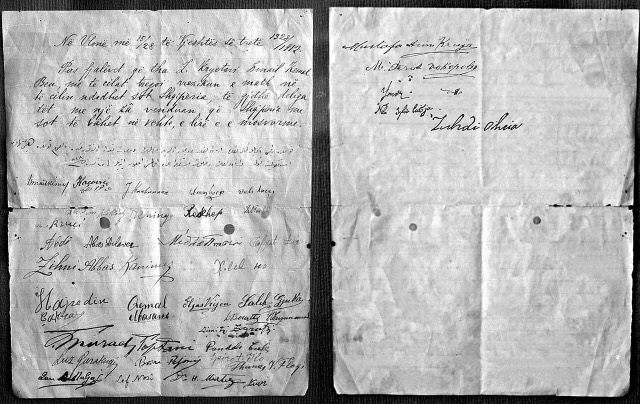
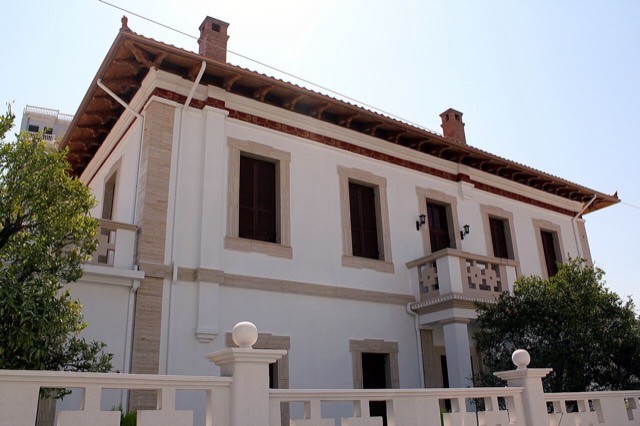
The First Balkan War—fought by Serbia, Bulgaria, Montenegro, and Greece against the Ottoman Empire—quickly drove Ottoman forces to the walls of Constantinople. With the Montenegrins surrounding Scutari, an assembly of Muslim and Christian leaders meeting in Vlorë in November 1912 declared Albania an independent country. The formal declaration, adopted on 15/28 November 1912, recorded that President Ismail Kemal Bey addressed the delegates on the great perils facing Albania, and that the delegates unanimously decided that Albania should from that day be free and independent.
A second session of the Assembly of Vlorë was held on 4 December 1912. That session established the Provisional Government of Albania, a ten-member government led by Ismail Qemali until his resignation on 22 January 1914. The Assembly also established a Senate (Albanian: Pleqësi) with an advisory role, consisting of eighteen Assembly members. The Albanian delegation at the subsequent London conference was assisted by Aubrey Herbert, a British Member of Parliament described as a passionate advocate of their cause. The ambassadorial conference that opened in London in December made the major decisions concerning Albanian affairs following the First Balkan War, formalised in the Treaty of London of May 1913.
The Great Powers held sharply divergent interests in the settlement. Austria-Hungary and Italy opposed granting Serbia an Adriatic outlet—Durrës was Serbia's preferred port—fearing it would become a Russian port, and supported instead the creation of an autonomous Albania. Russia backed Serbian and Montenegrin claims to Albanian-inhabited lands. Britain and Germany remained neutral, with Britain's foreign secretary Sir Edward Grey chairing the conference. An initial agreement to create an autonomous Albania under continued Ottoman suzerainty was abandoned in the summer of 1913 when it became clear the Ottoman Empire would lose Macedonia in the Second Balkan War and thus its overland connection to Albanian-inhabited lands.
In July 1913, the Great Powers opted to recognise an independent, neutral Albanian state under a constitutional monarchy with their collective protection. The Treaty of Bucharest of August 1913 established independent Albania with borders encompassing approximately 28,000 square kilometres of territory and a population of 800,000. Montenegro surrendered Scutari after losing an estimated 10,000 men in the process of taking the town. Serbia withdrew from northern Albania under an ultimatum from Austria-Hungary, Germany, and Italy. The settlement, however, left large areas with majority Albanian populations—notably Kosovo and western Macedonia—outside the new state. On 20 December 1912, the Conference of Ambassadors in London had formally recognised an independent Albania within its present-day borders.
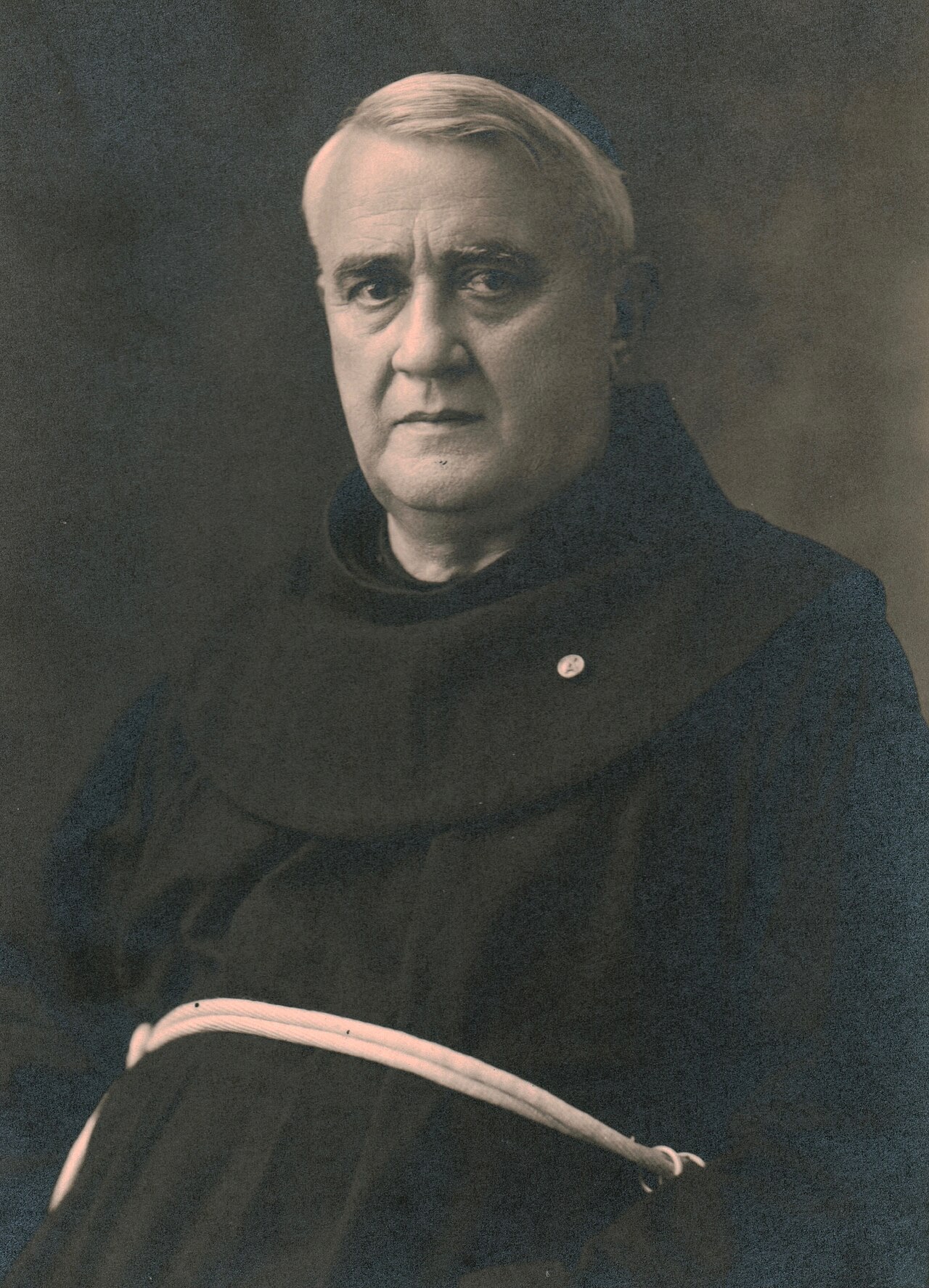
Ville · Korçë
The highland city of serenades, the first Albanian-language school, and the country's oldest brewery.
Période historique
Four and a half centuries in the empire — mass conversion to Islam, powerful local pashas, and eventually a national movement.
Période historique
Declared at Vlorë on 28 November 1912 as the Ottoman Empire collapsed in the Balkan Wars.
Objet
Thirty-six letters agreed at the Congress of Monastir in 1908, replacing competing Arabic, Greek and Latin scripts.
Personne
The Ottoman statesman who raised the flag at Vlorë and led Albania's first provisional government.
Personne
The most influential writer of the Rilindja, and one of three brothers central to the national movement.
Une erreur sur cette page ? Les corrections sont les bienvenues et sont vérifiées par rapport au document source. Indiquer ce qui est erroné et, si possible, d'où provient le chiffre correct.