Historische Epoche
The Zog Years
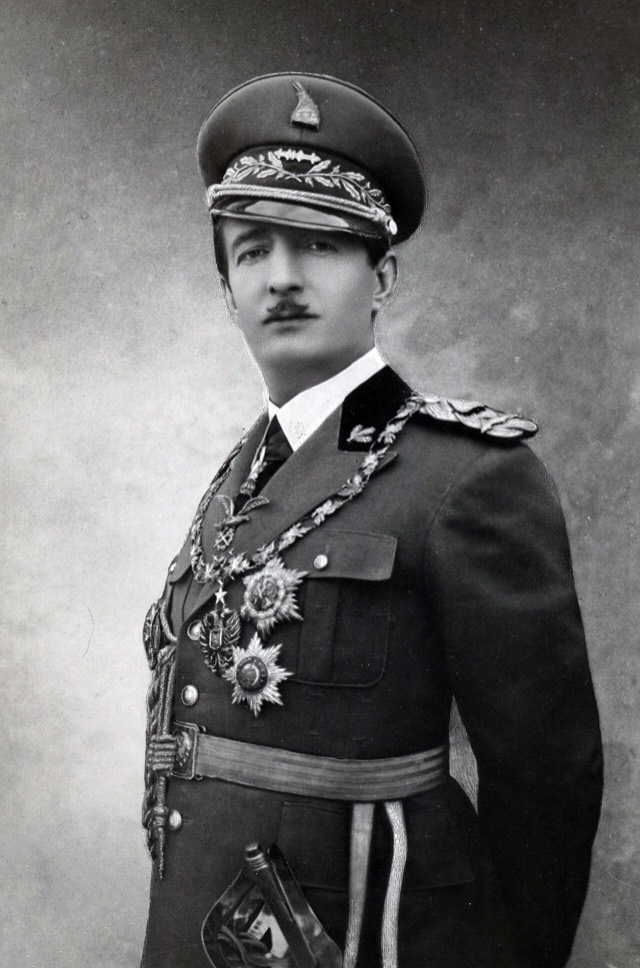
From the Congress of Lushnjë to a republic, then a monarchy, under Ahmet Zogu.
Jeder Kreis, jede Küste, jedes Jahrhundert
Geführte Ansicht
Neu in Albanien? Jede Seite beginnt mit einer einfachen Erklärung, die auch ein Zehnjähriger verstehen würde – bevor es ins Detail geht.
Expertenansicht
Sie kennen die Grundlagen bereits. Direkt zur Substanz, ohne die vereinfachten Erklärungen. Dies ist die Standardeinstellung.
Historische Epoche
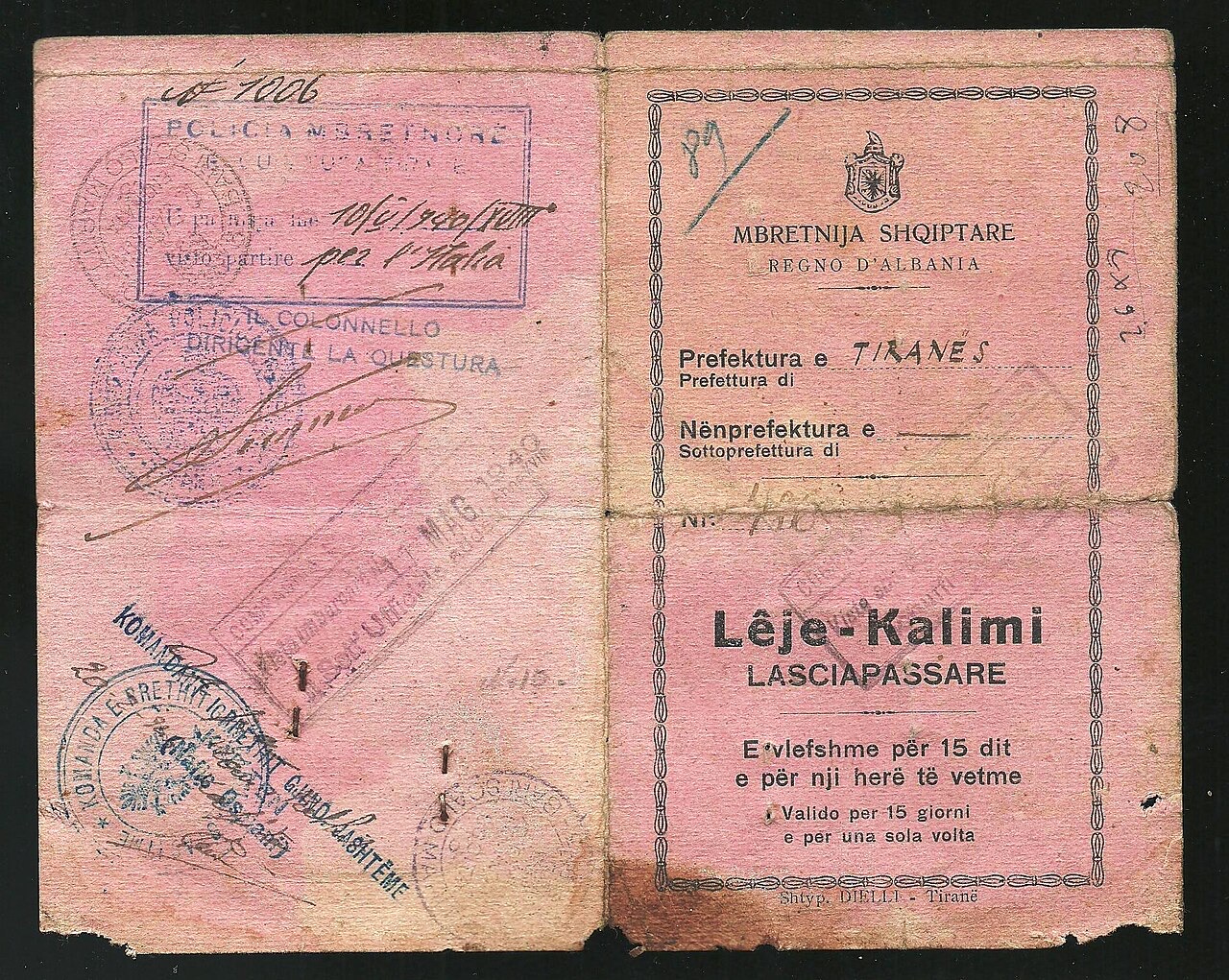
Italy invaded on 7 April 1939; Albania was annexed under the Italian crown until Italy's surrender.
Speichern
On 7 April 1939 Italy invaded Albania. King Zog fled and the country was joined to Italy. When Italy surrendered in 1943, German forces took over instead.
On 7 April 1939 Italy invaded Albania. King Zog fled and the country was joined to Italy. When Italy surrendered in 1943, German forces took over instead.
Italian interest in Albania predated the Fascist era by decades. Italian naval strategists coveted the port of Vlorë and the island of Sazan for their position at the entrance to the Bay of Vlorë and the Adriatic Sea, and wanted to construct a military base there for operations in the Balkans. During the late Ottoman period, Italy and Austria-Hungary both supported Albanian nationalism as a counterweight to pan-Slavism and what they perceived as Anglo-French influence exercised through Greece.
Before the First World War, Italy and Austria-Hungary backed the creation of an independent Albanian state. When war broke out, Italy seized the southern half of Albania to prevent it falling to Austria-Hungary. Albanian resistance during the subsequent Vlora War, combined with domestic problems, forced Italy to withdraw in 1920. Mussolini later cited this retreat as a humiliation that required correction.
The Fascist ideological case for Albania rested on several historical claims: that Albania had been part of the Roman Empire before even northern Italy was annexed by Rome; that coastal towns such as Durazzo had been held by Italian powers — notably the Kingdom of Naples and the Republic of Venice — during the High Middle Ages; and that Albanians and Italians shared a racial affinity traceable to links between protohistoric Italic and Illyrian populations. These arguments were formalised through state-commissioned studies and used to legitimise territorial ambition.
After Mussolini seized power in October 1922, Italy pursued systematic penetration of Albanian affairs. In 1925 Albania agreed to allow Italy to exploit its mineral resources. This was followed by the First Treaty of Tirana in 1926 and the Second Treaty of Tirana in 1927, which created a defensive alliance between the two states.
Italian influence extended deep into Albanian institutions. The Albanian government and economy were subsidised by Italian loans. The Royal Albanian Army was trained by Italian military instructors, and most of the army's officers were Italian nationals. Other Italians held senior positions in the Albanian government. By the late 1930s, a third of all Albanian imports came from Italy.
Despite this penetration, King Zog I resisted complete subordination. In 1931 he openly refused to renew the 1926 Treaty of Tirana. In 1934 Albania signed trade agreements with Yugoslavia and Greece, prompting Mussolini to send a fleet of warships to Albanian waters as a show of force — an intimidation attempt that failed.
The immediate trigger for invasion was partly strategic and partly personal. As Nazi Germany annexed Austria and moved against Czechoslovakia, Italy found itself becoming the lesser partner in the Pact of Steel. After Hitler invaded Czechoslovakia on 15 March 1939 without informing Mussolini in advance, the Italian dictator resolved to proceed with his own annexation of Albania. The imminent birth of an Albanian royal heir also concerned Rome, as a son would give Zog the means to establish a durable dynasty.
Rome delivered an ultimatum to Tirana on 25 March 1939, demanding Albanian consent to Italian occupation. Zog refused to accept money in exchange for a full Italian takeover and colonisation. Italy's own King Victor Emmanuel III criticised Mussolini's plan, calling it an extremely unnecessary risk for an almost negligible gain.
The Albanian government attempted to suppress news of the ultimatum. Radio Tirana broadcast denials that anything was happening. On 5 April the birth of Zog's son was announced by cannon fire; crowds emerged into the streets, but an anti-Italian demonstration took place in Tirana the same day. On 6 April, demonstrations were staged in Albania's main cities, and 100 Italian aircraft flew over Tirana, Durrës, and Vlorë, dropping leaflets instructing the population to submit to occupation. Crowds responded by demanding that the government arm them and release political prisoners. The Minister of the Interior, Musa Juka, left the country for Yugoslavia that same day.
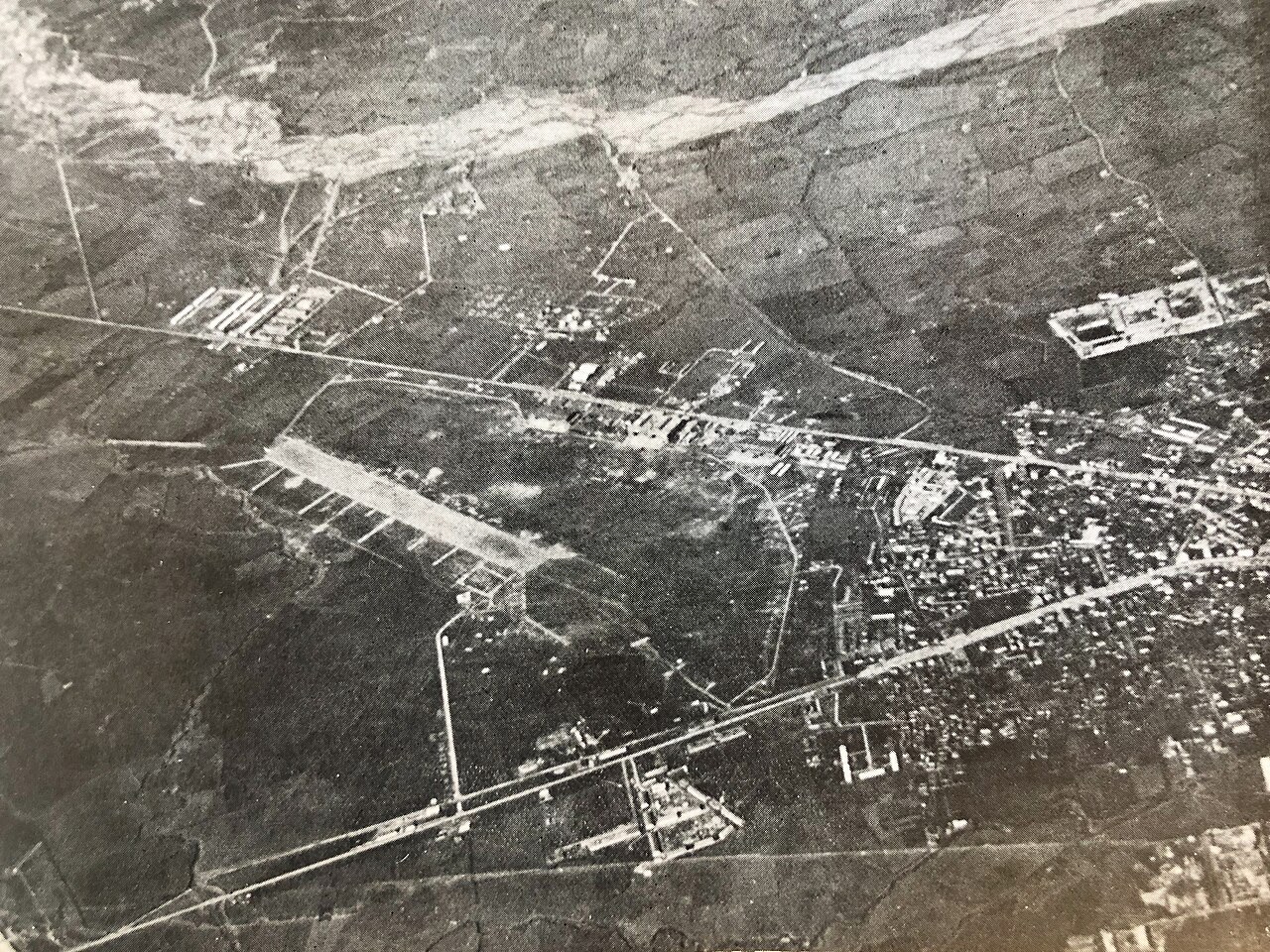
The original Italian invasion plan called for up to 50,000 men supported by 51 naval units and 400 aircraft. The force ultimately assembled grew to 100,000 men and 600 aircraft, though only approximately 22,000 men actually took part in the landings. The invasion was commanded by General Alfredo Guzzoni.
The Italian naval component included the battleships Giulio Cesare and Conte di Cavour, three heavy cruisers, three light cruisers, nine destroyers, fourteen torpedo boats, one minelayer, ten auxiliary ships, and nine transport ships. The ships were divided into four groups that landed simultaneously at Vlorë, Durrës, Shëngjin, and Sarandë.
On the Albanian side, the regular army comprised approximately 15,000 poorly equipped troops, most of whom had been trained by Italian officers — the same officers who, as Italian agents, subsequently sabotaged King Zog's plan to withdraw to the mountains and conduct a defensive campaign there, leaving ports and cities undefended. As a result, resistance fell mainly to the Royal Albanian Gendarmerie and small groups of armed volunteers.
The most significant Albanian resistance occurred at Durrës. A force of approximately 500 Albanians — gendarmes and armed volunteers — was led by Major Abaz Kupi, commander of the gendarmerie in Durrës, and Mujo Ulqinaku, a naval sergeant. They were equipped with small arms and three machine guns and were supported by a coastal battery. The Royal Albanian Navy at Durrës consisted of four patrol boats, each armed with a machine gun, and a coastal battery of four 75 mm guns.
Mujo Ulqinaku, commanding the patrol boat Tiranë, used his vessel's machine gun against Italian troops until he was killed by an artillery shell from an Italian warship. The defenders held for a few hours before Italian naval gunfire broke their resistance. Italian ships then unloaded a large number of light tanks, after which organised resistance collapsed. Within five hours of the landings beginning, the Italians had taken Durrës.
By 1:30 pm on 7 April, all Albanian ports were in Italian hands. At 9:30 am on 8 April, Italian troops entered Tirana and seized all government buildings. Italian columns then advanced to Shkodër, Fier, and Elbasan. Shkodër surrendered after twelve hours of fighting, during which a mob besieged the local prison and freed approximately 200 prisoners.
The number of Italian and Albanian casualties at Durrës is disputed. Italian military reports recorded 25 Italians killed and 97 wounded. Local Albanian accounts claimed that 400 Italians were killed. Albanian casualties were reported as 160 dead and several hundred wounded, though the source and precision of these figures are not specified in the sources.
Contemporary observers were openly critical of Italian military performance. Filippo Anfuso, the chief assistant to Count Ciano, remarked sarcastically: 'If only the Albanians had possessed a well-armed fire-brigade, they could have driven us into the Adriatic.' The overall assessment in the sources is that the Italian invasion was poorly planned and badly executed, and succeeded primarily because Albanian resistance was disorganised and weak rather than because of Italian military competence.
On 7 April, King Zog, Queen Geraldine Apponyi, and their newborn son Leka fled to Greece, taking part of the gold reserves of the Albanian central bank with them. On hearing of the king's departure, an angry mob attacked the prisons, freed prisoners, and sacked the royal residence in Tirana.
On 12 April, the Albanian parliament voted to depose Zog and offer the Albanian crown to Italy's King Victor Emmanuel III, uniting the two countries in personal union. The parliament elected Albania's largest landowner, Shefqet Vërlaci, as Prime Minister. Vërlaci served as interim head of state for five days until Victor Emmanuel III formally accepted the Albanian crown in a ceremony at the Quirinale Palace in Rome.
Victor Emmanuel III appointed Francesco Jacomoni di San Savino, a former Italian ambassador to Albania, to represent him in Albania as Lieutenant-General of the King — a position that functioned as a viceroy. On 15 April 1939, Albania withdrew from the League of Nations, from which Italy itself had resigned in 1937. On 3 June 1939, the Albanian foreign ministry was merged into the Italian foreign ministry, and Albanian Foreign Minister Xhemil Dino was redesignated an Italian ambassador.
Following the occupation and the installation of a new government, the economies of Albania and Italy were merged through a customs union that removed most trade restrictions. A tariff union brought the Italian tariff system into force in Albania. Because this shift in tariff policy was expected to cause economic losses in Albania, the Italian government provided annual compensation of 15 million Albanian leks. Italy alone retained the right to conclude treaties with third parties on Albania's behalf.
Italian capital was permitted to dominate the Albanian economy, and Italian companies were granted monopolies over the exploitation of Albanian natural resources. All petroleum resources in Albania were channelled through Agip, Italy's state petroleum company. The Albanian military was placed under Italian command and formally merged into the Italian Army in 1940. The Italian Blackshirts also formed four legions of Albanian Militia, initially recruited from Italian colonists living in Albania and later from ethnic Albanians.
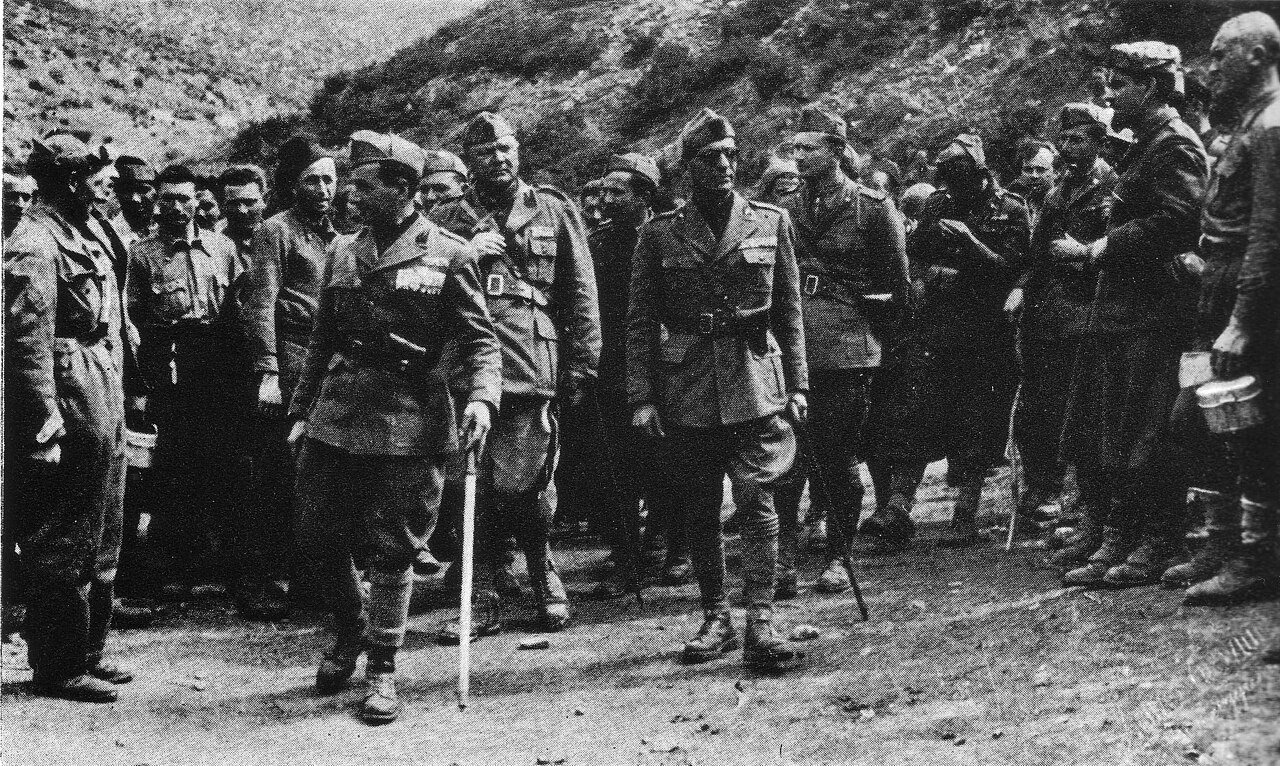
Albania followed Italy into war against Britain and France on 10 June 1940. In October 1940, Albania served as the staging ground for the Italian invasion of Greece. Albanian troops participated in the Greek campaign but massively deserted the front. During the Greek counter-offensive, Greece temporarily occupied the southern areas of Albanian territory, including the cities of Gjirokastër and Korçë.
In May 1941, following the Axis Balkans campaign, Albania was enlarged by the annexation of Kosovo, parts of Montenegro, and the Vardar Banovina — a step described in the article as going a long way towards realising nationalist claims for a Greater Albania. The western coastal region of Epirus known as Chameria was not annexed outright but was placed under the nominal authority of an Albanian High Commissioner.
When Italy left the Axis in September 1943, Wehrmacht troops immediately occupied Albania in a short campaign that met relatively strong resistance. Albanian Partisans, including some nationalist groups, had sporadically fought the Italians from autumn 1942 and subsequently fought the Wehrmacht. By October 1944, Army Group E withdrew from the southern Balkans following Red Army advances, the collapse of Romania, and the imminent fall of Bulgaria. After the Wehrmacht's withdrawal, the Albanian Communist Party, led by Enver Hoxha, crushed nationalist resistance and took power.
The events surrounding the Italian annexation of Albania provided part of the inspiration for the eighth volume of The Adventures of Tintin, titled King Ottokar's Sceptre, in which a fictional Balkan country called Syldavia faces pressure from its larger neighbour Borduria. The Tintin author Hergé pressed his editor to publish the work promptly in order to capitalise on current events in 1939, stating that he felt 'Syldavia is Albania.'
Historische Epoche
From the Congress of Lushnjë to a republic, then a monarchy, under Ahmet Zogu.
Person
The leader who took Albania out of the Soviet bloc, then out of the Chinese one, and banned religion outright.
Historische Epoche
Occupation, a three-way resistance, and the sheltering of Jewish refugees under besa.
Etwas falsch auf dieser Seite? Korrekturen sind willkommen und werden gegen den Quelldatensatz geprüft. Bitte mitteilen, was falsch ist und, wenn möglich, woher die richtige Angabe stammt.