Sítio histórico · Vlorë
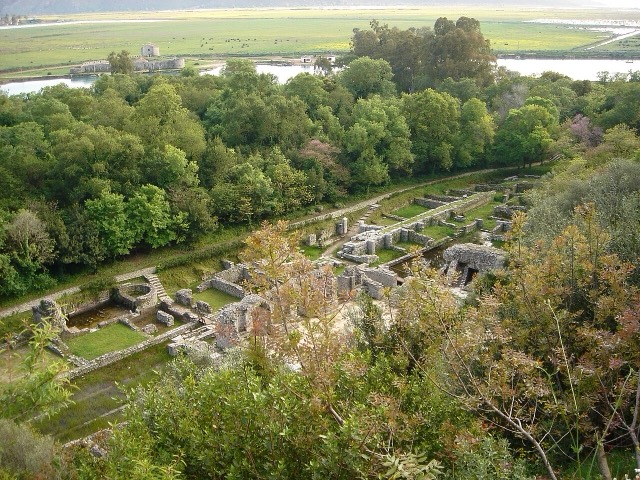
Butrint
A Greek, Roman, Byzantine, Venetian and Ottoman city layered on one wooded peninsula — Albania's first UNESCO site.
Cada condado, cada costa, cada século
Vista guiada
Novo na Albânia? Cada página começa com uma explicação em linguagem simples, acessível a uma criança de dez anos, antes de entrar em pormenor.
Vista para especialistas
Já conhece o essencial. Direto ao conteúdo, com as explicações simples ocultadas. Esta é a vista predefinida.
Período histórico
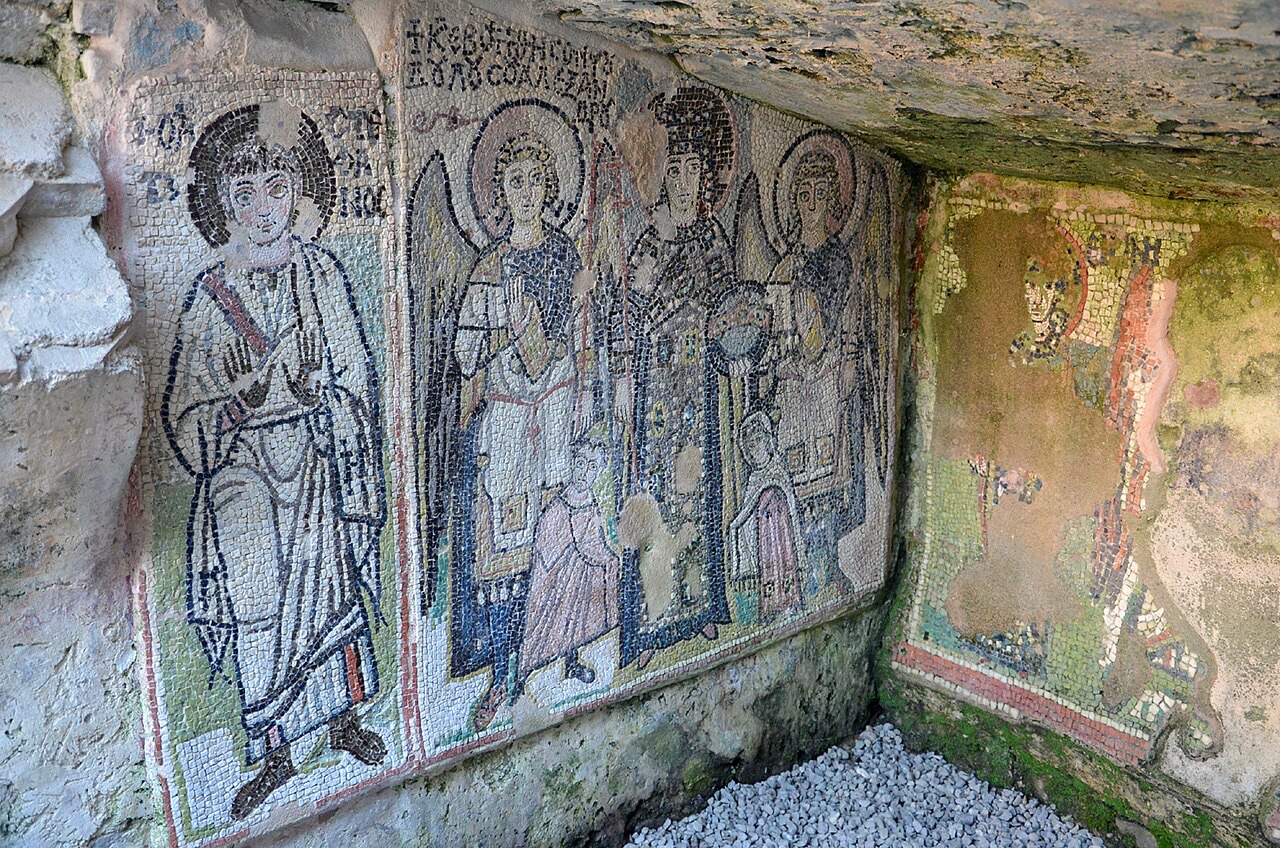
Nine centuries of eastern Roman rule, interrupted by Bulgarians, Normans, Serbs and Angevins.
Guardar
When the Roman Empire split, this land went to the eastern half, ruled from Constantinople. For nine hundred years it changed hands many times as Bulgarians, Normans from Italy, Serbs and others fought over it.
When the Roman Empire split, this land went to the eastern half, ruled from Constantinople. For nine hundred years it changed hands many times as Bulgarians, Normans from Italy, Serbs and others fought over it.
The territory that is today Albania formed part of the eastern provinces of the Roman Empire and, when that empire permanently split, fell within the sphere of its eastern continuation, centred on Constantinople. This eastern empire — which its own citizens called the Roman Empire and themselves Romans — survived the fall of the western half in the fifth century AD and endured until 1453. The label 'Byzantine Empire' was coined only after its collapse; contemporaries, including inhabitants of the Albanian territories, would have used Roman terminology.
Constantine I, who ruled from 306 to 337, rebuilt the city of Byzantium as a new capital called New Rome — later Constantinople — and secured absolute power in 324. This shifted the empire's political centre of gravity decisively eastward, reinforcing the importance of the Adriatic and Balkan provinces, including the Albanian littoral, as connective tissue between the new capital and the western territories. Theodosius I, ruling from 379 to 395, made Christianity the state religion and was the last emperor to govern both halves. After his death, the East continued under capable civilian administrators while the West deteriorated.
The Albanian region lay within the broader Balkan zone that the early Byzantine Empire struggled to control in the face of successive external pressures. Theodosius I secured peace in the east by permitting the Goths to settle within Roman territory, a policy that set a precedent for managing barbarian peoples along the Danube frontier. His successor Theodosius II, ruling from 408 to 450, saw Attila's Huns ravage the Balkans extensively, extracting large tribute payments from the eastern empire. The construction of the Theodosian Walls around Constantinople during this reign reflected the defensive urgency of the period.
Following Attila's death in 453, his people fragmented and the immediate Hun threat receded. The emperor Zeno, ruling from 474 to 491, managed the Ostrogoth problem diplomatically by encouraging their king Theodoric to redirect attention toward Italy. Anastasius I, who succeeded Zeno in 491 and ruled until 518, was regarded as a capable administrator: he abolished the chrysargyron tax and enacted financial reforms that strengthened the state. The Balkans, including the Albanian territories, remained an area of strategic concern throughout this period, positioned along key routes between Constantinople and the Adriatic.
The reign of Justinian I, from 527 to 565, represented the high point of Byzantine territorial ambition. His general Belisarius subjugated the Vandal Kingdom in North Africa in late 533 and then invaded Italy, effectively ending the Ostrogothic Kingdom by 554. The Albanian coastal zone, positioned along the sea route between Constantinople and Italy, carried logistical and strategic significance during these western campaigns. Justinian rewrote the legal code as the Corpus Juris Civilis, reasserted imperial control over religion, and rebuilt much of Constantinople, including the Hagia Sophia.
The decade of the 540s brought severe reversals. A devastating plague from around 541 drastically reduced the population and weakened the empire's financial and social stability. Khosrow I of the Sasanian Empire invaded Byzantine territory and sacked Antioch in 540, forcing the empire to fight on multiple fronts simultaneously. The scholar estimate places the empire's peak population at as many as 27 million in 540; by 800 it had fallen to 12 million. Justinian died in 565, leaving what the article describes as an unstable empire despite his record of achievement.
After Justinian's death, the reign of Justin II, from 565 to 578, inherited an empire stretched thin both financially and militarily. The Avars and Slavs began repeated invasions of the Balkans during this period, causing what the article describes as great instability. Maurice campaigned extensively in the region during the 590s and re-established Byzantine control up to the Danube, but pushed his troops too far in 602, triggering a mutiny that placed a soldier named Phocas on the throne. This civil war accelerated the empire's broader decline.
The seventh century saw the Avars and Slavs continuing to raid the Balkans while the empire also faced the catastrophic Arab conquests of Syria and Egypt in the 630s and 640s. Constans II, ruling from 641 to 668, undertook an administrative reorganisation of the Balkans that over time evolved into the theme system, which allocated troops to defend specific provinces. The Slavic settlement of the Balkans disrupted communication between Rome and Constantinople by the year 600, a development with lasting consequences for the ecclesiastical and political organisation of the Albanian territories specifically and the western Balkans generally.
The theme system, which emerged gradually from the administrative reorganisation begun by Constans II in the mid-seventh century, replaced the older prefecture structure. Provinces were divided into units governed by a military commander called a strategos. By the ninth century this arrangement had become the standard form of provincial governance across the empire. The Albanian territories would have been subject to this military-administrative structure, which reflected the empire's shift toward a defensive posture following the losses of the seventh century.
The thematic armies were supported by the revenues of their own districts and came to resemble, as the article describes them, a provincial militia with a small professional core, aided by foreign mercenaries and imperial regiments at Constantinople. These locally based forces were adequate for defensive purposes but proved rebellious and unsuitable for offensive operations as the eighth century progressed. The professional tagmata regiments, first introduced in the mid-eighth century, gradually supplemented and eventually replaced the thematic militias by the eleventh century.
The empire's population, which had fallen to roughly 12 million by 800 following plague and territorial losses, began to recover under the Macedonian dynasty. By around 1025, near the dynasty's end, the population is estimated to have reached as high as 18 million. This demographic recovery accompanied an economic revival characterised by increased agricultural production and urban expansion from the ninth century onward, conditions that would have applied across the Balkan provinces including Albania.
The ninth and tenth centuries presented the Byzantine Empire with sustained pressure from Bulgaria on its northern Balkan frontier, a pressure felt acutely in the western Balkan territories including those corresponding to modern Albania. Constantine IV, ruling from 668 to 685, had suffered a reversal against the Bulgars, who established an empire in the northern Balkans. The conflict continued intermittently for centuries. Nikephoros I, who came to power in 802, died in battle against the Bulgars in 811. Under Basil II, who ruled jointly with Constantine VIII for half a century, the decades-long campaign against Bulgaria ended in total Byzantine victory at the Battle of Kleidion in 1014.
The Macedonian dynasty, which followed the Isaurian and Amorian periods, produced what the article describes as a two-century-long renaissance. Emperors Nikephoros II, ruling from 963 to 969, and John I Tzimiskes, ruling from 969 to 976, achieved numerous military successes including victories against Bulgaria and the Kievan Rus in 971. When Basil II died in 1025, the empire's territory stretched from the Danube and Sicily in the west to the Euphrates in the east. The western Balkans, including the Albanian coast, formed the empire's Adriatic frontier during this period of maximum extent.
The Despotate of Epirus, which bordered the Albanian territories directly, emerged after 1204 as one of the Greek successor states formed following the Fourth Crusade's sack of Constantinople. Its ruler Theodore Doukas crowned himself emperor and for a time appeared likely to recapture Constantinople, but he suffered a decisive defeat at the Battle of Klokotnitsa in 1230, after which Epirote power waned. The Despotate's territory encompassed much of what is today northwestern Greece and southern Albania.
The Albanian coastline and its hinterland became a direct theatre of conflict during the Norman advances of the late eleventh century. In 1071, the Normans captured Bari, the last remaining Byzantine settlement in Italy. The general Alexios I, who usurped the Byzantine throne in 1081, immediately faced the Normans under Robert Guiscard. He repelled them through a combination of warfare and diplomacy. The Albanian coast, lying directly across the Adriatic from the Norman bases in southern Italy, was the most exposed part of Byzantine territory to this threat.
Alexios I, his son John II, and his grandson Manuel I together ruled from 1081 to 1180, a century during which the empire restored its regional authority for what the article calls the final time. Alexios decisively defeated the Pechenegs in 1091 with Cuman assistance and then sought western help to recover Asia Minor from the Seljuks, approaching Pope Urban II around 1095. The resulting First Crusade led to the recapture of western Anatolia, though relations between Alexios and the crusade's leaders quickly deteriorated.
Manuel I, who ruled from 1143 to 1180, pursued expansionist ambitions using the imperial treasury accumulated by his father. He cultivated alliances through diplomacy and bribery with the Sultanate of Rum, the Kingdom of Hungary, Cilician Armenians, Balkan princes, Italian and Dalmatian cities, and the Crusader States. The Albanian territories sat within the zone of these Balkan diplomatic arrangements. Manuel's military record was less successful: an invasion of Sicily was decisively defeated by King William I in 1156, and an invasion of Anatolia was routed at the Battle of Myriokephalon. He died in 1180, leaving the empire without effective leadership.
The Fourth Crusade of 1204 shattered the Byzantine state and directly affected the territories corresponding to modern Albania. Isaac II's son Alexios Angelos persuaded the crusaders to attack Constantinople in 1203 to restore his father; when the new rulers proved unpopular and were deposed by Alexios V, the crusaders used this as a pretext to sack the city in April 1204. The wealth accumulated by Constantinople over nine centuries was ransacked. The crusaders then crowned Baldwin I as ruler of a new Latin Empire, which suffered a crushing defeat against the Bulgarians in 1205.
Three Greek successor states formed in response. The Empire of Nicaea and the Empire of Trebizond arose in Asia Minor, while the Despotate of Epirus emerged on the Adriatic, encompassing territory that included much of present-day Albania. The Venetians acquired many ports and islands during this fragmentation, and their commercial and naval presence along the Albanian coastline dates substantially from this period. The Principality of Achaea emerged in southern Greece. For a period, the Despotate of Epirus appeared the most likely candidate to reclaim Constantinople, but the 1230 defeat at Klokotnitsa ended that prospect.
The article describes the economic consequences of 1204 in unambiguous terms: large landholdings were confiscated, the state lost control over trade practices and price regulations, and Italian merchants — Venetians, Genoese, and Pisans — dominated trade as the events of 1204 opened the Black Sea to western merchants. The empire's mixed economy deteriorated under these external pressures. By a few decades after the recapture of Constantinople in 1261, the empire's total population had fallen to an estimated three to five million, dropping further to two million by 1312.
Michael VIII Palaiologos recaptured Constantinople in 1261, founding the Palaiologan dynasty. He pursued a rebuilding programme in Constantinople alongside expansionist wars in Europe and clever diplomatic alliances. His successors Andronikos II, ruling from 1282 to 1328, and Andronikos III, ruling from 1328 to 1341, campaigned to restore imperial influence in Epirus and Thessaly — territories adjacent to Albania — with some success. However, the dynasty made critical errors: dismissing the fleet in 1285, hiring the Catalan Company which then turned against the Byzantines in the 1300s, and fighting a civil war between 1320 and 1328.
A further disastrous civil war between 1341 and 1354 caused long-term economic difficulties while the Ottoman Turks expanded progressively through the Balkans. The Ottomans took Philippopolis in 1363, Adrianople in 1369, and Thessalonica in 1387. After Emperor Manuel II refused homage to Sultan Bayezid I in 1394, Constantinople was besieged until the warlord Timur defeated Bayezid in 1402. The city was close to surrender. Manuel II oversaw two decades of relative peace while the Ottomans were engaged in internal civil war.
In 1421, Manuel's failed backing of the Ottoman claimant Mustafa Çelebi brought renewed Turkish assault. John VIII reconciled with the Catholic West at the Council of Florence but the empire continued to shrink. Sultan Mehmed II resolved to capture Constantinople in 1452 and laid siege early in 1453. On 29 May 1453, the city fell, the last emperor Constantine XI died in battle, and the Byzantine Empire ended. The Ottomans then absorbed the remaining independent territories rapidly: Acciaiuoli Athens in 1458, Morea in 1460, Trebizond in 1461, and Gattilusi Lesbos in 1462.
The Byzantine Empire's legal codes, developed from the Corpus Juris Civilis of Justinian I through subsequent reformulations including the Ekloge ton nomon of Leo III and the Basilika of Leo VI, significantly influenced the civil law traditions of continental Europe and beyond. The Basilika, a complete codification of Roman law in Greek comprising sixty books completed under Leo VI in the late ninth century, became the foundation of Byzantine law. In 1345, Constantine Harmenopoulos compiled the Hexabiblos, a six-volume law book derived from various Byzantine legal sources, which carried authority in southeastern European legal practice well beyond the empire's fall.
The empire is credited with developing the Glagolitic alphabet, which later evolved into the Cyrillic script and Old Church Slavonic. These innovations provided what the article describes as the first literary language for the Slavs and formed the educational foundation for all Slavic nations. The Orthodox Church, which the Byzantine Empire had fostered and defined, continued to manage the population of the former empire's territories under the Ottoman-administered Rum Millet. The Danubian Principalities became a haven for Orthodox Christians and Phanariot Greeks who sought to recreate a Byzantine Greek empire.
The fall of Constantinople in 1453 generated lasting political consequences for the Albanian and broader Balkan region. The Ottomans dismantled the empire's political and secular institutions, leaving the impoverished Church as the primary institutional structure for the Orthodox population. Since the fifteenth century, as the article notes, Byzantine history has been deeply politicised and woven into the nationalist narratives of Bulgaria, Romania, Serbia, Hungary, and Turkey, as well as former French and Russian imperialist agendas — a complexity that directly shapes how the Byzantine period in the western Balkans, including Albania, is interpreted.
Sítio histórico · Vlorë
A Greek, Roman, Byzantine, Venetian and Ottoman city layered on one wooded peninsula — Albania's first UNESCO site.
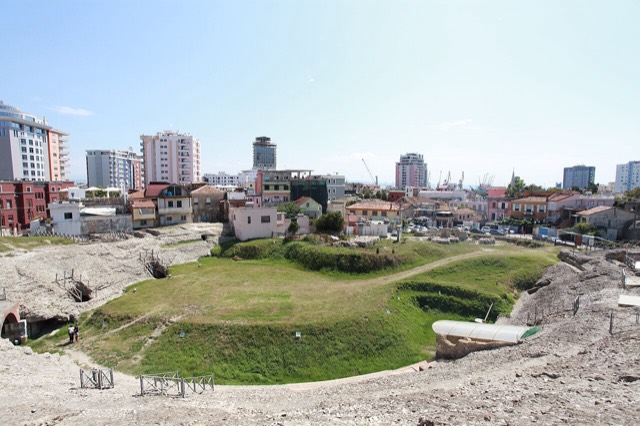
Cidade · Durrës
Albania's principal port and its oldest continuously inhabited city, founded as Epidamnos in 627 BC.
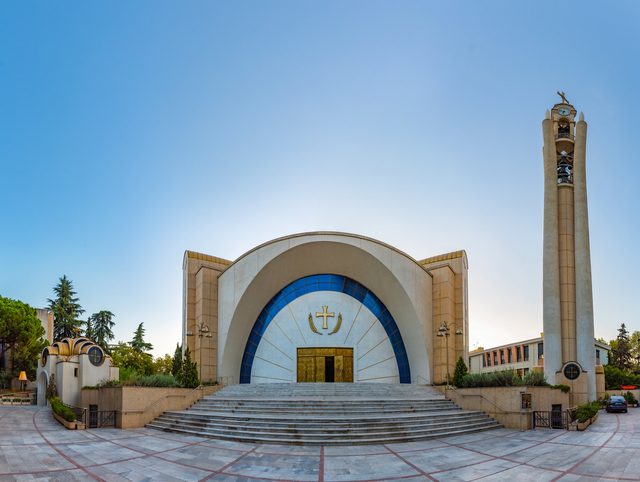
Assunto
An autocephalous church since 1937, rebuilt almost from nothing after 1991.
Algo errado nesta página? As correções são bem-vindas e verificadas em confronto com o registo de origem. Indique o que está errado e, se possível, de onde provém o valor correto.