Thành phố · Korçë
Korçë
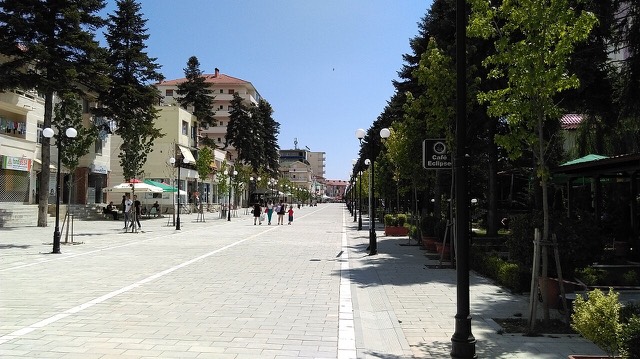
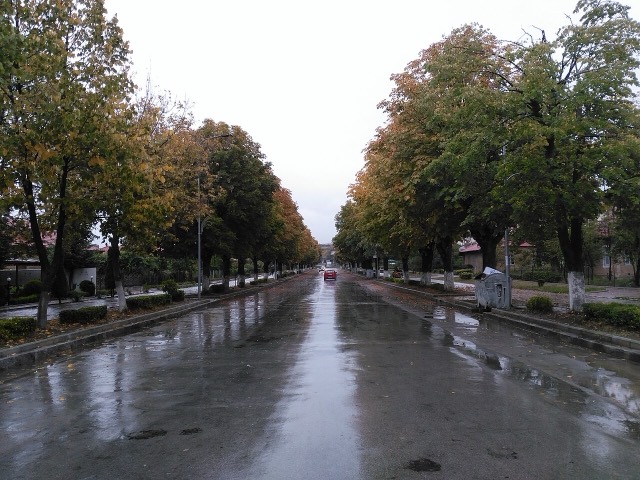
The highland city of serenades, the first Albanian-language school, and the country's oldest brewery.
Mọi hạt, mọi bờ biển, mọi thế kỷ
Chế độ hướng dẫn
Mới tìm hiểu về Albania? Mỗi trang mở đầu bằng một giải thích ngôn ngữ đơn giản mà bạn có thể đọc cho một đứa trẻ mười tuổi, trước khi đi vào chi tiết.
Chế độ chuyên gia
Bạn đã nắm được những điều cơ bản. Đi thẳng vào nội dung, với các giải thích đơn giản được ẩn đi. Đây là chế độ mặc định.
Hạt
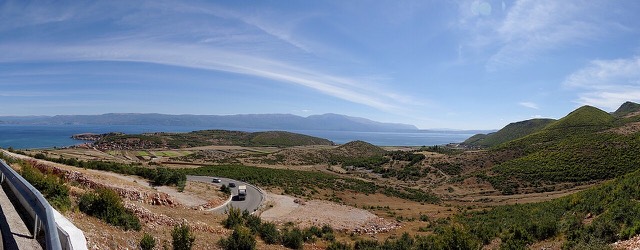
A high south-eastern plateau of lakes and orchards, with a distinct café and brewing culture.
Lưu
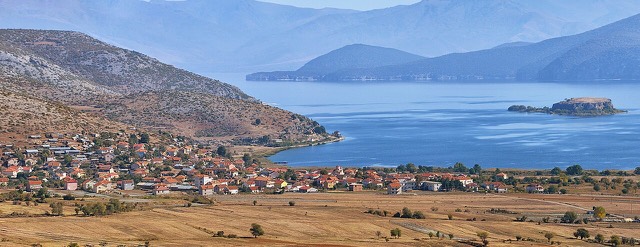
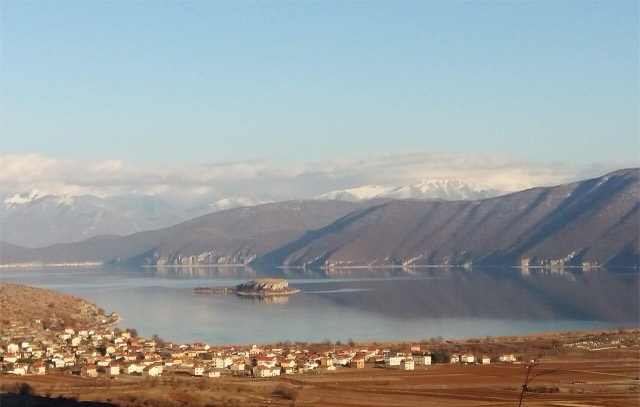
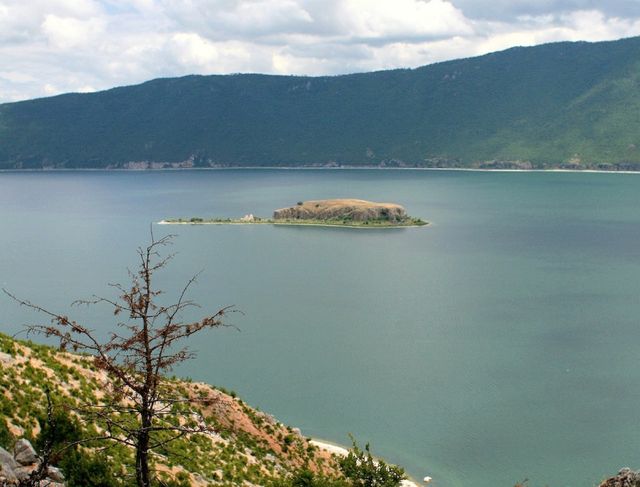
Korçë County is high up in the south-east, so it is colder than the coast and gets snow. It has two big lakes, Ohrid and Prespa, lots of apple orchards, and a city known for its cafés, beer and serenade singing.
Korçë County is high up in the south-east, so it is colder than the coast and gets snow. It has two big lakes, Ohrid and Prespa, lots of apple orchards, and a city known for its cafés, beer and serenade singing.
The name Korçë derives from a Slavic root. The word 'gorica' means 'hill' in South Slavic languages and is a diminutive of 'gora', meaning mountain. Both forms appear as place-name elements across Slavic and non-Slavic countries alike, including Albania, Greece, Italy, and Kosovo. The Albanian form of the name—Korça in the definite form—coexists with a range of equivalents in neighbouring languages: Aromanian Curceaua or Curciau; Bulgarian, Macedonian and Serbian Горица (Goritsa); Greek Κορυτσά (Korytsa); Italian Coriza; Romanian Corcea or Corița; and Turkish Görice.
The name Gorica originally corresponded to an older fortified settlement, separate from the community of Piskopiye. Piskopiye—its name suggesting a bishop's residence—was subsequently absorbed into the growing town and became the core of what is now Korçë. The Greek form Episkopi signifies a sacred place for the Orthodox faith, though whether the later construction of an Ottoman mosque on or near an older Orthodox site was coincidence or deliberate policy remains uncertain.
The foundation of Korçë is closely linked to Ilias Bey Mirahori, a Muslim Albanian convert born in the village of Panarit in the Korçë area. He held the position of Master of the Stables under Sultan Bayezid II and was the first equerry at the Ottoman capture of Constantinople. In 1484 the Sultan rewarded him with seven villages in the Korçë area—Leshnjë, Vithkuq, Peshkëpi, Boboshticë, Panarit, Treska, and Trebicka—formalised through four separate firmans issued over the following years.
The first firman granted Leshnjë and Vithkuq as mülk (freehold land tenure), but collection of revenues proved difficult and after twelve years these reverted to timar status. A second firman in 1497 substituted them with the locality of Piskopiye. A third firman the same year defined Piskopiye's boundaries between Mborje, Barç, and Bulgarec—the territory corresponding to today's city of Korçë. Within this area Ilias Bey built a mosque (constructed between 1484 and 1495 and named after him), an imaret, a muallim-hane, and a hammam, intending to raise the settlement to the status of a kasaba by registering its inhabitants as citizens rather than farmers.
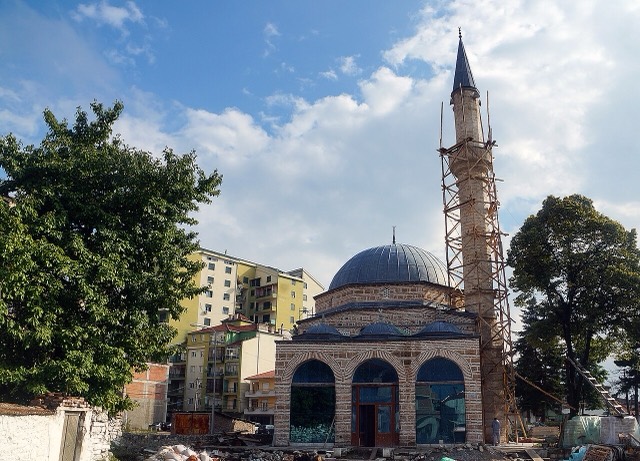
The Mirahori Mosque represents one of the most important examples of Islamic architecture in Albania and is its second oldest mosque after the Sultan's Mosque of Berat. The vakf he established also served to organise the settlement of Muslim inhabitants in an area that had been recently abandoned by its original Christian population. By 1505 the villages of Episkopi, Boboshtica, Leshnjë, and Vithkuq were being used as income sources for Ilias Bey's five charitable institutions. The Tapu Defter of 1519 records a cemaat of Christian müsellems in the castle of Mborje, which depended on Korçë and at that date numbered 88 Christian and 18 Muslim households.
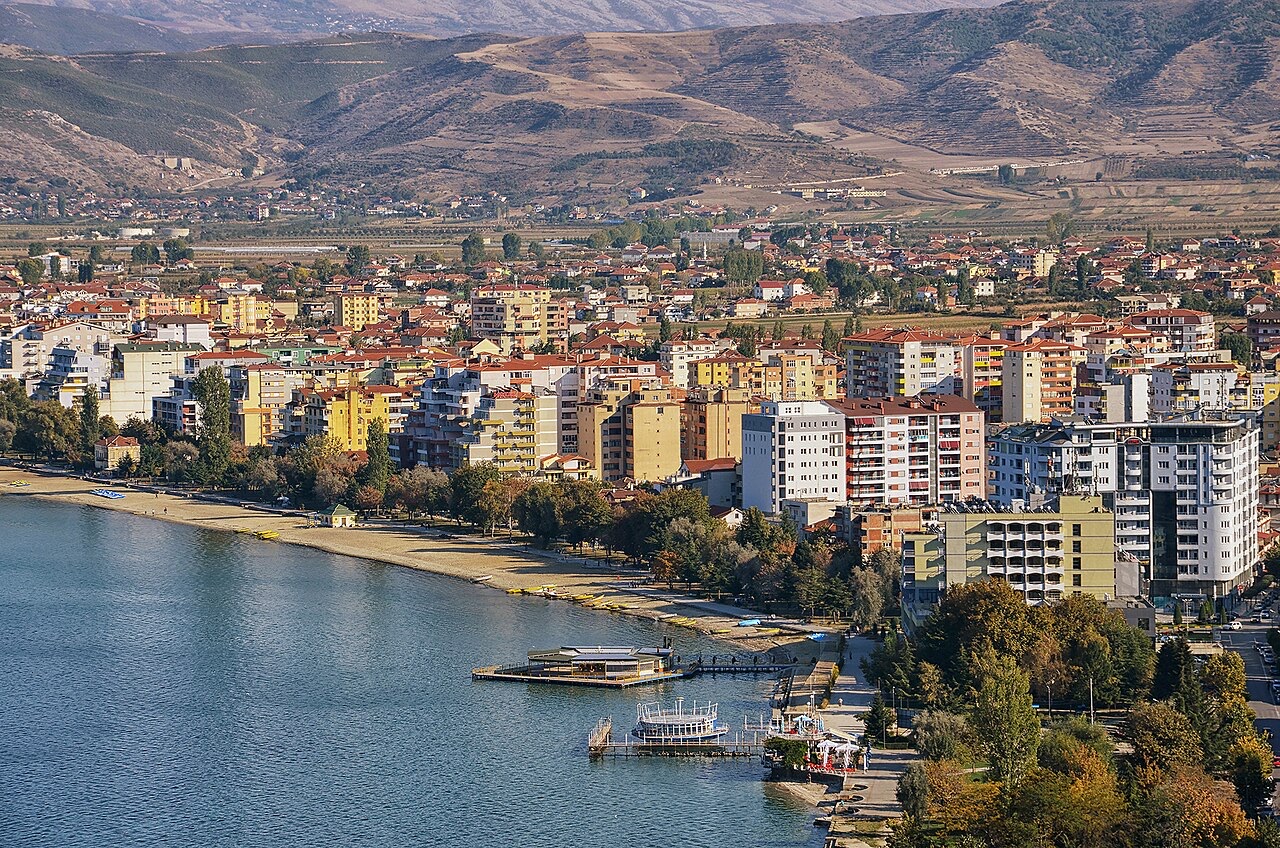
Korçë was organised into two large neighbourhoods: Varosh and Kasaba. By the 16th century Muslims constituted 21 percent of the town's population and inhabited Kasaba, which was subdivided into Çarshi, Ratak, Qoshk, and Dere, encompassing the institutions Ilias Bey had founded. The Christian population lived in Varosh, itself divided into Varosh i Sipërm (Upper Varosh) and Varosh i Poshtëm (Lower Varosh).
Varosh i Sipërm contained the smaller neighbourhoods of Mano, Barç, Jeni-Mahallë, Qiro, Penço, Manço, Manto, and Kala. Varosh i Poshtëm consisted only of Katavarosh, also known as 'Lagja e Shën Mërisë' after the church located there. Administratively, the town was incorporated as a sandjak within the Manastir Vilayet of the Ottoman Empire.
The destruction of the nearby town of Moscopole (Voskopojë) by Ali Pasha's forces in 1789 redirected some of its commerce to Korçë and Berat, and part of Moscopole's displaced population settled in Korçë. Greek sources (Liakos and Aravandinos) record that Aromanian settlers came not only from Moscopole but also from the village of Shalës in Kolonjë, establishing the Varosh market district. Psalidas' Geography of 1830 noted that 100 Aromanian families lived in the Varosh district at that time.
French diplomat François Pouqueville recorded 1,300 families in the city in 1805, two-thirds of them Christian. The population grew from around 8,200 in 1875 to approximately 18,000 by 1905, of whom 14,000 adhered to Orthodox Christianity. Ethnographers of the early 20th century generally classified the city as Albanian. Greek was the language of the elite; Aromanians dominated commerce, crafts, and international trade, becoming one of the wealthiest communities in Epirus and Macedonia, while ethnic Albanians were described in contemporary sources as predominantly engaged in stockbreeding and agriculture. Both Albanian and Greek were spoken in the city.
The first school in Korçë, a Greek-language institution, was founded in 1724 with support from residents of nearby Vithkuq. It was destroyed during the Greek War of Independence and reopened in 1830. A Greek school for girls was operating by 1857, and by the eve of the Balkan Wars in 1912 a total of 2,115 students were attending Greek-language education in the city. A community fund, the Lasso fund, was established in 1850 by the local Orthodox bishop Neophytos to support Greek cultural activity.
Around 1850 Naum Veqilharxhi created an Albanian alphabet, and a small number of books were published in it, with the script briefly flourishing in Korçë. In 1885 Jovan Cico Kosturi, Thimi Marko, and Orhan Pojani founded the Albanian Cultural Society, which was suppressed by Ottoman and Orthodox Church authorities and continued underground as the Secret Committee of Korça. In March 1887, with assistance from the Frashëri brothers, the committee established the first Albanian-language school. This institution—known as the Drita (Light) school, its first director Pandeli Sotiri—had received Ottoman permission only for Christian children, but Albanian organisers admitted Muslim children as well. The school survived until 1902 under teachers Leonidis and Naum Naça, who were arrested at the request of Greek clergy; the school was then closed, vandalised, and wrecked.
In the late 1880s Gjerasim Qiriazi began a Protestant mission in the city. His sister Sevasti Qiriazi founded the first Albanian girls' school in 1891; it was later run by Sevasti and Parashqevi Qiriazi together with Polikseni Luarasi (Dhespoti), with further support from Rev. and Mrs. Grigor Cilka and Rev. and Mrs. Phineas Kennedy of the Congregational Mission Board of Boston. Both the boys' and girls' Albanian schools were closed by Ottoman authorities during 1902–1904. The Central Committee for Defending Albanian Rights, active in the late 1870s, had also devised a Latin-based Albanian script that was adopted by British and US Protestant missionaries.
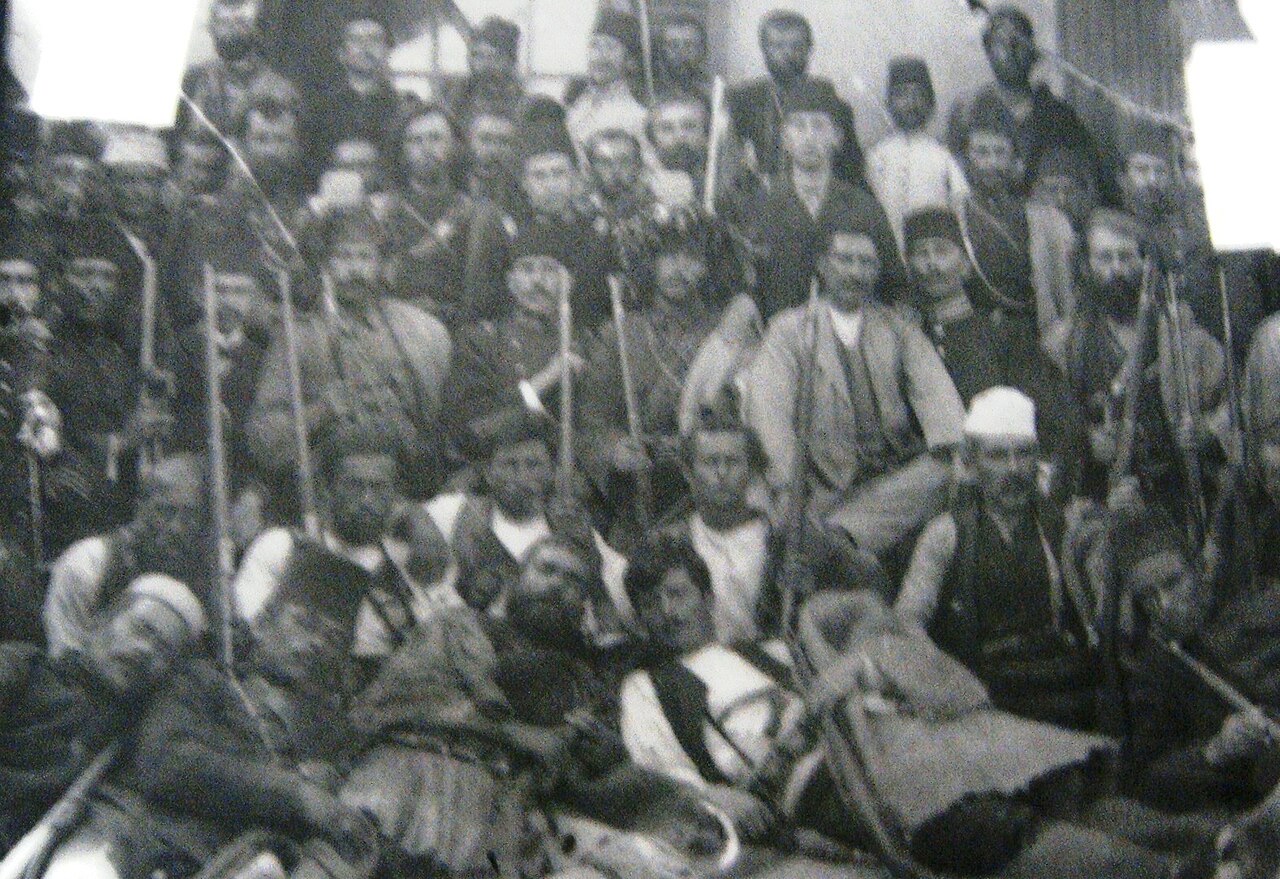
Albania declared independence in 1912, ending Ottoman rule over Korçë. The Treaty of San Stefano (1878) had proposed incorporating the city and its surroundings into the Principality of Bulgaria, but the Treaty of Berlin the same year returned the area to Ottoman rule. Albanian çeta bands led by Sali Butka, Spiro Bellkameni, and Kajo Babjeni briefly liberated Korçë from the Ottomans in August 1912. Greek forces captured the city from the Ottomans on 6 December 1912 and subsequently imprisoned Albanian nationalists. Greece disputed the city's incorporation into Albania in 1913, claiming it as part of Northern Epirus; under the Protocol of Corfu of May 1914 Korçë became part of the Autonomous Republic of Northern Epirus within Albanian borders, but on 10 July 1914 Greek Northern Epirote forces occupied it.
During the Greek occupation a census counted 15,453 inhabitants, designating 11,453 as 'Greeks' and 4,000 as 'Albanians'; however, the census did not inquire about ethnicity but assigned all Christians the label 'Greeks' and all Muslims the label 'Albanians'. Contemporary ethnographers sympathetic to Greek claims nonetheless considered the city Albanian. Greece wished to retain Korçë because it provided the only viable land communication route between Epirus and Macedonia—passes over the Pindus range being considerably more difficult.
During the Greek National Schism of 1916, local revolt brought the city under Venizelist control, but it soon passed to French military administration (1916–1920). Albanian guerrilla bands under Themistokli Gërmenji and Sali Butka resisted Greek Venizelist forces. Sali Butka led 1,500 men to surround Korçë and threatened it with the same fate as Moscopole, which his band had burned. French General Maurice Sarrail, on 8 December 1916, cabled that French policy should shift to support the Albanian nationalist uprising, aiming to protect his flank, link up with Italian forces at Vlorë, and reduce the troops required to hold the area.
On 10 December 1916 fourteen Albanian delegates—seven Muslims and seven Christians—proclaimed the Autonomous Albanian Republic of Korçë. Colonel Descoins and the Albanian representatives signed a protocol placing the republic under French military protection with Themistokli Gërmenji as president. Greek schools were closed, Greek clergy and pro-Greek notables expelled, and Albanian education promoted. The republic minted its own coinage, flew its own flag, and printed its own stamps. Greek schools were reopened in February 1918, some 14 months later, as a concession when Greece re-entered the war. On 16 February 1918, Sarrail's successor officially abrogated the proclamation. Gërmenji was subsequently executed on charges of being an Austrian spy; it later became clear that the military tribunal had been misled by Greek informers. In response, Sali Butka assembled a force of 20,000 Albanians and surrounded Korçë, forcing the French to hand the city back to Albanian rather than Greek control. A League of Nations report of December 1921–1922 by Finnish commissioner Jakob Sederholm stated that Korçë's population was 'entirely Albanian; the numbers of Greeks being insignificant'. The city ultimately remained part of Albania as confirmed by the International Boundary Commission, which affirmed the country's 1913 borders.
Italian forces occupied Korçë in 1939 along with the rest of Albania. During the Greco-Italian War the city served as the main forward base of the Italian air force. Greek forces captured it on 22 November 1940 during the first phase of the Greek counter-offensive, and Korçë remained under Greek control until the German invasion of Greece in April 1941. Following Italy's withdrawal from the war in 1943, German forces occupied the town until 24 October 1944.
During the Axis occupation Korçë became a major centre of Communist-led resistance. The Albanian Party of Labour—the Communist Party of Albania—was formally proclaimed in Korçë in 1941. Albanian rule was restored in 1944 after the German withdrawal. Under Enver Hoxha's Stalinist government, Korçë acquired substantial industrial capacity in addition to its established commercial and agricultural role; local industries came to include knitwear, rugs, textiles, flour-milling, brewing, and sugar-refining. Popular revolts in February 1991 ended with the removal of Hoxha's statue, and after 1990 Korçë was one of six Albanian cities in which the New Democratic Party won all constituencies.
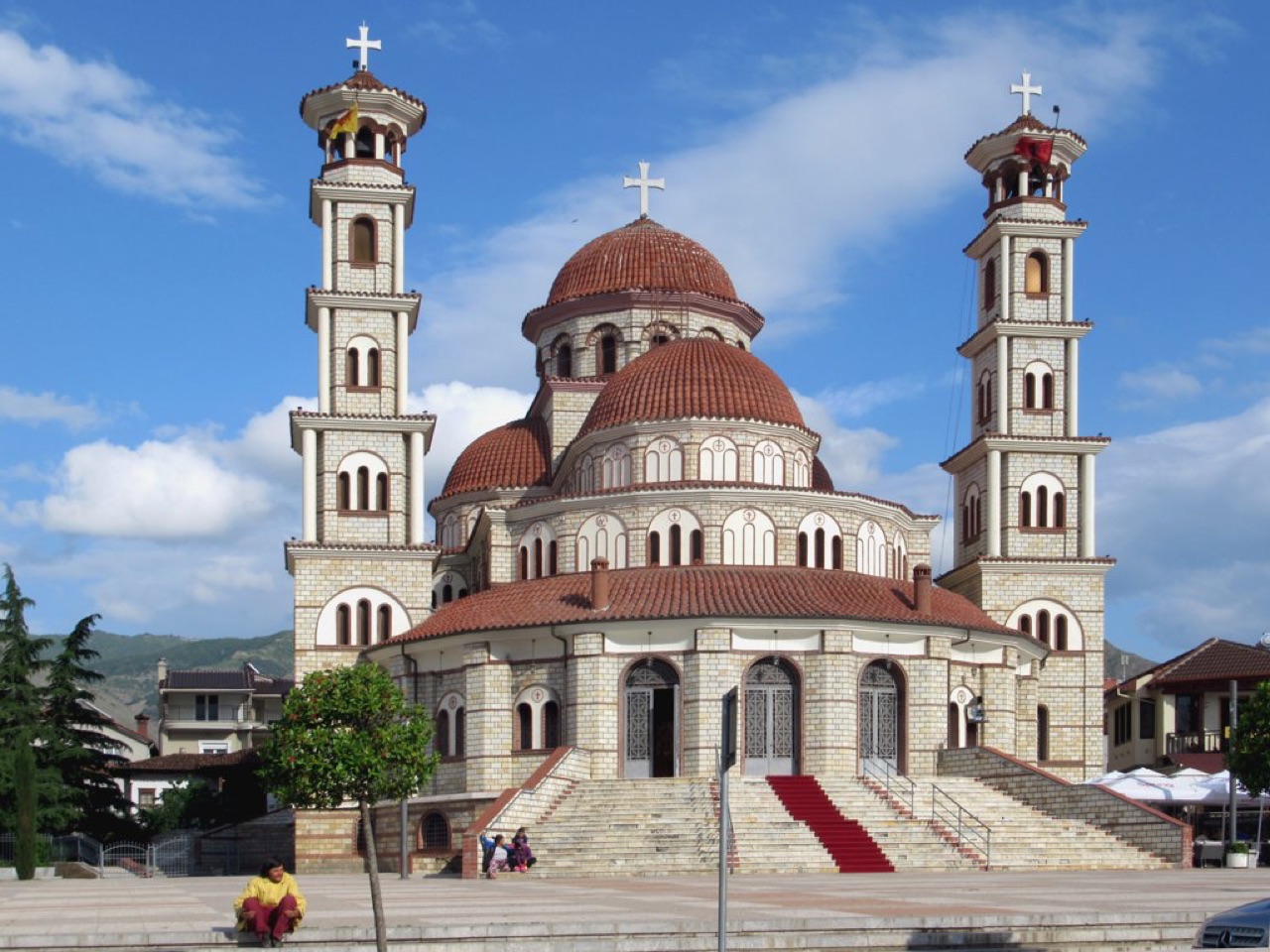
Korçë has functioned as a significant religious centre for both Orthodox Christians and Muslims. The Korçë district was initially part of the Metropolis of Kastoria in the 15th century; in the early 17th century it became the seat of an Orthodox bishop, and in 1670 was elevated to a metropolitan bishopric. The city remained entirely Christian until the first half of the 16th century. The Orthodox Cathedral of Saint George was demolished by the authorities of the People's Republic of Albania during the atheistic campaign. The St Sotir Church, serving the Aromanian community, was built between 1995 and 2005; an earlier building on the same site had been completed in 1925 but was demolished by communist authorities in 1959.
Islam reached the city in the 15th century through Iljaz Hoxha, an Albanian janissary who participated in the Fall of Constantinople. The Iliaz Mirahori Mosque, built in 1484, is one of the oldest mosques in Albania. Significant Sunni and Bektashi communities have existed in and around the city; the main Bektashi centre is the Turan Takya. In 1940 the city's Evangelical Church was closed by Italian fascist forces. Smaller numbers of Catholics and Protestants are also present. The Romani population of Korçë is predominantly Muslim; those settled in the Varosh neighbourhood are Orthodox Christian. The Romani community's presence in the city dates mainly from the early 20th century, when they migrated from Turkey via Florina.
Korçë is regarded as an intellectual and cultural centre for southern Albania. The city is known for handmade rugs with distinctive local motifs, and for a genre of urban songs called serenata. It hosts the largest carnival in Albania, held before Orthodox Easter, a tradition recorded as dating back approximately 40 years from the time of writing. The annual Lakror Festival, organised by Korçë municipality, celebrates the regional Albanian pie lakror and is held in the city or in a surrounding village. The National Museum of Medieval Art holds approximately 7,000 icons and 500 objects in textile, stone, and metal. The National Museum of Archaeology, the Bratko Museum, the Oriental Museum, the first Albanian school building, and the residence and gallery of painter Vangjush Mio also operate in the city. The Andon Zako Çajupi Theatre has operated continuously since 1950.
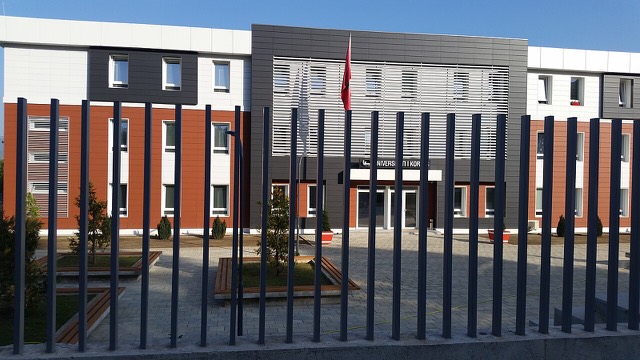
Fan Noli University, founded in 1971, offers degrees in the humanities, sciences, and business, with faculties covering agriculture, teaching, business, nursing, and tourism. In April 2005 the first bilingual Greek-Albanian school opened in the city after approximately 60 years during which Greek-language education had been prohibited; 17 Greek-language tutoring centres also function in the city. A madrassa was built in 2009, operated by the Muslim Community of Albania. Football club Skënderbeu Korçë, founded on 15 April 1909 under the name Vllazëria, won the Albanian championship in 1933 and subsequently in 2011, 2012, 2013, 2014, 2015, 2016, and 2018; in 2015 the club became the first Albanian side to reach the UEFA Champions League play-off round and the first to qualify for the group stage of European competition. The city's main industrial product of national note is Birra Korça brewery. Greek and Romanian consulates operate in the city, which is twinned with Los Alcázares (Spain), Cluj-Napoca (Romania), Mitrovica (Kosovo), and Thessaloniki (Greece).
Thành phố · Korçë
The highland city of serenades, the first Albanian-language school, and the country's oldest brewery.
Hồ · Korçë
A high tectonic lake where Albania, Greece and North Macedonia meet, draining underground into Ohrid.
Di tích lịch sử · Korçë
Six surviving basilicas of a town that once rivalled any city in the Balkans, covered inside with frescoes.
Hồ · Korçë
One of Europe's oldest and deepest lakes, UNESCO-listed and home to species found nowhere else.
Thị trấn · Korçë
The seat of Devoll municipality, on the Greek border in an apple-growing plain.
Di tích lịch sử · Korçë
Floor mosaics of birds and vines from a hilltop basilica above Lake Ohrid.
Thị trấn · Korçë
The highest town in Albania, seat of Kolonjë municipality below Mount Gramos.
Thị trấn · Korçë
A lakeside town on Ohrid, a UNESCO natural and cultural site shared with North Macedonia.
Làng · Korçë
In the 18th century one of the largest towns in the Balkans; today a village of frescoed churches.
Làng · Korçë
A stone village at 1,340 m in the Morava mountains, one of Albania's small ski destinations.
Làng · Korçë
A peninsula village on Lake Ohrid with a 6th-century basilica floor mosaic and a prehistoric pile settlement.
Thị trấn · Korçë
A lakeside municipality on Lake Prespa with a recognised Macedonian minority.
The Albanian share of a three-country park around the Great and Small Prespa lakes.
A town on a drained marsh plain, built around a sugar refinery in the 1950s.
Spring-fed canals and plane trees on the Ohrid shore east of Pogradec.
The public university of the south-eastern highlands.
Có thông tin sai trên trang này? Chúng tôi hoan nghênh các đề nghị đính chính và sẽ đối chiếu với hồ sơ nguồn. Hãy cho chúng tôi biết điều gì sai và, nếu có thể, nguồn số liệu chính xác là ở đâu.