Город · Elbasan
Elbasan
A central industrial city inside an Ottoman fortress wall, on the old Via Egnatia.
Каждый округ, каждый берег, каждый век
Режим с пояснениями
Впервые об Албании? Каждая страница начинается с доступного объяснения, понятного даже десятилетнему ребёнку, и лишь затем переходит к подробностям.
Режим эксперта
Основы вам уже известны. Сразу к существу вопроса, без простых пояснений. Это режим по умолчанию.
Округ
A central industrial and agricultural county on the Shkumbin river, historically the road east.
Сохранить
Elbasan County sits in the middle of Albania on the Shkumbin river. It has factories, farms and a big steel works. The old Roman road to the east, the Via Egnatia, ran through here.
Elbasan County sits in the middle of Albania on the Shkumbin river. It has factories, farms and a big steel works. The old Roman road to the east, the Via Egnatia, ran through here.
In the second century BC, a Roman trading post recorded in Latin as Mansio Scampa developed near the site of modern Elbasan, close to a junction of two branches of the Via Egnatia. That road connected the Adriatic coast with Byzantium and ranked among the most important routes of the Roman Empire. The settlement appears on late antique itineraries including the Tabula Peutingeriana and the Itinerarium Burdigalense under the names Scampis or Hiscampis.
By the third or fourth century AD, the site had grown into a fortified city. A substantial Roman fortress with towers covered around 300 square metres. Scampis participated in the spread of Christianity along the Via Egnatia and had a bishop, cathedral, and basilicas by the fifth century. The Roman-Byzantine quarter lay outside the ancient fortress walls and included an early Christian basilica situated beyond the city's fortifications.
Emperor Justinian later improved the fortifications after the legions were withdrawn, leaving the site vulnerable in a wide river valley. The city survived attacks by the Bulgars and Ostrogoths and was recorded by the historian Procopius of Caesarea. Ruins of a Paleochristian basilica dated to the fifth or sixth century AD have been found in the Bezistan area. In August 2010, archaeologists discovered two Roman-era Illyrian graves near the castle walls. In 2026, a well-preserved polychrome mosaic depicting a Christian scene, together with an inscription, was found in the Roman-Byzantine quarter, belonging to an earlier phase of the basilica.
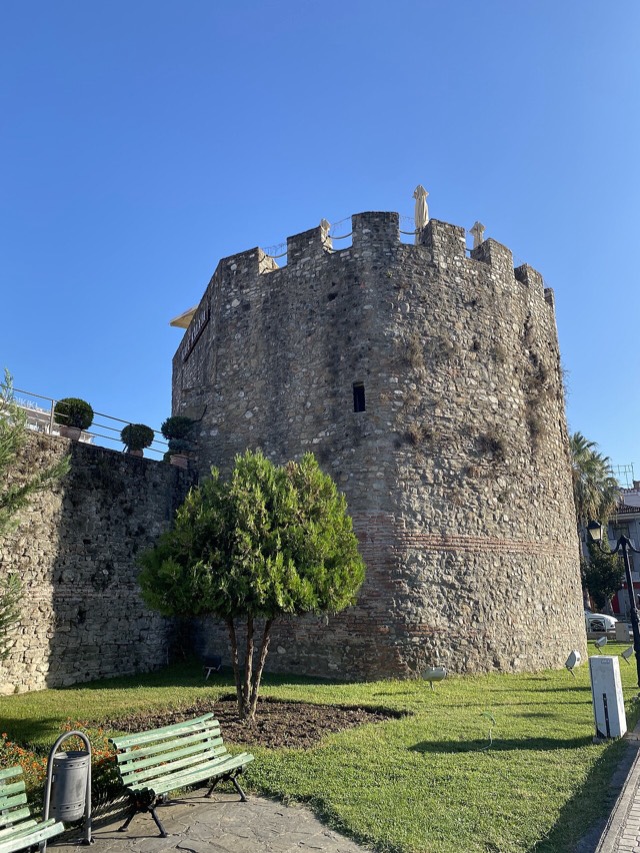
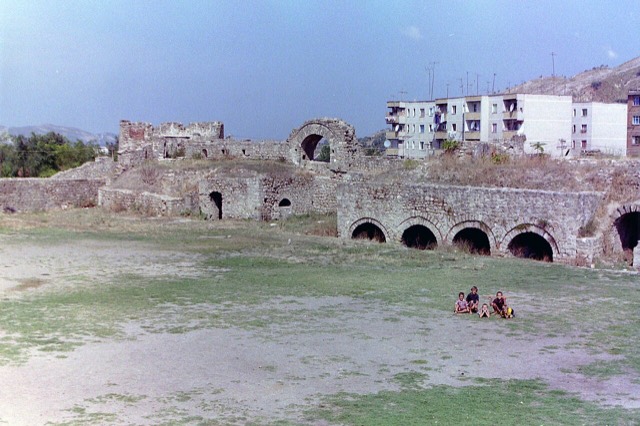
The site appears to have been abandoned after the late antique period until the Ottoman army established a military camp there. Urban reconstruction followed under Sultan Mehmed the Conqueror in 1466, when a massive four-sided castle with a deep moat and three gates was built. Mehmed constructed the castle specifically to prosecute the ongoing conflict with Skanderbeg and the Albanians.
The name Elbasan is derived from the Ottoman Turkish il-basan, meaning 'the fortress.' Alternative readings suggest 'the flat fortress' in Albanian or 'the flat province' in Turkish. The city became the seat of the Sanjak of Elbasan. Halil Inalcik dates the establishment of the Sanjak to 1466, coinciding with the construction of the fortress, though records from Tursun Beg raise the possibility that Elbasan was initially part of the Sanjak of Ohrid. In 1467, many Christians from Skopje, Ohrid, Serres, and Kastoria were forcibly deported to the city.
The fortress that Mehmed constructed was later dismantled by Reshit Pasha in 1832. In 1864, the Sanjak of Elbasan was incorporated into the Monastir Vilayet. Through this period the city served as a centre of Ottoman urban civilisation for 445 years, accumulating a mixed population that by the end of the seventeenth century numbered around 2,000 inhabitants.
The Ottoman traveller Evliya Çelebi passed through Elbasan in the late seventeenth century and noted that all inhabitants spoke Albanian. He observed that Muslim clergy had knowledge of Turkish and were literate in Persian, while merchants also used Greek and 'Frankish' languages.
By the late nineteenth century, Elbasan was inhabited by 3,000 Muslim families and 280 Orthodox Christian families. Of the Orthodox households, 100 were described as old Albanian families living in the historic Christian neighbourhood within the fortress walls, while 180 were Aromanian families residing in the St. Nicholas neighbourhood on the edge of the city. Albanians, Turks, Aromanians, and Sephardic Jews were also recorded as living in Elbasan. At the beginning of the twentieth century, the population was estimated at 15,000 people.
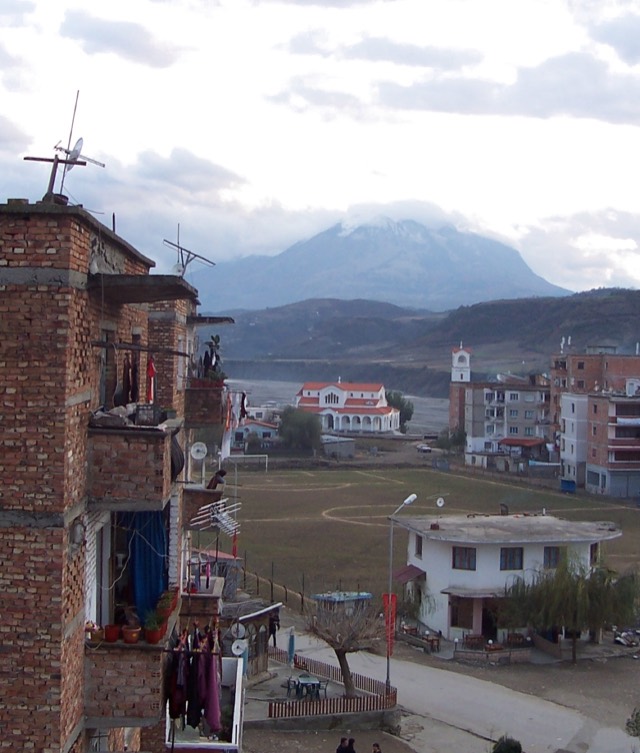
Before the Second World War, the city retained a mixture of eastern and medieval buildings, narrow cobbled streets, and a large bazaar. There was a defined Muslim settlement within the castle walls, an Aromanian district on the outskirts, and several mosques and Islamic buildings. The population at that time was approximately 15,000.
In 1909, following the Young Turks revolution in Istanbul, an Albanian National Congress was convened in Elbasan to address educational and cultural matters. The delegates, drawn entirely from central and southern Albania, endorsed the earlier decision of the Congress of Monastir — held in Monastir, now Bitola in North Macedonia — to adopt the Latin alphabet rather than Arabic script for written Albanian.
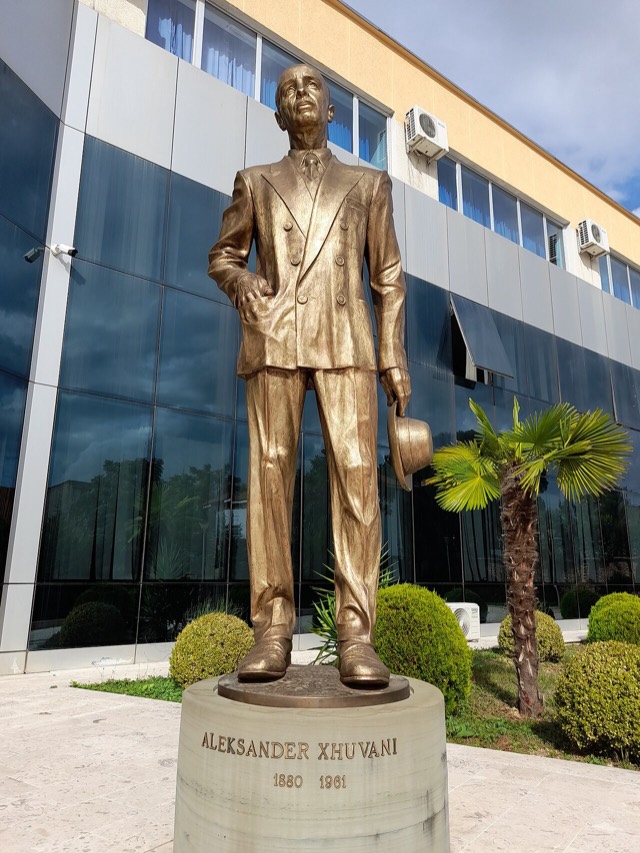
The question was contested locally. After the 1908 Congress of Monastir had reached its decision, Muslim clerics in Elbasan who were influenced by the Ottoman Empire staged demonstrations in favour of retaining the Arabic script. The Saint Mary Orthodox Church, built in 1830 on the foundations of an older church, served as an important centre for the Albanian language during this period. The church building was used as the first Albanian school of Elbasan in modern times, opening in 1909. Notable figures associated with the church — Teodor Haxhifilipi, Kostandin Kristoforidhi, and Aleksandër Xhuvani — translated numerous psalms into Albanian.
Elbasan also hosted the very first teachers' training college in Albania, the Shkolla Normale e Elbasanit, underlining the city's role as an early centre of Albanian-language education.
During the First Balkan War, Serbian troops occupied Elbasan on 29 November 1912. They withdrew on 25 October 1913 following an ultimatum issued by the United Kingdom and Austria-Hungary. The Muslim majority of Elbasan opposed the subsequent installation of Prince Wied in 1914.
Between 1915 and 1918, the city was occupied in succession by Serbian, Bulgarian, Austrian, and Italian forces. The Bulgarian army took Elbasan on 29 January 1916 during the Bulgarian occupation of Albania. In March 1916, Austria-Hungary assumed control. From June 1916 to March 1917, the Czech writer Stanislav Kostka Neumann served with the Austrian army in Elbasan and later recorded his experiences of the occupation in war memoirs.
The wartime period left considerable physical damage to the city. Industrial development in the interwar Zogist period subsequently introduced tobacco and alcohol factories, while the city's buildings, public gardens, and educational facilities had already given it a degree of distinction before the war.
The most significant phase of industrial development in Elbasan occurred during the communist period. The culmination was the construction of the Steel of the Party metallurgical complex — Albanian: Celiku i Partise — in the Shkumbin valley outside the city. Built with Chinese assistance in the 1970s, the steel mill was commissioned in 1974. Enver Hoxha described the project as 'The Second National Liberation of Albania.'
One account relayed from conversation states that during the communist regime almost everyone in the country appeared to have a gun, likely manufactured at this Chinese-financed factory, and that the country lacked tractors, ploughs, or sewing machines. The city also hosts a ferrochrome smelter commissioned in 1989 by the communist regime, now owned by the Balfin Group.
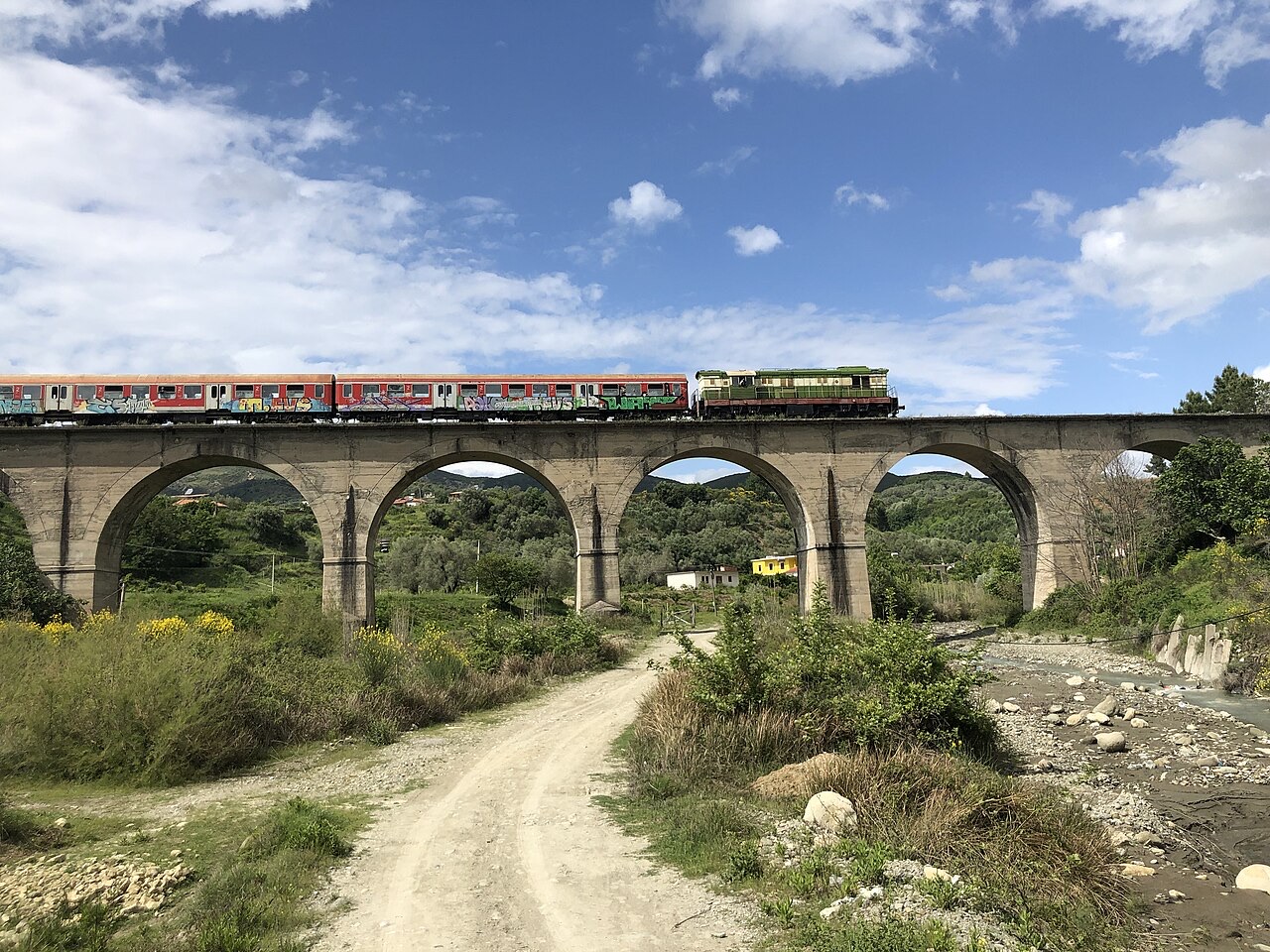
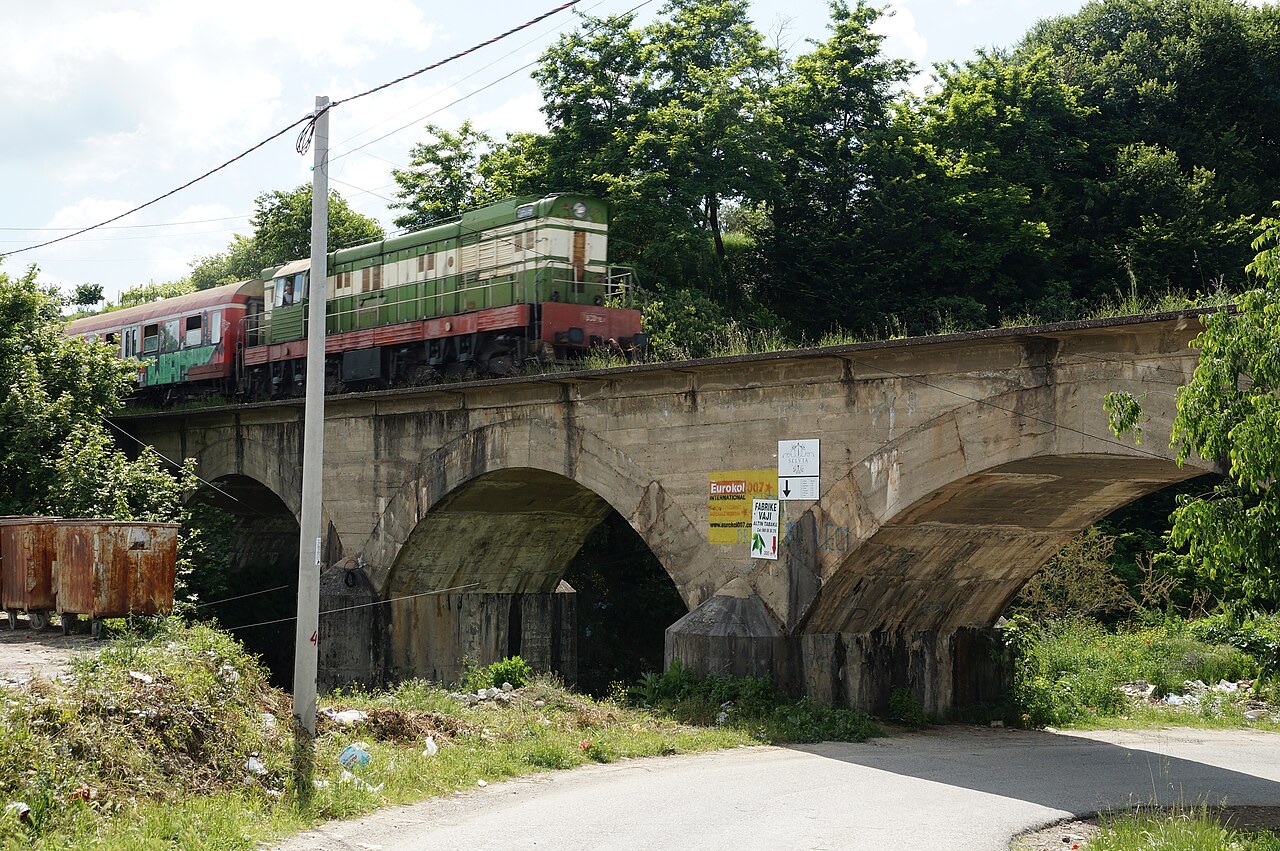
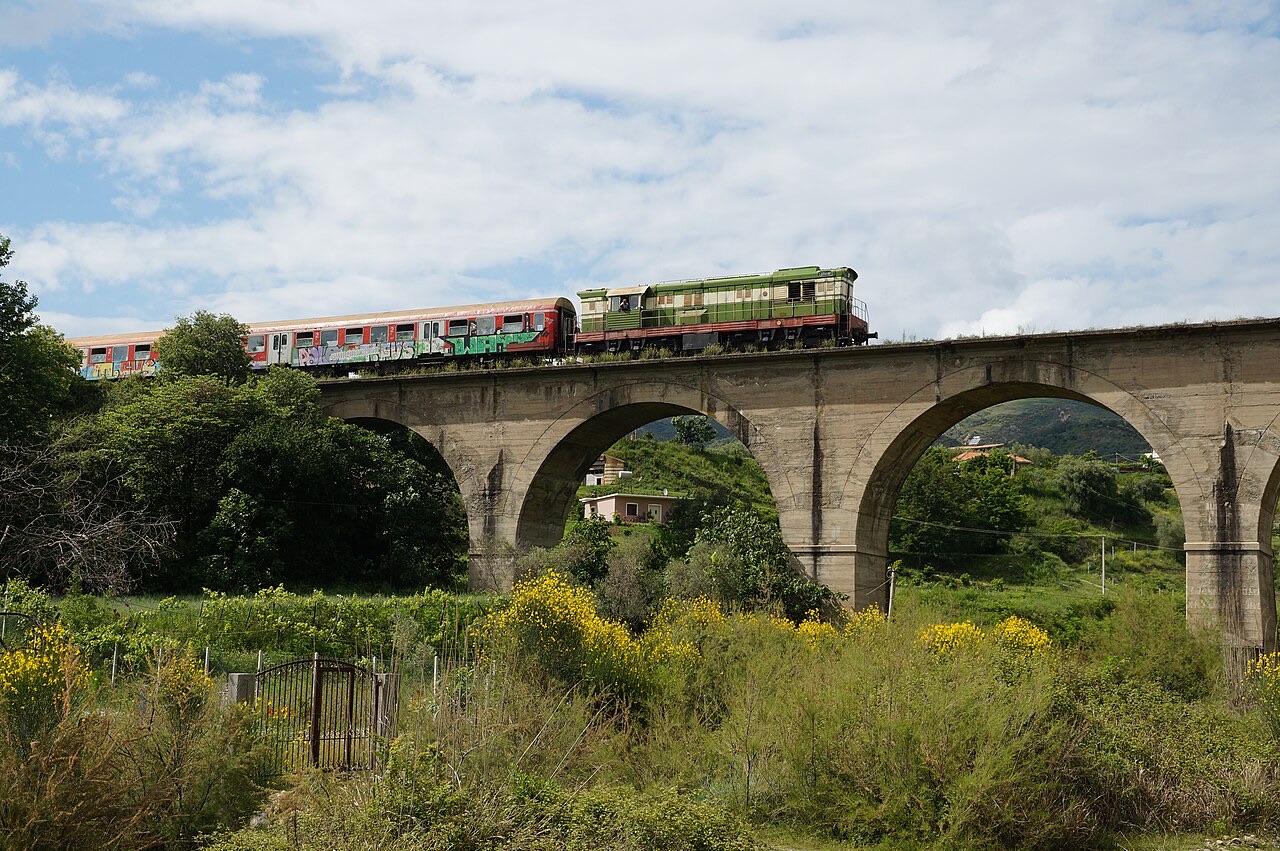
The environmental cost of this industrial programme was high for the Shkumbin valley. Today Elbasan is considered one of the most polluted cities in Albania. In addition to locally generated pollution, environmentalists have identified what they term 'imported pollution' from waste brought into the country for recycling in private companies. The communist-era industrialisation increased the city's population to around 75,000 inhabitants. Elbasan Railway Station opened in 1950.
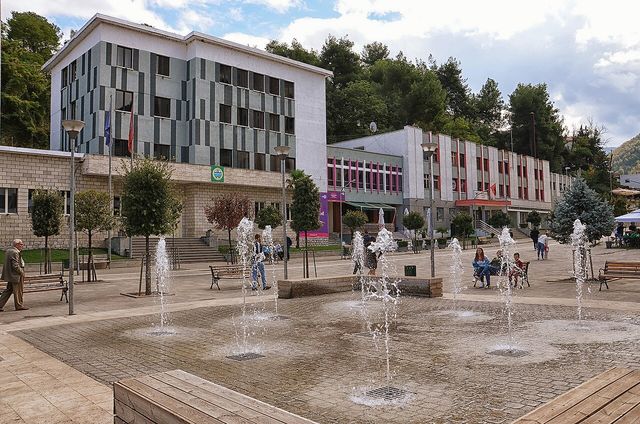
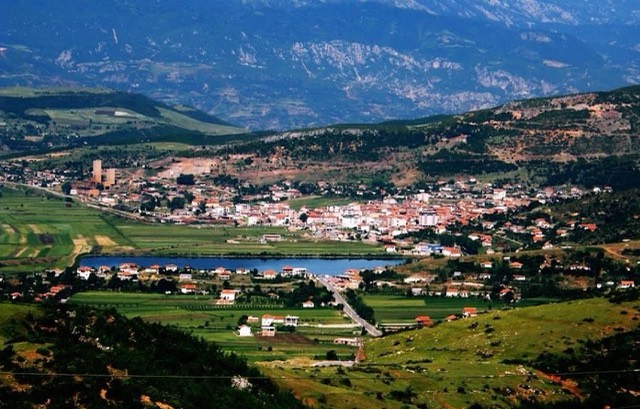
The city of Elbasan lies north of the river Shkumbin, between the Skanderbeg Mountains and the Myzeqe Plain in central Albania. It is the fourth most populous city in the country and serves as the seat of both Elbasan County and Elbasan Municipality.
The municipality encompasses the administrative units of Bradashesh, Funarë, Gjergjan, Gjinar, Gracen, Labinot-Fushë, Labinot-Mal, Papër, Shirgjan, Shushicë, Tregan, Zavalinë, and Elbasan itself. The total area of the municipality is 872.03 square kilometres.
According to the Köppen climate classification, Elbasan has a hot-summer Mediterranean climate, classified as Csa. The average annual temperature is 13.1 °C (55.6 °F).
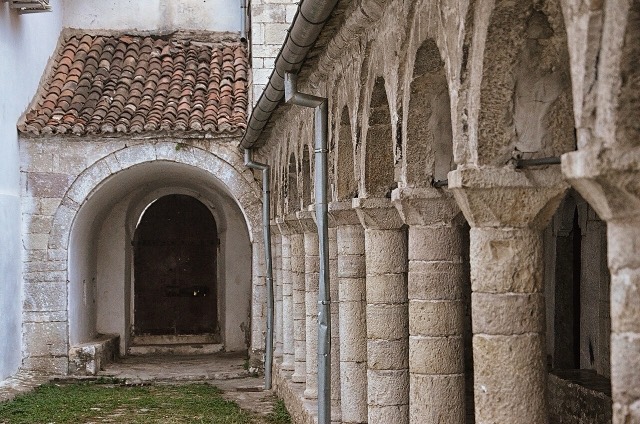
The Saint Mary Orthodox Church stands in the centre of Elbasan. Built in 1830 on the foundations of an earlier church that had partially burned in 1819, it contains paintings and frescoes by Onufri, restored by David Selenicasi and Kostadin Shelcani. Other Orthodox churches in the Elbasan district include the Saint Nicholas church in Shelcan (built 1554), the Saint Nicholas church in Valesh (built 1604), the Mameli church (seventeenth century), the Saints Cosmas and Damian church in Sterstan (eighteenth century), the Saint Michael church in Shalës (seventeenth century), the Saint Mary church in Dragot (eighteenth century), and the Elbasan Saint Athanasius church (built 1554).
Approximately 7 km from Elbasan stands the Orthodox church of St. Jovan Vladimir, built by Albanian monarch Karl Thopia and his son Gjergj Thopia in 1381. The remains of Saint Jovan Vladimir were kept there until 1995, when they were transferred to the Orthodox Cathedral in Tirana; they are returned to the monastery only for his feast days. Elbasan is also the base of the National Autocephalous Albanian Church, an Orthodox body that split from the Albanian Orthodox Church in 1995, led by Father Nikolle Marku.
The city has four museums: the Ethnographic Museum (1982), held in an eighteenth-century building; the Kostandin Kristoforidhi house museum (opened 1978); the Shkolla Normale Museum; and a War Museum. Elbasan is also associated with the Summer Day festivities, a pagan feast marking the end of winter. The traditional food served on that day is ballokume, a cookie made with butter and cornmeal. Since 2004 the occasion has been recognised as a national holiday celebrated across Albania.
The population of the municipality of Elbasan recorded in the 2023 census was 115,101, of which 66,834 were in the municipal unit proper.
Elbasan Arena, the renovated former Ruzhdi Bizhuta Stadium reconstructed by the Albanian government in 2014, serves as the home stadium of the Albania national football team and meets FIFA criteria, making it Albania's de facto national stadium.
Elbasan is twinned with Dunaújváros in Hungary and Osijek in Croatia. The city maintains cooperation and friendship relationships with Bar in Montenegro and Liège in Belgium.
Город · Elbasan
A central industrial city inside an Ottoman fortress wall, on the old Via Egnatia.
Исторический объект · Elbasan
An Ottoman fortress built on a Roman site, with a living town inside its walls.
Охраняемая территория · Elbasan
Old-growth beech forest on the North Macedonian border, part of a UNESCO-listed primeval forest network.
Река · Elbasan
The river that splits Albania in two — the historic dividing line between Gheg and Tosk.
Университет · Elbasan
A central-Albania university built on the country's oldest teacher-training tradition.
Городок · Elbasan
A hill town surrounded by more than eighty small lakes and extensive olive groves.
Компания · Elbasan
The Turkish group that took over the Elbasan steel complex and several hydropower assets.
Нашли ошибку на этой странице? Исправления приветствуются и проверяются по исходной записи. Сообщите нам, что именно неверно, и по возможности укажите, откуда взята правильная цифра.