유적지 · Tiranë
Albania's Bunkers
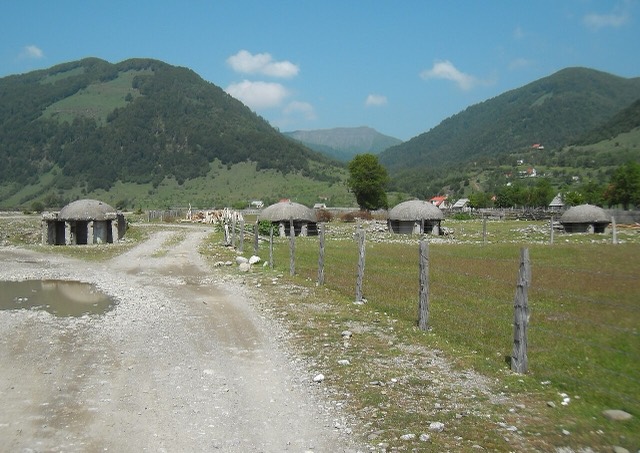
Roughly 170,000 concrete pillboxes built under Enver Hoxha — the most visible physical legacy of the communist state.
모든 주, 모든 해안, 모든 세기
안내 보기
알바니아가 처음이신가요? 모든 페이지는 세부 내용이 시작되기 전에, 열 살짜리 아이도 이해할 수 있는 평이한 설명으로 시작됩니다.
전문가 보기
기본 내용은 이미 알고 계신가요? 간단한 설명은 숨기고 핵심 내용만 바로 확인하세요. 이것이 기본 설정입니다.
도시 · Tiranë County
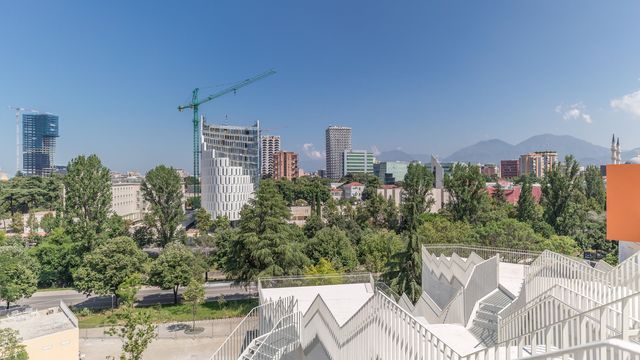
The capital: a fast-changing city of painted blocks, Ottoman survivals and new towers, under Mount Dajti.
저장
Tirana is Albania's capital and biggest city. It grew very fast after 1990, so you see old mosques and Italian-era buildings next to brand-new glass towers. The main square is named after Skanderbeg, and a cable car climbs the mountain behind the city.
Tirana is Albania's capital and biggest city. It grew very fast after 1990, so you see old mosques and Italian-era buildings next to brand-new glass towers. The main square is named after Skanderbeg, and a cable car climbs the mountain behind the city.
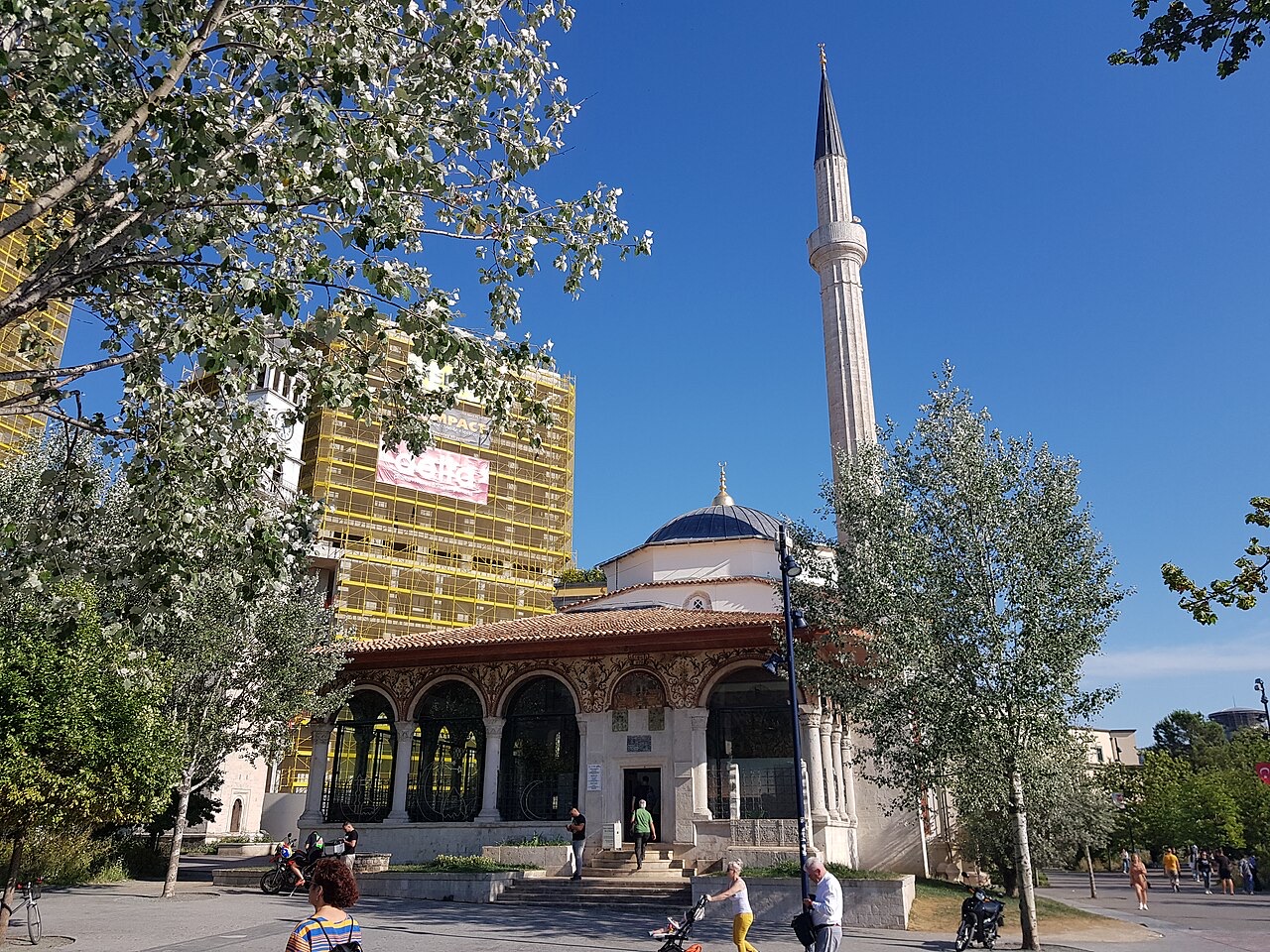
Tirana was formally founded in 1614 by the Ottoman Albanian nobleman Sulejman Pasha Bargjini, who built the Old Mosque, a small commercial centre, and a hammam on the site. The Et'hem Bey Mosque, begun by Molla Bey of Petrela, was completed in 1821 by Molla's son Etëhem, who was also Bargjini's great-nephew and employed the best artisans available in the country at the time.
Settlement on the site predates the formal founding by centuries. Venetian documents mention Tirana in the 1350s and again in 1418. Ottoman land registrations from 1431–32 record 60 inhabited areas, roughly 2,028 houses and 7,300 inhabitants. Marin Barleti, an Albanian Catholic priest writing in 1510, distinguished between 'Little Tirana' and 'Great Tirana', indicating a dispersed but recognisable settlement. According to the scholar Hahn, a bazaar and several watermills were already operating before 1614, and two mosques—the Mosque of Reç and the Mosque of Mujo—stood 300–400 metres from the Old Mosque on the left bank of the Lana River, predating Bargjini's construction.
In 1800, Aromanian migrants from villages near Korçë and Pogradec arrived and settled around the area of what is now Tirana Park by the Artificial Lake. Known locally as the llacifac, they were the first Christians to settle in the town after its creation. By 1807 Tirana had become the administrative centre of the Subprefecture of Krujë-Tirana, and after 1816 it came under the control of the Toptani family of Krujë before eventually becoming a sub-prefecture of the Vilayet of Shkodër and the Sanjak of Durrës. Albanian-language instruction began in Tirana's schools in 1889, and the patriotic club Bashkimi was founded there in 1908.
The earliest recognised evidence of human habitation in the Tirana area comes from the Cave of Pëllumbas, which contains artefacts from the Palaeolithic period. Illyrians are identified as the first population of the area and are thought to have formed the core of the Illyrian kingdom of the Taulantii, which in classical antiquity was centred in the hinterland of Epidamnus.
Following the Illyrian Wars, Rome integrated the territory into its empire under the political control of the city of Rome. The oldest surviving physical discovery from this period is a Roman house dating to the 3rd century, which was later converted into an aisleless church with a mosaic floor. A castle, possibly called Tirkan, was built by the Byzantine Emperor Justinian I between the 4th and 6th centuries and subsequently restored by Ahmed Pasha Toptani in the 18th century. With the collapse of the Western Roman Empire in the fourth century, most of Albania passed to the Eastern Roman Empire.
On 28 November 1912, President Ismail Qemali raised the national flag in Vlorë, marking Albanian independence. The following years were turbulent: on 27 November 1912, after more than 400 years of Ottoman occupation, the Serbian army occupied Tirana and annexed it into the Kingdom of Serbia's Durrës County. In response to massacres during Serbian rule, Tirana participated in an uprising of villages led by Haxhi Qamili. Tirana was liberated in 1913 following the Treaty of London, which required the Serbian army to withdraw from Albanian territory.
On 8 February 1920, the Congress of Lushnjë proclaimed Tirana the temporary capital of Albania. The city acquired permanent capital status on 31 December 1925. In August 1916, the first city map had been compiled by specialists of the Austro-Hungarian army. In 1923, the first regulatory city plan was prepared by Austrian architects. The layout of the city centre was the work of Florestano Di Fausto and Armando Brasini, architects associated with the Mussolini period in Italy; Brasini established the basic arrangement of the ministerial buildings. The plan was subsequently revised by Albanian architect Eshref Frashëri, Italian architect Castellani, and Austrian architects Weiss and Kohler.
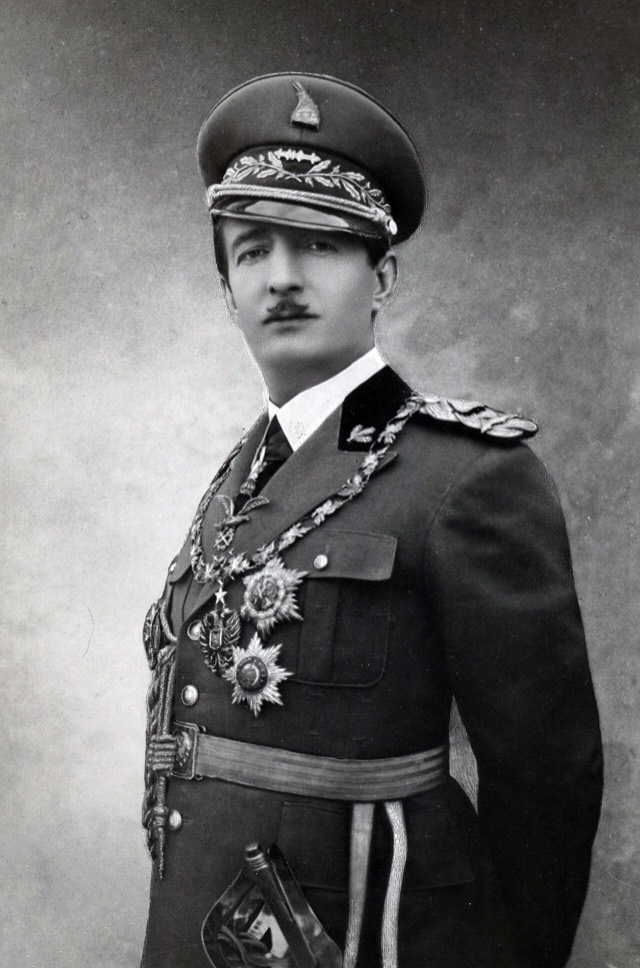
The influx of Albanian inhabitants from Debar after Serbia captured that town added a significant Dibran community to Tirana from 1920 onward. The building that later became the modern Albanian parliament building originally served as an officers' club. It was there, in September 1928, that Zog of Albania was crowned King Zog I, King of the Albanians. During King Zog's rule, many Muhaxhirs migrated to Tirana, contributing further to population growth in the early 20th century.
In 1939, Tirana was captured by Fascist Italian forces, who installed a puppet government. Italian architect Gherardo Bosio was engaged to elaborate on earlier urban plans and to design the area of present-day Mother Teresa Square. A failed assassination attempt on King Victor Emmanuel III of Italy was carried out by a local resistance activist during his visit to the city.
In November 1941, two emissaries of the Communist Party of Yugoslavia, Miladin Popović and Dušan Mugoša, convened representatives of three Albanian communist groups in Tirana and founded the Communist Party of Albania. Enver Hoxha soon emerged as its leader. Tirana became the organisational centre of the Albanian communist movement, which mobilised locals against Italian and, later, Nazi German forces. On 4 February 1944, the Gestapo, supported by the forces of Xhafer Deva, executed 86 anti-fascists in the city. On 17 November 1944, following a fierce battle between communist forces and German troops, the Germans withdrew and the communists seized power.
Between 1944 and 1991, Tirana was substantially remodelled. Massive socialist-style apartment complexes and factories were constructed, while Skanderbeg Square was redesigned and several buildings demolished. The Old Bazaar and the Orthodox Cathedral were razed to build the Soviet-styled Palace of Culture. The northern section of the main boulevard was renamed Stalin Boulevard and a statue of Stalin was erected in the city square. Private car ownership was banned, and mass transportation depended mainly on bicycles, trucks and buses.
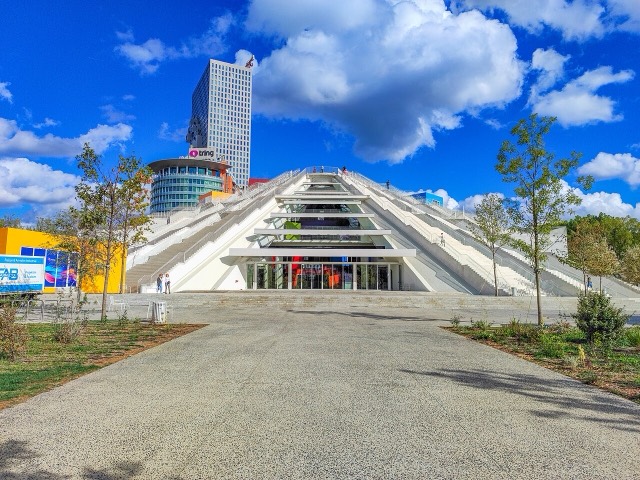
After Enver Hoxha's death, the government constructed a pyramidal museum in his memory. Before and after the proclamation of Albania's policy of self-imposed isolationism, high-profile visitors came to the city, among them Soviet leader Nikita Khrushchev, Chinese Premier Zhou Enlai and East German Foreign Minister Oskar Fischer. In 1985, Hoxha's funeral was held in Tirana. Mother Teresa subsequently became the first religious figure to visit Albania after the end of its enforced atheist policy, paying respects to her mother and sister buried at a local cemetery.
The communist period ended with large student-led demonstrations in the early 1990s, which began at the campus of the University of Tirana and culminated in Skanderbeg Square with the toppling of Hoxha's statue. Then-U.S. Secretary of State James Baker visited the capital in the aftermath of communism's fall, addressing hundreds of thousands gathered in Skanderbeg Square. Pope John Paul II became the first major religious leader to visit Tirana in 1992. During the Balkans turmoil of the mid-1990s, the city experienced the 1997 unrest in Albania and a failed coup d'état on 14 September 1998. In 1999, following the Kosovo War, Tirana Airport was repurposed as a NATO airbase.
Between 2000 and 2011, Mayor Edi Rama led campaigns to demolish illegally constructed buildings across Tirana and along the banks of the Lanë River with the aim of restoring the area to its pre-1990 condition. Rama also authorised the demolition of private properties to widen roads and directed the painting of building façades in bright colours. His critics argued that these were cosmetic changes that failed to address structural problems including shortages of drinking water and electricity.
In June 2007, U.S. President George W. Bush visited Tirana on an official state visit, the first sitting U.S. president to visit the former communist country. In 2008 the Gërdec explosions caused windows to shatter in the capital. In January 2011, opposition demonstrations took place in front of government buildings in protest at political corruption and state capture associated with then-Prime Minister Sali Berisha's government. Pope Francis made an official state visit in September 2014, becoming the second pontiff to visit Albania after John Paul II.
Between December 2018 and February 2019, demonstrations erupted in central Tirana in response to a controversial higher education law, poor teaching quality, high tuition fees and corruption. In September 2019, a 5.6-magnitude earthquake with an epicentre near Durrës struck the city; two months later, in November 2019, a 6.4-magnitude earthquake caused comparatively limited damage in Tirana. In December 2022, Tirana hosted the EU-Western Balkans summit, the first such summit held outside the European Union's borders. In September 2024, it was reported that Prime Minister Edi Rama was planning to create the Sovereign State of the Bektashi Order, a proposed sovereign microstate for the Order within Tirana.
Tirana occupies the Plain of Tirana in the centre of Albania, bounded by Mount Dajti to the east, the hills of Kërrabe, Sauk and Vaqarr to the south, and a valley to the north that looks toward the Adriatic Sea. The average elevation is approximately 110 metres above sea level; the highest point within the municipality is Maja Mincekut of Mali me Gropa in Shenmeri at 1,828 metres.
The city is flanked by two protected areas: Dajti National Park and the Mali me Gropa-Bizë-Martanesh Protected Landscape. The forests are primarily composed of pine, oak and beech, and the interior terrain includes canyons, waterfalls, caves and lakes. The Tiranë and Lanë rivers flow through the city. The municipality also contains several artificial lakes—Tirana, Farka, Tufina and Kashar. The present-day municipality was formed in the 2015 local government reform through the merger of fourteen former municipalities, which became municipal units.
Tirana has a humid subtropical climate, classified as Cfa under the Köppen system. Precipitation averages approximately 1,266 mm per year. The majority falls between November and March; summer months from June to September are comparatively dry, though sufficient summer rainfall prevents reclassification as a Mediterranean climate. The city is ranked among the wettest cities in Europe.
Average temperatures range from 6.7 °C in January to 24 °C in July. Springs and summers are warm to hot, frequently exceeding 20 °C from May to September. The city receives approximately 2,500 hours of sunshine per year and is counted among the sunniest cities in Europe. The surrounding mountains receive snow in winter but snowfall in the city itself is rare.
The 2023 census recorded 598,176 residents in the municipality of Tirana, of whom 583,963 were born in Albania and 14,213 abroad. The population density is 502 people per square kilometre, the highest of any Albanian municipality. The metropolitan area encompassing the regions of Durrës and Tirana holds a combined population of approximately one million, representing roughly one third of Albania's total population.
Of residents born in Albania, 310,084 were born in Tirana itself. The next largest birthplace groups were from Dibër (38,612), Korçë (35,667), Fier (30,290), Berat (30,254), Kukës (27,246), Elbasan (26,258) and Gjirokastër (25,885), with additional communities from Shkodër, Vlorë, Durrës and Lezhë. Internal migration intensified after the early 1990s when restrictions on movement were lifted. Between 1989 and 2011, the city's population grew at approximately 2.7% annually.
According to the 2023 census, the county population is predominantly of Albanian ethnicity at 91.0%. Small minorities include Greeks (0.26%), Roma (0.22%), Aromanians (0.10%), Egyptians (0.13%), Macedonians (0.06%) and Montenegrins (0.03%), with other groups each below 0.05%. Approximately 8% of residents did not declare an ethnic affiliation. Albanian is the mother tongue of 94.7% of the population. Life expectancy at birth in Tirana is recorded at 82.8 years overall, 84.5 years for women and 81 years for men, figures that exceed those of wealthier Western European capitals including Vienna and Berlin.
Tirana's built environment reflects successive layers of political history. The Palace of Brigades, the ministerial buildings, the government building and the municipality hall were all designed by Florestano Di Fausto and Armando Brasini during the Fascist Italian period. The Dëshmorët e Kombit Boulevard was built in 1930 and originally named King Zog I Boulevard. The Royal Palace, also called the Palace of Brigades, was begun as the official residence of King Zog I but was not completed before his flight from Albania following the 1939 Italian invasion. The Italians finished it and used it as Army Headquarters; it acquired its current name after communist forces took it from an Italian army brigade.
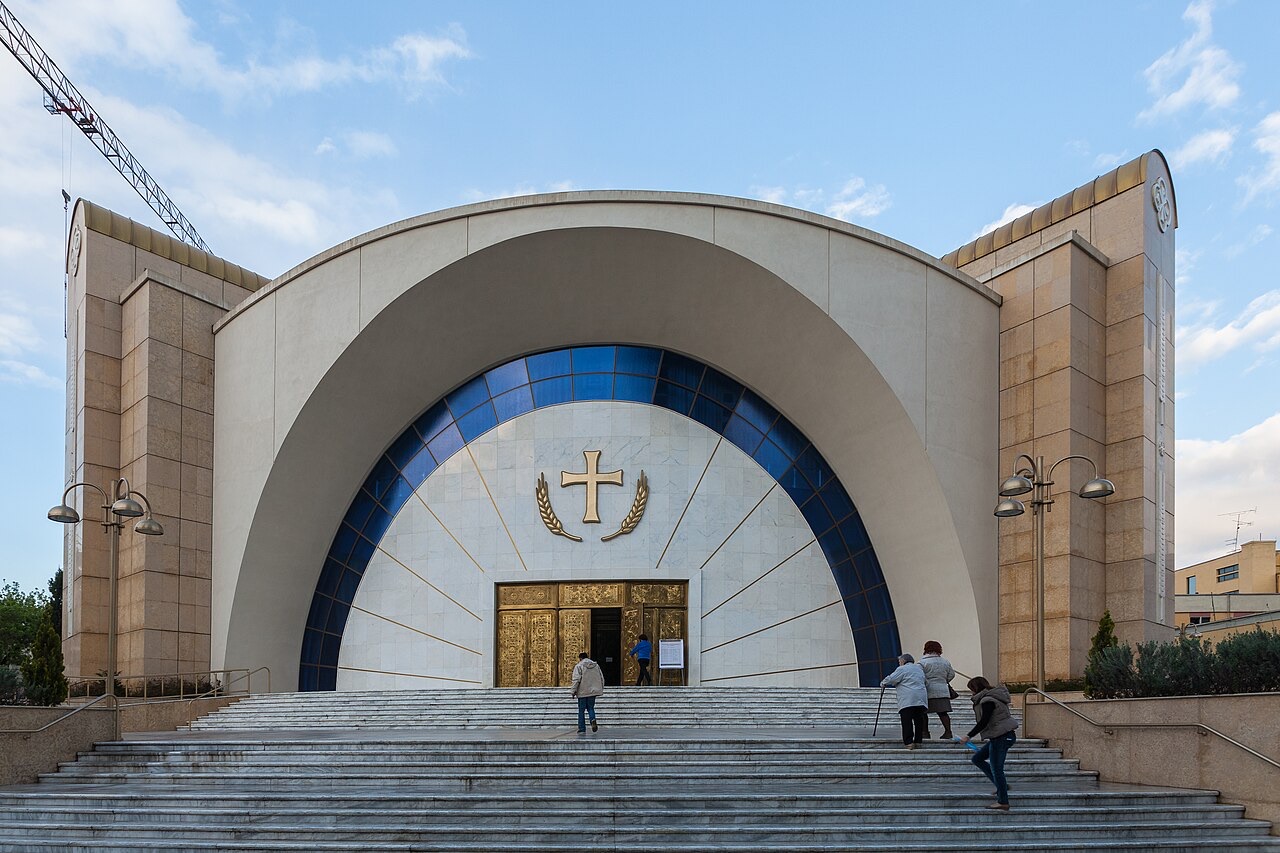
During the communist period, the northern stretch of the main boulevard was renamed Stalin Boulevard. Large socialist-style apartment blocks were constructed and the urban core was significantly reorganised. In the 21st century, large blocks of flats, modern buildings and shopping centres have been added. In June 2016, Mayor Erion Veliaj and Italian architect Stefano Boeri announced the commencement of work on the Master Plan Tirana 2030.
The Grand Park, the city's principal green space, contains children's playgrounds, sport facilities and landmarks including the Saint Procopius Church, the Presidential Palace, the Botanical Gardens, the Tirana Zoo, the Amphitheatre and the Monument of the Frashëri Brothers. The Rinia Park dates from the communist era and is bordered by Dëshmorët e Kombit Boulevard to the east, with the Taivani Centre as its main landmark. Tirana also has a designated Tirana Greenbelt where construction is prohibited or restricted, and works on four new large parks in Kashar, Farkë, Vaqarr and Dajt began in summer 2015.
Tirana is Albania's principal economic centre. The tertiary sector is dominant, employing more than 68% of the workforce, with the secondary sector accounting for 26% and the primary sector for 5%. The city hosts all major national financial institutions, including the Bank of Albania, the Albanian Stock Exchange, and banks such as Banka Kombëtare Tregtare, Raiffeisen Bank, Credins Bank, Intesa Sanpaolo Bank and Tirana Bank. Leading telecommunications providers Vodafone, Telekom Albania and Eagle maintain their main Albanian operations in the city.
The city is served by Nënë Tereza International Airport, officially named after Mother Teresa, which carried more than 3.3 million passengers in 2019 and connects Tirana to destinations in Europe, Africa and Asia. The national road network converges on Tirana: SH1 links the city to Shkodër and Montenegro in the north; SH2 connects it to Durrës on the Adriatic; SH3, being upgraded to Autostrada 3, follows the ancient Via Egnatia and forms part of Pan-European Corridor VIII toward Greece; and Autostrada 1 connects the city to Kosovo via the Milot interchange.
The Tirana Railway Station was closed in 2013 and relocated to Kashar to free space for the New Boulevard project. A new station is planned at Laprakë as a multimodal terminal for rail, tram and bus services; construction of a new rail line to Nënë Tereza International Airport and Durrës is underway. Public bus transport operates 16 urban lines and 14 suburban lines from 06:00 to 24:00 daily. As of 2020, there were 451 bus stops on a network extending over 170 kilometres, with a single-ride fare of 40 Lek. A bicycle-sharing scheme launched in 2011 (Ecovolis) and a second scheme (Mobike, deploying 4,000 bicycles from 8 June 2018) were both subsequently discontinued; cycling infrastructure totalled approximately 30 kilometres of routes in 2020.
가장 더운 달은 August (일 최고 기온 평균 30°C), 가장 추운 달은 January (일 최저 기온 평균 2°C), 가장 강수량이 많은 달은 November (146 mm). 연평균 강수량은 1,187 mm.
| 월 | 최고 | 최저 | 강수량 | 강수일 | 일조 시간 |
|---|---|---|---|---|---|
| January | 11°C | 2°C | 127 mm | 11 | 7.2 h |
| February | 12°C | 3°C | 110 mm | 11 | 8.1 h |
| March | 15°C | 5°C | 120 mm | 11 | 9.6 h |
| April | 18°C | 8°C | 108 mm | 13 | 10.7 h |
| May | 23°C | 13°C | 90 mm | 11 | 12.1 h |
| June | 27°C | 17°C | 52 mm | 7 | 13.6 h |
| July | 30°C | 19°C | 32 mm | 5 | 13.8 h |
| August | 30°C | 20°C | 35 mm | 6 | 12.9 h |
| September | 26°C | 16°C | 104 mm | 9 | 10.7 h |
| October | 21°C | 12°C | 118 mm | 9 | 9.2 h |
| November | 17°C | 8°C | 146 mm | 11 | 7.4 h |
| December | 12°C | 4°C | 146 mm | 12 | 6.7 h |
출처: ERA5 reanalysis via Open-Meteo, 1994–2023 · "최고" 및 "최저"는 일 최고·최저 기온의 평균값입니다. "강수일"은 강수량이 1mm 이상인 날의 수입니다.
유적지 · Tiranë
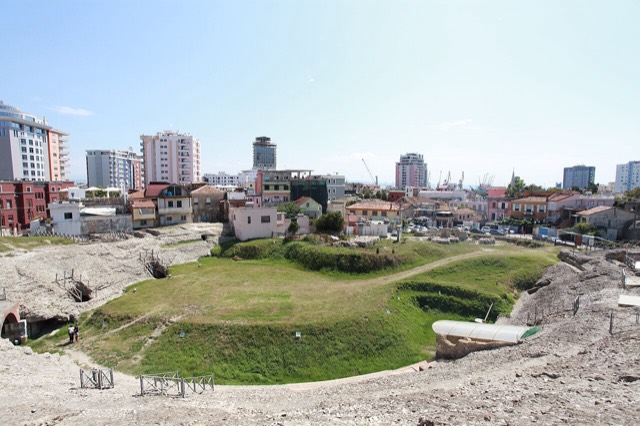
Roughly 170,000 concrete pillboxes built under Enver Hoxha — the most visible physical legacy of the communist state.
도시 · Durrës
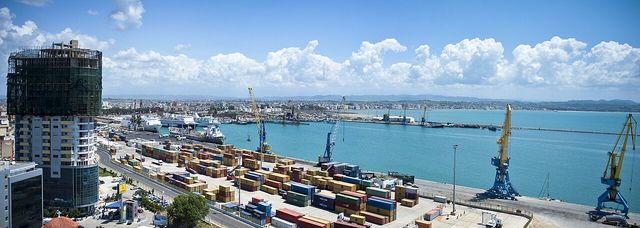
Albania's principal port and its oldest continuously inhabited city, founded as Epidamnos in 627 BC.
유적지 · Tiranë
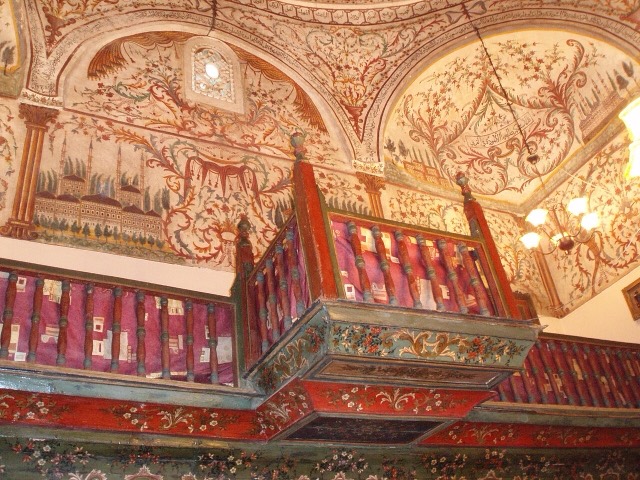
The small mosque on Skanderbeg Square whose frescoes of trees and waterfalls are unusual in Islamic art.
소도시 · Durrës
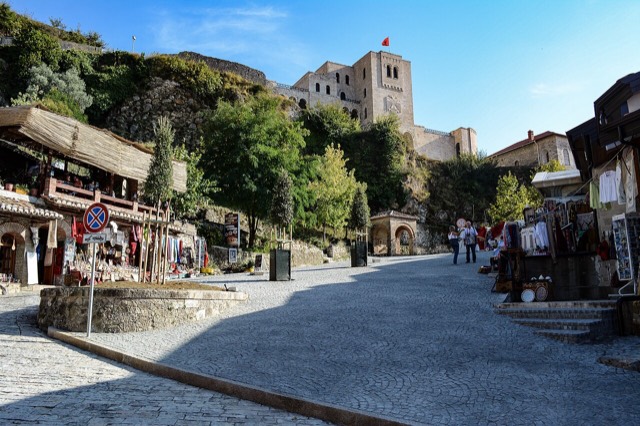
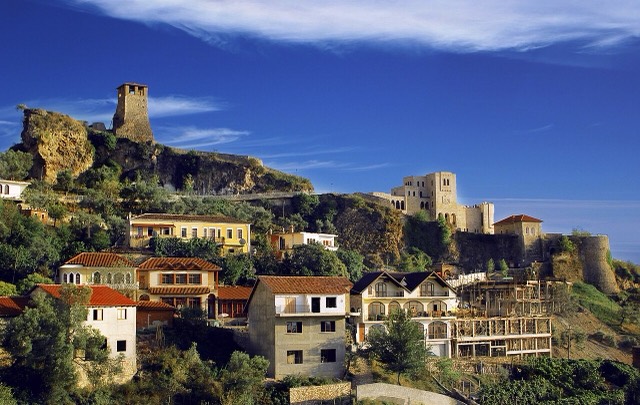
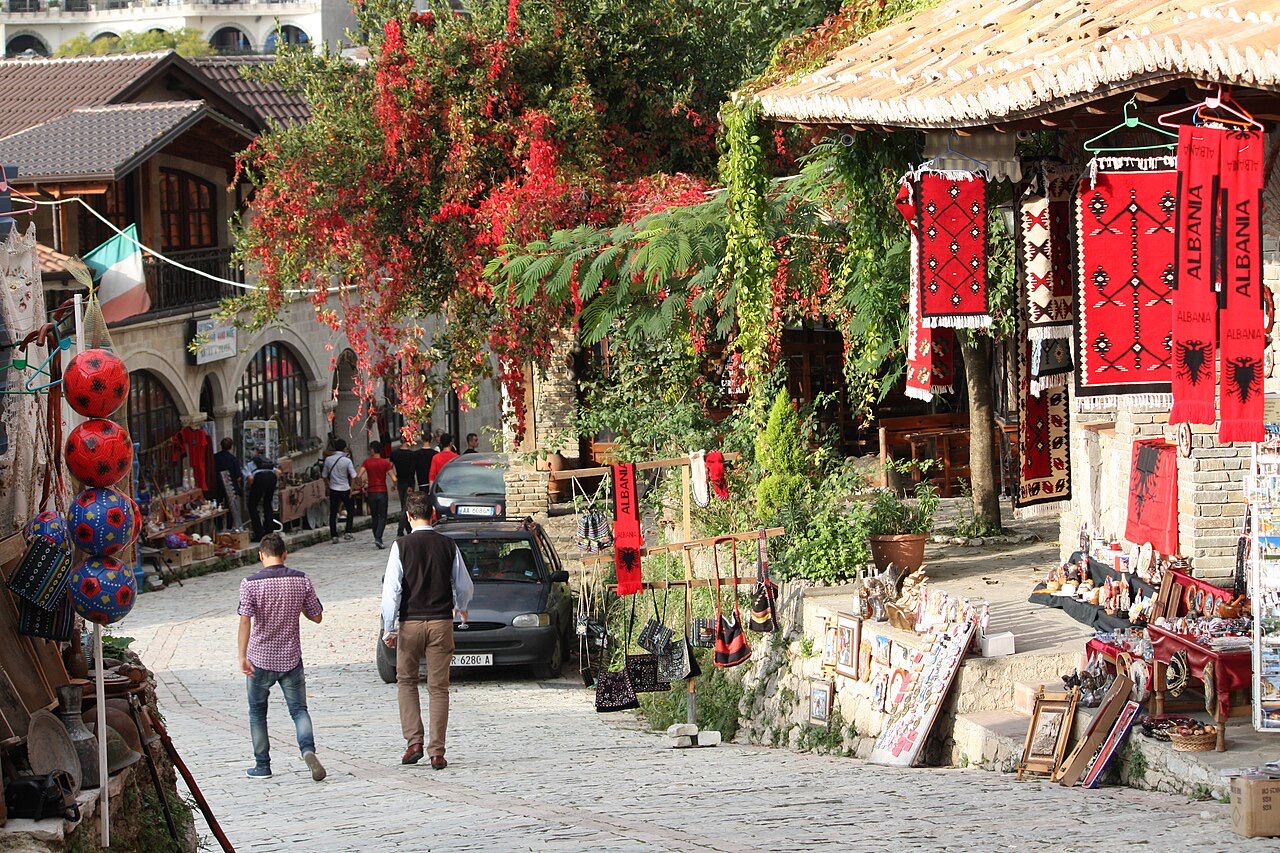
Skanderbeg's mountain stronghold, an old bazaar street, and the national museum of the resistance.
유적지 · Durrës
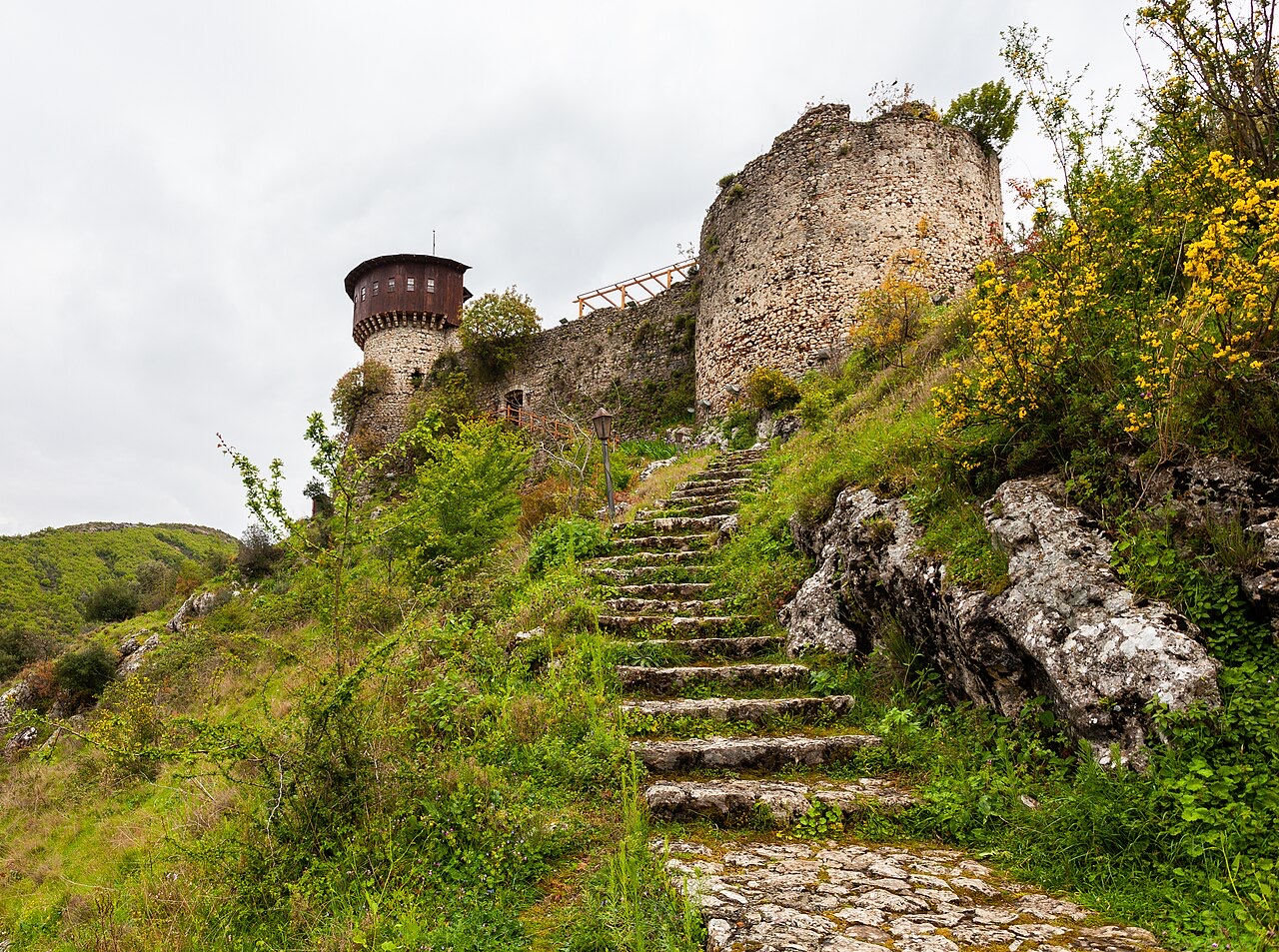
Skanderbeg's base, which held out against three Ottoman sieges and now houses the national museum of the resistance.
유적지 · Tiranë
Built as Enver Hoxha's mausoleum-museum, later a nightclub and NATO base, reopened in 2023 as a youth technology centre.
유적지 · Tiranë
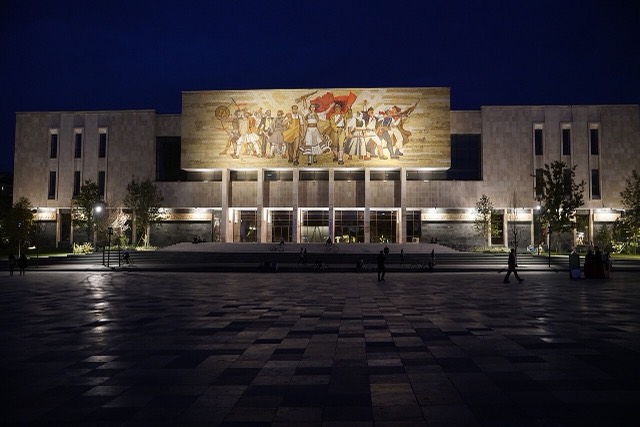
Albania's principal museum, under the Skanderbeg Square mosaic mural known as 'The Albanians'.
공항 · Tiranë
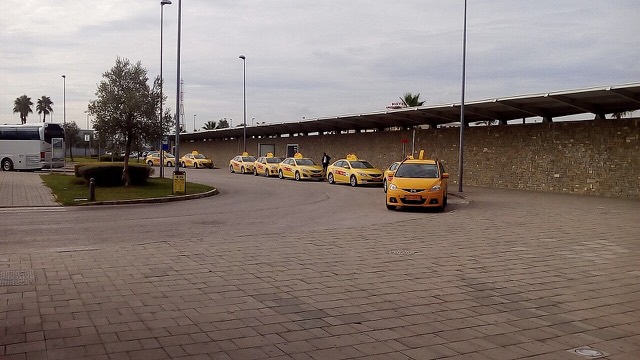
Albania's principal airport, 17 km north-west of Tirana — for years the country's only functioning civil airport.
국가
A mountainous country of about 2.4 million people on the Adriatic and Ionian seas, between Montenegro, Kosovo, North Macedonia…
호수 · Tiranë
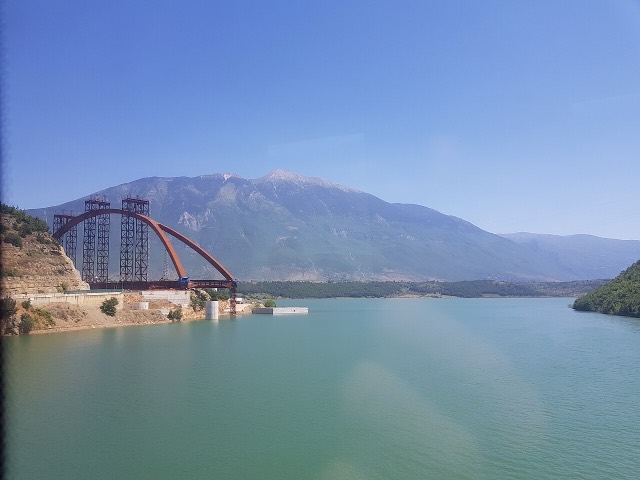
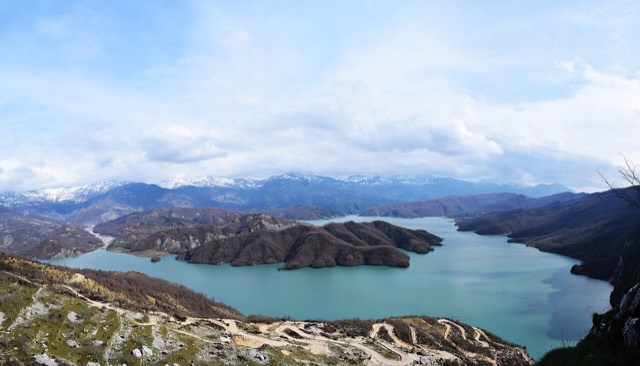
Tirana's drinking-water reservoir, ringed by limestone cliffs half an hour from the capital.
제목
An upper-middle-income economy of roughly $30 billion, led by services and tourism, with remittances and construction close…
제목
A Sufi order whose world headquarters has been in Tirana since 1925, with a major shrine on Mount Tomorr.
산 · Tiranë
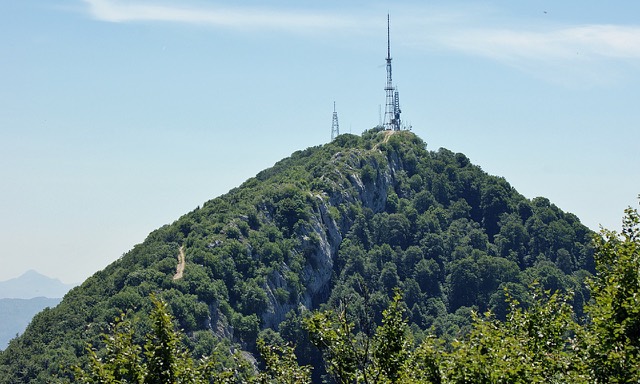
Tirana's own mountain: 1,613 m, a national park, and a 4.2 km cable car from the city edge.
산업
One of the largest contributors to growth, and the sector most exposed to tourism demand.
이 페이지에 오류가 있습니까? 수정 제안을 환영하며, 출처 기록과 대조하여 검토합니다. 잘못된 내용과 가능하다면 올바른 수치의 출처를 알려 주십시오.